
Plaintiff–Defense Brain Injury Litigation and the Measurement of Functional Loss: Medical Foundations, Expert Evidence, Trial Strategies
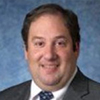
Richard S. Kaplan, M.D. earned his BS in Engineering Science and a Doctor of Medicine degree with research distinction from the University of Miami College of Engineering and the University of Miami School of Medicine in 1990. Subsequently, Dr. Kaplan completed an internship in internal medicine at Mayo Clinic in Rochester, MN and a residency in physical medicine and rehabilitation at Mayo Clinic in Rochester, MN.

Peter LeGrand’s practice is concentrated on professional liability litigation, particularly in defending healthcare professionals. Although he primarily practices in Illinois, Peter has appeared and participated in healthcare professional liability litigation around the country.
On-Demand: January 16, 2026
2 hour CLE
Tuition: $195.00
Co-Sponsored by myLawCLE
Get this course, plus over 1,000+ of live webinars.
Learn More
Training 5 or more people?
Sign-up for a law firm subscription plan and each attorney in the firm receives free access to all CLE Programs
Program Summary
Session I – Litigating Brain Injury Cases: Legal Strategies for Measuring Loss of Function from Both Sides – Peter L. LeGrand
Drawing on years of experience representing both plaintiffs and defendants in catastrophic personal injury cases—including traumatic brain and spinal injuries—Peter LeGrand will translate the medical and functional concepts of Session II into actionable litigation strategies. This attorney-centered session focuses on how lawyers build, attack, negotiate, and try brain-injury functional-loss claims, including navigating complex expert evidence, shaping causation narratives, and preparing a legally defensible damages model.
Key topics to be discussed:
- Building and challenging the legal theory of loss of function
- Discovery strategy in brain injury litigation
- Working with (and against) experts — attorney tactics
- Translating functional deficits into legal damages (without repeating clinical content)
- Using evidence persuasively in mediation and negotiation
- Trial strategy: Presenting or undercutting loss of function to a jury
- Practical pitfalls and lessons from the trenches
Session II – Measuring Loss of Function in Brain Injury Cases: A Dual-Perspective Approach – Dr. Richard S. Kaplan
In this session Dr. Kaplan—board-certified in Physical Medicine & Rehabilitation and a certified Life Care Planner with decades of experience evaluating catastrophic injuries including brain injury—will guide counsel through the complex terrain of quantifying functional loss after brain injury and effectively presenting those losses from both plaintiff and defense vantage points.
Participants will gain a deeper understanding of how to dissect medical, rehabilitation and life-care planning evidence; how to translate functional deficits into legal damages; and how each side’s strategies differ when analyzing impairment, disability, future care needs and life expectancy. The session will highlight the interplay between clinical rehabilitation data, expert testimony and legal frameworks for causation, permanency, and valuation of loss.
Key topics to be discussed:
- Brain injury functional-loss concepts
- From the plaintiff’s perspective: Establishing and quantifying loss of function
- From the defense’s perspective: Challenging and constraining loss of function
- Bridging both perspectives: Key concepts and pitfalls in measuring functional loss
This course is co-sponsored with myLawCLE.
 Closed-captioning available
Speakers
M.D. | Kaplan Life Care Plan
Richard S. Kaplan, M.D., is a physician specializing in physical medicine and rehabilitation and the founder of Kaplan Life Care Plan. With nearly 30 years in private practice, he has extensive experience treating patients with pain and physical disabilities in both inpatient and outpatient settings. He previously served for 15 years as Medical Director of acute inpatient rehabilitation at Uniontown Hospital in Pennsylvania. In addition to his clinical work, Dr. Kaplan has over 25 years of experience conducting forensic evaluations related to rehabilitation, including assessments of pain, disability, medical malpractice, and personal injury. He is also a certified life care planner with a subspecialty in life expectancy consultation and has contributed to professional education through teaching life care planning courses nationwide.
Education & Credentials
- Richard S. Kaplan, M.D., earned his Bachelor of Science in Engineering Science and his Doctor of Medicine, with research distinction, from the University of Miami College of Engineering and the University of Miami School of Medicine in 1990. He completed an internship in internal medicine and a residency in physical medicine and rehabilitation at Mayo Clinic in Rochester, Minnesota. He became Board Certified in Physical Medicine and Rehabilitation in 1995, is licensed in 10 states, and is certified as a life care planner.
Recognition & Leadership
- Richard S. Kaplan, M.D., has held leadership roles including serving as Medical Director of acute inpatient rehabilitation at Uniontown Hospital for 15 years. He is also recognized for his contributions to the field of life care planning, including teaching courses nationally through organizations such as SEAK and Strafford, and developing analytical tools and resources to support life care planning and life expectancy evaluations.
Professional Involvement
- Richard S. Kaplan, M.D., is actively involved in forensic and educational work related to physical medicine and rehabilitation and life care planning. He has participated extensively in evaluations for plaintiffs, defendants, and neutral entities, including government bodies, and contributes to the professional community by teaching life care planning courses and advancing methodologies in life expectancy analysis.
Experience
- Richard S. Kaplan, M.D., has nearly three decades of experience in physical medicine and rehabilitation, maintaining a continuous private practice while treating a broad range of pain and disability conditions. His experience includes 15 years as Medical Director of inpatient rehabilitation, as well as extensive outpatient care. For over 25 years, he has conducted forensic evaluations involving pain, disability, impairment, medical malpractice, and medical necessity. As a certified life care planner, he specializes in life expectancy consultation, supported by his development of software applications and databases and his use of a comprehensive library of peer-reviewed literature to analyze complex cases.
Peter LeGrand | Donohue Brown Smyth LLC
Peter LeGrand is an attorney at Donohue Brown Smyth LLC whose practice focuses on professional liability litigation, with a particular emphasis on defending healthcare professionals. While primarily practicing in Illinois, he has participated in healthcare professional liability litigation across the country. He has significant trial experience, having taken multiple jury trials to verdict, including cases involving emergency medicine professionals. Peter combines strong academic credentials with practical litigation experience, bringing a focused and results-driven approach to complex defense matters.
Education & Credentials
- Peter LeGrand graduated magna cum laude from the University of Illinois College of Law in 2018 and previously earned his undergraduate degree magna cum laude from the University of Missouri in 2014. His academic work includes publication of his article, The Potential Unconstitutionality of the Consumer Financial Protection Board and its Ramifications for the Elderly, in the Elder Law Journal.
Recognition & Leadership
- Peter LeGrand has distinguished himself academically by graduating magna cum laude from both his undergraduate institution and law school. His published work in the Elder Law Journal reflects his scholarly contribution to legal analysis consumer financial regulation and its implications.
Professional Involvement
- Peter LeGrand is actively engaged in professional liability litigation, particularly in the defense of healthcare professionals. His involvement includes participating in cases across multiple jurisdictions and contributing to the legal field through his published scholarship.
Experience
- Peter LeGrand’s experience centers on defending healthcare professionals in professional liability litigation. He primarily practices in Illinois but has been involved in litigation nationwide, representing clients in complex healthcare-related matters. His experience includes trying multiple jury trials to verdict, including cases involving emergency medicine professionals, demonstrating his capability in high-stakes litigation and courtroom advocacy.
Agenda
Session I – Litigating Brain Injury Cases: Legal Strategies for Measuring Loss of Function from Both Sides | 2:00pm – 3:00pm
- Building and challenging the legal theory of loss of function
- Crafting plaintiff and defense narratives around functional loss without over relying on medical jargon
- Structuring the case theory early: Causation, foreseeability, duty, breach, and comparative fault
- Managing inconsistent facts, pre-existing conditions, and gray areas in impairment evidence
- Discovery strategy in brain injury litigation
- What attorneys must obtain early to frame functional-loss claims: Prior medical records, employment history, digital/social media activity, rehabilitation histories
- Defense-focused discovery tools to test the credibility of reported deficits (employment records, surveillance, electronic data, collateral interviews)
- Plaintiff strategies for locking down admissions, limiting alternative-cause theories, and compelling insurer compliance
- Working with (and against) experts — attorney tactics
- Developing admissible, litigation-ready expert opinions: avoiding Daubert traps
- Deposition strategy: Eliciting clear explanations of functional loss for juries
- Cross-examining neuropsychologists, rehabilitation physicians, and life-care planners: Exposing overreach, bias, or unsupported methodologies
- Coordinating multidisciplinary expert teams for plaintiff vs. defense
- Translating functional deficits into legal damages (without repeating clinical content)
- Constructing a persuasive damages model across economic and noneconomic categories
- Plaintiff strategy: Weaving functional loss into wage-loss claims, home-support needs, supervision, loss of household services, and loss of enjoyment of life
- Defense strategy: Narrowing damages—challenging medical necessity, projecting recovery potential, exposing speculative assumptions
- Using evidence persuasively in mediation and negotiation
- Leveraging functional-loss evidence to drive settlement value
- How each side uses demonstratives, timelines, and day-in-the-life elements without duplicating medical testimony
- Negotiating catastrophic cases involving lifelong care: plaintiff-side valuation vs. defense-side risk analysis
- Trial strategy: Presenting or undercutting loss of function to a jury
- How to simplify complex cognitive/functional issues so jurors understand the true impact
- Plaintiff courtroom strategies
- Narratives that humanize the functional impact
- Effective use of visual aids, testimony sequencing, and real-world analogies
- Defense courtroom strategies
- Undermining functional-loss claims without appearing insensitive
- Highlighting variability, recovery, and alternative explanations
- Building closing arguments around credibility, consistency, and objective anchors
- Practical pitfalls and lessons from the trenches
- Avoiding attorney missteps when dealing with brain injury evidence (e.g., overstating deficits, relying on weak experts, ignoring inconsistent records)
- Strategies to maintain credibility with judges, jurors, and mediators
- Brief illustrative case lessons from Peter’s catastrophic-injury practice (without confidential details)
Break | 3:00pm – 4:10pm
Session II – Measuring Loss of Function in Brain Injury Cases: A Dual-Perspective Approach | 3:10pm – 4:10pm
- Brain injury functional-loss concepts
- Definitions: Impairment vs. disability vs. handicap as applied to brain injury
- The role of a physiatrist/life-care planner in assessing brain injury
- Types of brain injuries (traumatic, anoxic, concussive) and functional domains affected (cognitive, physical, emotional/behavioral)
- From the plaintiff’s perspective: Establishing and quantifying loss of function
- Identifying and documenting pre-injury baseline and post-injury decline in function
- Use of rehabilitation assessments (e.g., neuropsychological testing, functional capacity evaluation, activities of daily living) and life-care plans to project future care needs
- Articulating future medical/rehabilitation/life-care cost streams and diminished lifetime capacity (employment, social participation) for damages presentations
- Strategies for selecting and engaging experts (physiatry, neuropsychology, life care planning) and preparing them for deposition/trial
- From the defense’s perspective: Challenging and constraining loss of function
- Scrutinizing the causation and attribution of functional deficits: Pre-existing conditions, co-morbidities, rehabilitation compliance, malingering/motivation, differential diagnosis
- Critically evaluating the methodology of life-care plans and future-cost projections: Assumptions, discounting, inflation, alternative care models
- Cross-examination themes for brain injury experts: Functional validity, effort testing, longitudinal change, alternative explanations for deficits
- Crafting a defense narrative: Comparative functional benchmarks, minimization of future loss, re-employment/rehabilitation potential
- Bridging both perspectives: Key concepts and pitfalls in measuring functional loss
- Impairment rating vs. functional inability: When each is applicable and how they are interpreted in disputes
- Use of objective vs. subjective measures in brain injury (e.g., imaging, neuropsychological test results, functional performance)
- Presenting functional loss via life-care needs and daily life impact (e.g., “day-in-the-life” evidence) and how each side frames the story
- Practical tips for attorneys: Timing of expert retention, coordinating medical/rehab records, setting up the life-care expert engagement, avoiding common traps (over-reliance on unsupported assumptions, unsupported future-cost inflation, weak foundation for causation)
- Illustrative case examples (without breaching confidentiality) or hypotheticals: How the same functional deficit might be presented differently by plaintiff vs. defense
Credits
Alaska
Approved for CLE Credits
2 General
Alabama
Approved for Self-Study Credits
2 General
Arkansas
Approved for CLE Credits
2 General
Arizona
Approved for CLE Credits
2 General
California
Approved for CLE Credits
2 General
Colorado
Pending CLE Approval
2 General
Connecticut
Approved for CLE Credits
2 General
District of Columbia
No MCLE Required
No MCLE Required
Delaware
Pending CLE Approval
2 General
Florida
Approved via Attorney Submission
2 General Hours
Georgia
Approved for CLE Credits
2 General
Hawaii
Approved for CLE Credits
2 General
Iowa
Pending CLE Approval
2 General
Idaho
Pending CLE Approval
2 General
Illinois
Approved for Self-Study Credits
2 General
Indiana
Approved For On-Demand Credits
2 General
Kansas
Pending CLE Approval
2 Substantive
Kentucky
Pending CLE Approval
2 General
Louisiana
Pending CLE Approval
2 General
Massachusetts
No MCLE Required
2 CLE Hour(s)
Maryland
No MCLE Required
2 CLE Hour(s)
Maine
Pending CLE Approval
2 General
Michigan
No MCLE Required
2 CLE Hour(s)
Minnesota
Approved for Self-Study Credits
2 General
Missouri
Approved for Self-Study Credits
2.4 General
Mississippi
Pending CLE Approval
2 General
Montana
Approved for Self-Study Credits
2 General
North Carolina
Pending CLE Approval
2 General
North Dakota
Approved for CLE Credits
2 General
Nebraska
Pending CLE Approval
2 General
New Hampshire
Approved for CLE Credits
120 General minutes
New Jersey
Approved for CLE Credits
2 General
New Mexico
Approved for Self-Study Credits
2 General
Nevada
Pending CLE Approval
2 General
New York
Approved for CLE Credits
2 General
Ohio
Approved for Self-Study Credits
2 General
Oklahoma
Pending CLE Approval
2.5 General
Oregon
Pending CLE Approval
2 General
Pennsylvania
Approved for Self-Study Credits
2 General
Rhode Island
Pending CLE Approval
2 General
South Carolina
Pending CLE Approval
2 General
South Dakota
No MCLE Required
2 CLE Hour(s)
Tennessee
Approved for Self-Study Credits
2 General
Texas
Approved for CLE Credits
2 General
Utah
Approved for Self-Study Credits
2 General
Virginia
Not Eligible
2 General Hours
Vermont
Approved for CLE Credits
2 General
Washington
Approved via Attorney Submission
2 Law & Legal Hours
Wisconsin
Approved for Self-Study Credits
2 General
West Virginia
Pending CLE Approval
2.4 General
Wyoming
Pending CLE Approval
2 General
Preview
More CLE Webinars
Trending CLE Webinars










Upcoming CLE Webinars




























































© 2026 Federal Bar Association