Police Misconduct and Civil Rights Basics: Spotting Cases and Protecting Client Rights
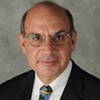
Alphonse A. Gerhardstein is a partner in the Ohio civil rights firm of Friedman, Gilbert +Gerhardstein. For more than 45 years he has litigated civil rights issues including police misconduct, race, sex, sexual orientation and disability discrimination, prisoner rights, voting rights, and reproductive health issues.
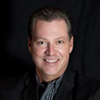
Sheriff Gary Raney worked for 31 years at the Ada County Sheriff’s Office in Boise, Idaho, serving as the elected sheriff for the last ten years. He retired in 2015 and has worked for the U.S. Department of Justice (DOJ) and independently on law enforcement and jail policy and practices.
On-Demand: October 30, 2025
2 hour CLE
Tuition: $195.00
Co-Sponsored by myLawCLE
Get this course, plus over 1,000+ of live webinars.
Learn More
Training 5 or more people?
Sign-up for a law firm subscription plan and each attorney in the firm receives free access to all CLE Programs
Program Summary
A viable excessive-force claim is routinely waived, time-barred, or quietly forfeited long before any plaintiff's lawyer sees it — destroyed by plea language, missed accrual dates, and evidence no one preserved. With plea bargaining resolving nearly every criminal case and qualified immunity still intact after years of stalled federal reform, the decisions that make or break a § 1983 action are made at arraignment and sentencing, not at the civil complaint. Criminal defense attorneys, public defenders, and general practitioners handling an arrest are already shaping these claims, often surrendering them through factual stipulations they never recognized as dispositive. This program maps the elements of excessive force under Fourth and Eighth Amendment objective-reasonableness review, the plea terms that preserve rather than waive a § 1983 claim, the accrual, tolling, and state-law borrowing rules that govern limitations, and the qualified-immunity arguments most vulnerable to attack. Attendees leave able to spot the claim, draft a plea that protects it, and lock down the evidence a later case will turn on.
What Will You Learn
Attorneys will learn to identify excessive force and other civil rights and constitutional claims, protect those claims while providing a criminal defense, and understand 42 U.S.C. § 1983 basics.
What Will You Gain
Attorneys will gain skills to spot civil rights cases, preserve claims during criminal defense, and understanding of the primary civil rights statute, 42 U.S.C. § 1983.
Key topics to be discussed:
- Excessive force
Elements of an excessive force claim against police officers and jail guards. - Plea protection
Protecting a criminal defendant's civil rights claim while pursuing a guilty or no contest plea. - Limitations periods
Statutes of limitation for civil rights claims. - Immunity defenses
Primary immunity defenses raised by law enforcement officers. - Section 1983
Basics regarding 42 U.S.C. § 1983, the primary civil rights statute.
This course is co-sponsored with myLawCLE.
 Closed-captioning available
Speakers
Alphonse Gerhardstein, Of Counsel | Friedman, Gilbert + Gerhardstein
Alphonse “Al” Gerhardstein is a nationally recognized civil rights trial lawyer with more than four decades of experience litigating landmark cases at the intersection of constitutional law and social justice. Of Counsel at Friedman, Gilbert + Gerhardstein, Al has built his career on litigating causes, not just cases — pursuing not only justice for individual clients but also the systemic reforms that prevent future harm. His practice spans police accountability, wrongful conviction, prisoner rights, LGBTQ+ equality, reproductive rights, and discrimination law, and his work has reshaped policy and precedent across the country.
- Education & Credentials
Al earned his Bachelor of Arts from Beloit College in 1973 and his Juris Doctor from New York University School of Law in 1976, where he was a Root-Tilden Public Interest Law Scholar. He is admitted to practice before the Supreme Court of the United States, the Supreme Court of Ohio, the Supreme Court of Minnesota, the United States Court of Appeals for the Sixth Circuit, and the United States District Courts for the Southern District of Ohio, Northern District of Ohio, and Eastern District of Kentucky.
- Recognition & Leadership
Al’s career has earned him significant honors reflecting both his legal acumen and his commitment to public service. Recent recognition includes being named one of Cincinnati’s Top 50 SuperLawyers in 2021 — one of only eight cited for civil rights work in Ohio and Kentucky — and receiving the 2019 Distinguished Service Award from the Black Lawyers Association of Cincinnati. In 2016, he received three major honors: the Holmes-Weatherly Award from the Unitarian Universalist Association in Boston; an Honorary Doctor of Humane Letters from Meadville Lombard Theological School in Chicago; and, jointly with his wife Mimi Gingold, the Making Democracy Work Award from the League of Women Voters of the Cincinnati Area. His leadership extends well beyond the courtroom. He founded the Ohio Justice and Policy Center (formerly the Prison Reform Advocacy Center), serving as its President from 1997 to 2010 and on its board through 2013. His role as lead counsel in Obergefell v. Hodges — the 2015 U.S. Supreme Court decision establishing marriage equality nationwide — is chronicled in Love Wins: The Lovers and Lawyers Who Fought the Landmark Case for Marriage Equality (Harper Collins 2016) by Debbie Cenziper and Jim Obergefell, and his civil rights work is featured in the Netflix documentary series Amend: The Fight for America.
- Professional Involvement
Al maintains an extensive record of professional and civic engagement. He serves as a Master of the Bench (1984–present) and Emeritus member (1988–present) of the Potter Stewart American Inn of Court, and was a longtime member of the Editorial Board of the Correctional Law Reporter (1999–2014). He holds memberships in the American Civil Liberties Union, the National Employment Lawyers Association, the Cincinnati Bar Association, and the Ohio State Bar Association, and has served on the Board of the Ohio Association for Justice since 2007. Since 2009, he has served on the Judicial Advisory Commission for the Northern District of Ohio, appointed by United States Senator Sherrod Brown to evaluate candidates for the federal district court bench. He served as principal author of the ordinance establishing Cincinnati’s Civilian Police Review Panel, following his work as counsel to the NAACP, the Urban League, the Baptist Ministers’ Conference, and other community organizations in U.S. Department of Justice–led mediation with the City of Cincinnati. Earlier in his career, he served as Circuit Secretary for the Sixth Judicial Circuit of NYU School of Law’s Root-Tilden-Kern Program (1997–2000) and on the Selection Committee for the Soros Justice Fellowship Program at the Center on Crime, Communities and Culture in New York City (1997–1999). Al has also taught civil rights litigation at Northern Kentucky University’s Chase College of Law and the University of Cincinnati, and is widely sought as a commentator on civil rights issues by national and Ohio media.
- Experience
Al’s career is defined by a series of landmark victories that have delivered both substantial recoveries for clients and lasting institutional change. In Obergefell v. Hodges (2015), he served as lead counsel in the U.S. Supreme Court case that secured marriage equality for same-sex couples in all 50 states. In the police accountability arena, he served as lead counsel for the family of Samuel DuBose in a 2016 settlement against the University of Cincinnati valued at approximately $4.85 million, which included a presidential apology, tuition and fee waivers for twelve children, a permanent campus memorial, and the family’s participation in comprehensive police reforms. He was also lead counsel in the 2002 class action that produced Cincinnati’s Collaborative Agreement — a $4.5 million settlement and reform framework that has been cited nationally as a model for police reform. His other significant police accountability victories include a $3.5 million settlement and sweeping policy reforms for the family of Samantha Ramsey (2016); a $2.25 million settlement for the family of Tanisha Anderson (2017); a $3 million settlement for taser victim David Nall (2015); and a $2.25 million recovery in 1995 for a taser victim who suffered permanent brain injury. His 2012 Report of Taser Risks has driven taser policy reform at law enforcement agencies nationwide. In wrongful conviction work, Al has represented Michael Green, who received $1.6 million from the City of Cleveland following thirteen years of wrongful imprisonment — a settlement that triggered a forensic audit of the Cleveland crime lab and led to the identification of additional wrongfully incarcerated individuals. He continues as lead counsel for Anthony Lemons, who served more than 27 years in prison before being declared wrongfully imprisoned. His prison and prisoner rights work includes leading the class action that secured $4 million in damages for the prisoner victims of the Lucasville riot — the longest and third-deadliest prison riot in U.S. history — and the case that closed Ohio’s first private prison in Youngstown, securing $1.65 million in damages and strict controls on its reopening. He has also led class actions challenging health care in Ohio’s prison system, secured sentence reductions for thousands of prisoners in Hernandez v. Wilkinson, and partnered with the Children’s Law Center to drive reforms at the Ohio Department of Youth Services that closed five facilities and reduced the youth population from 2,200 to approximately 450. Additional landmark work includes Culberson v. Doan (1999), a $3.75 million recovery with regional reforms protecting victims of domestic violence; and Chesher v. Neyer (2002), an $8 million class action against the Hamilton County Coroner’s office. Al has also served for many years as general counsel to the Cincinnati Planned Parenthood affiliate and has represented abortion providers in numerous cases challenging restrictions on reproductive health care.
Gary Raney, Principal | GAR, Inc.
Gary Raney is a nationally recognized law enforcement leader, expert witness, and consultant whose career spans more than three decades in public service and a thriving “second career” advising agencies and counsel across the country. After retiring as the elected Sheriff of Ada County, Idaho in 2015, Gary founded GAR, Inc., where he provides expert witness and litigation services, jail assessments, and organizational culture assessments. He has earned a national reputation for pioneering data-driven decision-making, cultivating organizational cultures that achieve some of the lowest use-of-force rates and highest employee satisfaction in the field, and translating evidence-based practices into measurable reform — work that has taken him to projects in more than 40 states.
- Education & Credentials
Gary holds both a bachelor’s degree and a master’s degree from Boise State University. He is a graduate of three of the most respected leadership programs in American law enforcement: Northwestern University’s School of Police Staff & Command, the FBI National Academy, and the National Executive Institute, a selective international consortium for senior law enforcement executives. He has also served as an adjunct professor at Boise State University and at Northwestern University’s Center for Public Safety, where he has helped train the next generation of law enforcement leaders.
- Recognition & Leadership
Gary’s contributions to law enforcement and criminal justice reform have been recognized at the highest levels of government and industry. He was appointed by the U.S. Attorney General to the board of the National Institute of Corrections — the federal agency that establishes best practices for jails and prisons — where he was subsequently elected Vice-Chair. He received gubernatorial appointments to chair Idaho’s Peace Officers Standards & Training (POST) Council and to the Idaho Criminal Justice Commission, where he was elected Vice-Chair, and he chaired the Idaho Criminal Justice Grants Council. He has served as President of the Idaho Sheriffs’ Association and Chair of the Ada County Critical Incident Task Force, and is a recipient of the Idaho Association of Counties Leadership Award. His work and ideas have drawn recognition from the United States Congress, the U.S. Attorney General, and NASA’s Kennedy Space Center — an unusual breadth of acknowledgment that reflects the cross-disciplinary reach of his leadership and organizational expertise.
- Professional Involvement
Gary maintains active involvement in the leading professional organizations shaping the field. He is engaged with the International Association of Chiefs of Police, the National Sheriffs’ Association, the American Jail Association, and the Police Executive Research Forum, and participates in numerous ad hoc working groups focused on improving criminal justice processes and outcomes. He has served as a consultant to the U.S. Department of Justice, assessing and recommending operational improvements in criminal justice organizations, and contributed to the National Judicial Task Force to Examine State Courts’ Response to Mental Illness. His board service includes the Intermountain Regional Computer Forensic Laboratory, the Family Justice Center, the Ada County Mental Health Court, the Ada County Drug Court, and the Boise State University think-tank on organizational innovation. As a sought-after speaker on effective leadership and best practices, Gary has presented to the United States Congress, the NASA Launch Services Program Leadership Retreat, the Police Executive Research Forum, the National Sheriffs’ Association, the American Jail Association, the American Correctional Association, the National Center for State Courts, the Los Angeles Citizens’ Commission on the Reduction of Jail Violence, Community Resources for Justice, Human Rights Watch, the American College of Correctional Physicians, and numerous state sheriffs’ associations across the country.
- Experience
Gary spent more than 30 years with the Ada County Sheriff’s Office in Boise, Idaho, the final ten as the elected Sheriff. During his tenure, he became nationally recognized for innovative leadership, model data-driven practices, and the development of an organizational culture marked by exceptionally low use-of-force rates and exceptionally high employee satisfaction. Since founding GAR, Inc. following his 2015 retirement, Gary has built a national consulting and expert witness practice focused on three core service areas. As an expert witness and litigation consultant, he provides analysis and testimony in matters involving law enforcement and corrections operations. His jail assessment work helps agencies evaluate facility operations, identify risks, and align with evidence-based best practices. And his organizational culture assessments help agencies diagnose internal challenges and build the kind of high-performing, accountable cultures he developed firsthand as Sheriff. Across all of these engagements, the through-line of Gary’s work remains the same: turning rigorous analysis into practical, lasting reform that produces better outcomes for officers, agencies, and the communities they serve.
Agenda
SESSION 1 – Excessive Force Claims: Officers and Jail Guards | 2:00pm – 2:20pm
Examine the core elements required to establish an excessive force claim against police officers and jail guards. Learn how courts evaluate objective reasonableness, identify constitutional violations under the Fourth and Eighth Amendments, and build claims that withstand scrutiny.
SESSION 2 – Preserving Civil Rights Claims During Plea Deals | 2:20pm – 2:40pm
Discover strategies to safeguard a client’s civil rights claims while negotiating guilty or no contest pleas. Learn how plea language, factual stipulations, and procedural choices can either preserve or unintentionally waive valuable § 1983 actions down the road.
SESSION 3 – Statutes of Limitation for Civil Rights Claims | 2:40pm – 3:00pm
Navigate the complex statutes of limitation governing civil rights claims under 42 U.S.C. § 1983. Understand accrual rules, tolling doctrines, and state-law borrowing principles to ensure claims are timely filed and clients’ rights remain fully protected.
Break | 3:00pm – 3:10pm
SESSION 4 – Primary Immunity Defenses Raised by Law Enforcement Officers | 3:10pm – 3:40pm
Examine the primary immunity defenses law enforcement officers invoke in civil rights litigation, including qualified immunity. Learn how courts apply these doctrines, identify weaknesses in common defense arguments, and develop strategies to overcome immunity barriers in § 1983 cases.
SESSION 5 – Practical Tips for Investigating and Preserving Claims | 3:40pm – 4:10pm
Gain practical strategies for investigating police misconduct and preserving civil rights claims from the earliest stages. Learn how to gather critical evidence, secure witness accounts, document injuries, and avoid common pitfalls that can weaken or forfeit a viable case.
Credits
Alaska
Approved for CLE Credits
2 General
Alabama
Pending CLE Approval
2 General
Arkansas
Approved for CLE Credits
2 General
Arizona
Approved for CLE Credits
2 General
California
Approved for CLE Credits
2 General
Colorado
Pending CLE Approval
2 General
Connecticut
Approved for CLE Credits
2 General
District of Columbia
No MCLE Required
No MCLE Required
Delaware
Pending CLE Approval
2 General
Florida
Approved for CLE Credits
2.5 General
Georgia
Approved for CLE Credits
2 General
Hawaii
Approved for CLE Credits
2 General
Iowa
Approved for Self-Study Credits
2 General
Idaho
Pending CLE Approval
2 General
Illinois
Approved for Self-Study Credits
2 General
Indiana
Approved For On-Demand Credits
2 General
Kansas
Approved for Self-Study Credits
2 Substantive
Kentucky
Pending CLE Approval
2 General
Louisiana
Approved for Self-Study Credits
2 General
Massachusetts
No MCLE Required
2 CLE Hour(s)
Maryland
No MCLE Required
2 CLE Hour(s)
Maine
Pending CLE Approval
2 General
Michigan
No MCLE Required
2 CLE Hour(s)
Minnesota
Approved for Self-Study Credits
2 General
Missouri
Approved for Self-Study Credits
2.4 General
Mississippi
Pending CLE Approval
2 General
Montana
Approved for Self-Study Credits
2 General
North Carolina
Pending CLE Approval
2 General
North Dakota
Approved for CLE Credits
2 General
Nebraska
Pending CLE Approval
2 General
New Hampshire
Approved for CLE Credits
120 General minutes
New Jersey
Approved for CLE Credits
2 General
New Mexico
Approved for Self-Study Credits
2 General
Nevada
Approved for Self-Study Credits
2 General
New York
Approved for CLE Credits
2 General
Ohio
Approved for Self-Study Credits
2 General
Oklahoma
Pending CLE Approval
2 General
Oregon
Approved for Self-Study Credits
2 General
Pennsylvania
Approved for Self-Study Credits
2 General
Rhode Island
Pending CLE Approval
2 General
South Carolina
Pending CLE Approval
2 General
South Dakota
No MCLE Required
2 CLE Hour(s)
Tennessee
Approved for Self-Study Credits
2 General
Texas
Pending CLE Approval
2 General
Utah
Pending CLE Approval
2 General
Virginia
Not Eligible
2 General Hours
Vermont
Approved for CLE Credits
2 General
Washington
Approved via Attorney Submission
2 Law & Legal Hours
Wisconsin
Approved for Self-Study Credits
2 General
West Virginia
Pending CLE Approval
2.4 General
Wyoming
Pending CLE Approval
2 General
Preview
More CLE Webinars
Trending CLE Webinars










Upcoming CLE Webinars




















































© 2026 Federal Bar Association