Witness Preparation and Expert Investigations in the AI Era
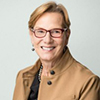
Katherine B. Forrest is a partner in the Litigation Department at Paul, Weiss, Rifkind, Wharton & Garrison LLP in New York, where she serves as Vice Chair of the firm and Co-Chair of its Global Artificial Intelligence Group. That group handles AI litigation and advises clients on anticipating regulatory developments, limiting legal exposure, and adopting industry best practices.

Bill Hartzer is the CEO of Hartzer Consulting and an internationally recognized expert in internet investigations, digital evidence, search engine technologies, artificial intelligence, domain names, and online business practices. With more than 25 years of experience analyzing websites, internet records, search engines, and digital technologies, Bill assists attorneys and organizations with complex technical investigations, litigation support, and expert witness services. He is a widely respected author, consultant, and expert witness who regularly investigates technical issues, analyzes digital evidence, and prepares expert reports involving internet-related disputes.
On-Demand: August 31, 2026
2 hour CLE
Tuition: $195.00
Co-Sponsored by myLawCLE
Get this course, plus over 1,000+ of live webinars.
Learn More
Training 5 or more people?
Sign-up for a law firm subscription plan and each attorney in the firm receives free access to all CLE Programs
Program Summary
Your witness may already be preparing with AI. No one asked you first
Witness preparation used to happen in a closed room. ABA Formal Opinions 508 and 512 now set the ethical terms for attorney AI use. United States v. Heppner establishes what happens to privilege when a witness uses AI unsupervised.
Choose the wrong platform, and confidential facts leave your control. Let a witness rehearse alone with an adversarial simulation tool, and privilege may follow. Miss the expert disclosure your jurisdiction requires, and the opinion is exposed. State-specific AI obligations sit on top of all of it.
You leave with compliance protocols that travel across jurisdictions. They cover platform criteria, pre-engagement AI instructions, supervision of AI-generated preparation materials, and theAI questions a witness should expect at deposition. You also leave with documentation practices that separate AI-assisted research from the expert’s independent conclusions. Drawing that line is the judgment AI cannot supply.
Key topics to be discussed:
- Combined Ethical Framework
How ABA Formal Opinions 508 and 512, read together, change what counsel must disclose and supervise before AI touches witness preparation. - Privilege After Heppner
How the privilege consequences established in United States v. Heppner change the instructions you give a witness before preparation begins. - Unsupervised Witness Use
How unsupervised witness AI use and adversarial simulation tools reshape both your pre-engagement instructions and the AI-related deposition questions you prepare for. - Practical Compliance Protocols
How platform selection, expert witness disclosure requirements, and state-specific AI obligations translate into one protocol that travels across jurisdictions. - AI in Expert Work
How AI meaningfully accelerates technical research and digital evidence organization inside the expert witness workflow, and where it stops short of expert judgment. - Defensible Expert Output
How to validate AI-assisted research, preserve expert independence in drafted support materials, and document real-world workflows so opinions remain defensible.
This course is co-sponsored with myLawCLE.
 Closed-captioning available
Speakers
Katherine B. Forrest, Partner | Paul, Weiss, Rifkind, Wharton & Garrison LLP
Katherine B. Forrest is a partner in the Litigation Department at Paul, Weiss, Rifkind, Wharton & Garrison LLP in New York, where she serves as Vice Chair of the firm and Co-Chair of its Global Artificial Intelligence Group. That group handles AI litigation and advises clients on anticipating regulatory developments, limiting legal exposure, and adopting industry best practices. Before returning to private practice she spent seven years on the federal bench as a U.S. District Judge for the Southern District of New York, and earlier served as a Deputy Assistant Attorney General in the Antitrust Division of the U.S. Department of Justice. Her work today centers on sensitive high-technology investigations, litigation, and advisory matters involving artificial intelligence, cryptocurrency, and blockchain.
- Education & Credentials
Katherine holds a J.D. from New York University School of Law and a B.A., with Honors, from Wesleyan University. She is admitted to practice in New York and before the U.S. Supreme Court. She has also taught as an adjunct professor of law at NYU School of Law for ten years as of 2026, where she co-teaches a course on Quantitative Methods and the Law.
- Recognition & Leadership
Chambers USA ranked Katherine Band 1 in artificial intelligence in 2026, and Chambers Global named her a Global Market Leader in artificial intelligence in 2025. Lawdragon included her among its 2025 “500 Leading Global Entertainment, Sports & Media Lawyers,” the New York Law Journal named her a 2023 individual Innovation Award winner for her AI work, and the Financial Times shortlisted her as a 2023 Innovative Practitioner finalist. Benchmark Litigation awarded her its Hall of Fame Award in 2020 and has named her to its “Top 100 Trial Lawyers in America” list (2022–2025) and its “Top 250 Women in Litigation” list (2019–2025).
She has been recognized by The Best Lawyers in America since 2010, currently for Antitrust, Litigation – Antitrust, and Litigation – Intellectual Property, and was named Best Lawyers’ New York City “Lawyer of the Year” for Antitrust in 2022. Earlier honors include Crain’s New York Business’s “Notable Women in Law” (2019), The American Lawyer’s list of ten district court judges to watch (2012) and its Individual Innovation Award (2023), Law360’s ten most influential recently appointed judges (2015), Global Competition Review’s “40 Under 40” (2005), IP Law & Business’s “Top 50 Under 45” (2008), and The Legal 500 US (2022–2024). Her pro bono practice earned the Jewish Children’s Museum’s Ari Halberstam Memorial Award in 2023.
- Professional Involvement
Katherine co-hosts the award-winning Paul, Weiss podcast Waking Up With AI, which has run more than 100 episodes on AI developments, regulation, and use cases. She has written three books on artificial intelligence: When Machines Can Be Judge, Jury and Executioner: Justice in the Age of Artificial Intelligence; Is Justice Real When “Reality” is Not: The Construction of Ethical Systems in Virtual Worlds; and the forthcoming Of Another Mind: Navigating a New Social Contract with Superintelligent AI. She authored the “Artificial Intelligence” treatise chapters for Business & Commercial Litigation in New York State Courts (Fifth Edition, 2021) and Business & Commercial Litigation in Federal Courts (Fifth Edition, 2021), plus a chapter on emerging copyright issues in The Law of Artificial Intelligence and Smart Machines (First Edition, 2019). She writes a regular technology column for the New York Law Journal and received a distinguished legal writing award from The Burton Awards in 2020 for “The Holographic Judge.”
She is a frequent keynote speaker at events hosted by the American Bar Association, the New York City Bar Association, the Federal Bar Association, the National Judicial College, the New York State Judicial Institute, The Future Society, and UNESCO, and has trained judges on AI issues in the United States and internationally. She is a Fellow of the American Bar Foundation, a member of the ABA Taskforce on Law and Artificial Intelligence, co-chair of the New Jersey Court Systems AI Initiative, and a member of the board of trustees of Choate Rosemary Hall.
- Experience
Katherine advises clients on legal questions arising from technology, including artificial intelligence, the digital environment, high-speed trading, content distribution, big data, and intellectual property. She has led sensitive investigations involving the DOJ, the FTC, and other U.S. and foreign regulators, and has handled complex, high-stakes litigation spanning artificial intelligence, Web3, and digital assets.
Nominated by President Barack Obama and confirmed by the U.S. Senate in 2011, she served seven years as a U.S. District Judge for the Southern District of New York and presided over several thousand civil and criminal cases. During that tenure she sat on the district’s Judicial Patent Task Force and presided over several dozen patent cases. She has also appeared on the PBS program NOVA to discuss algorithmic bias and artificial intelligence.
Bill Hartzer, CEO | Hartzer Consulting
Bill Hartzer is the CEO of Hartzer Consulting and an internationally recognized expert in internet investigations, digital evidence, search engine technologies, artificial intelligence, domain names, and online business practices. With more than 25 years of experience analyzing websites, internet records, search engines, and digital technologies, Bill assists attorneys and organizations with complex technical investigations, litigation support, and expert witness services. He is a widely respected author, consultant, and expert witness who regularly investigates technical issues, analyzes digital evidence, and prepares expert reports involving internet-related disputes.
- Education & Credentials
Bill began his career as a technical writer, producing software manuals for IBM mainframe systems in the early 1990s before transitioning into website development, domain name strategy, internet technologies, and search engine optimization. Over more than two decades, he has developed extensive expertise in internet investigations, digital evidence, search engine technologies, AI-assisted research, and technical analysis. His experience spans complex online investigations, website technologies, domain name disputes, digital marketing practices, and the evolving role of artificial intelligence in technical investigations and litigation support.
- Recognition & Leadership
Bill is internationally recognized for his expertise in search engine technologies, internet investigations, AI search, domain names, and online business practices. As CEO of Hartzer Consulting, he has advised organizations and legal teams on technical investigations involving websites, online advertising, digital evidence, and internet technologies. He previously founded DNProtect before launching DNAccess, a domain name protection and recovery service. He is also the co-founder of the Dallas/Fort Worth Search Engine Marketing Association and serves as a brand ambassador for Majestic and OnCrawl. His technical expertise has made him a sought-after expert witness in litigation involving internet technologies, digital evidence, search engines, online advertising, and domain name disputes.
- Professional Involvement
Bill is an active speaker, author, and educator on internet technologies, digital investigations, AI search, and emerging technology issues affecting businesses and the legal profession. He frequently presents at leading conferences, including SMX, PubCon, and BrightonSEO, and hosts the Digital Marketing with Bill Hartzer podcast. He regularly publishes research, technical articles, white papers, and case studies on AI search, internet investigations, digital evidence, domain names, and online reputation management. His work emphasizes practical methodologies for investigating online activity, evaluating technical evidence, and responsibly incorporating AI into research and investigative workflows.
- Experience
For more than 25 years, Bill has advised organizations and attorneys on technical investigations involving websites, search engines, digital marketing, domain names, and online business practices. A significant portion of his work involves serving as an expert witness in internet-related litigation, where he conducts extensive technical research, investigates digital evidence, and prepares expert witness reports addressing complex technology issues. Bill regularly incorporates artificial intelligence into his investigative process to accelerate research, analyze large volumes of technical information, and assist in preparing certain types of documents, while ensuring that all expert opinions, findings, and reports are based on his own independent analysis, professional judgment, and well-documented methodology. His experience also includes technical SEO audits, website migrations, domain recovery strategies, AI search visibility, online reputation management, and digital asset protection.
Agenda
SESSION 1 – Preparing and Defending Witnesses Ethically in the AI Era Session Scope | 12:00pm – 1:00pm
This session examines the ethical framework governing attorney use of artificial intelligence in witness preparation, from the intersection of ABA Formal Opinions 508 and 512 to the privilege consequences of unsupervised witness AI use established in United States v. Heppner. Attorneys will learn how to select appropriate platforms, structure pre-engagement AI instructions, supervise AI-generated preparation materials, and ready witnesses for AI-related deposition questions. Participants leave with concrete compliance protocols applicable across jurisdictions, including expert witness disclosure requirements and state-specific AI obligations.
BREAK | 1:00pm – 1:10pm
SESSION 2 – AI-Assisted Expert Witness Investigations: Research, Digital Evidence, and Defensible Expert Reports | 1:10pm – 2:10pm
Artificial intelligence is transforming how expert witnesses investigate technical issues, analyze digital evidence, organize complex datasets, and conduct research supporting expert opinions. This session explores practical AI workflows from the perspective of a seasoned technical expert witness, demonstrating where AI meaningfully improves efficiency while highlighting the tasks that continue to require independent expert judgment. Attendees will learn how AI can support investigations involving websites, search engines, digital marketing, online business practices, internet records, and technical evidence without compromising the credibility or defensibility of expert opinions. The session also examines documentation practices that help distinguish AI-assisted research from the expert’s independent conclusions.
Credits
Alaska
Approved for CLE Credits
1 General, 1 Ethics
Alabama
Pending CLE Approval
1 General, 1 Ethics
Arkansas
Approved for CLE Credits
1 General, 1 Ethics
Arizona
Approved for CLE Credits
1 General, 1 Professional Responsibility/Ethics
California
Approved for CLE Credits
1 General, 1 Ethics
Colorado
Pending CLE Approval
1 General, 1 Ethics / Professionalism
Connecticut
Approved for CLE Credits
1 General, 1 Ethics / Professionalism
District of Columbia
No MCLE Required
2 CLE Hour(s)
Delaware
Pending CLE Approval
1 General, 1 Enhanced Ethics
Florida
Approved for CLE Credits
1.5 General, 1 Ethics
Georgia
Approved for CLE Credits
1 General, 1 Ethics
Hawaii
Approved for CLE Credits
1 General, 1 Ethics or Professional Responsibility Education
Iowa
Pending CLE Approval
1 General, 1 Ethics
Idaho
Pending CLE Approval
1 General, 1 Ethics / Professionalism
Illinois
Approved for Self-Study Credits
1 General, 1 Ethics, Civility, Professionalism
Indiana
Approved For On-Demand Credits
1 General, 1 Ethics
Kansas
Pending CLE Approval
1 Substantive, 1 Ethics / Professionalism
Kentucky
Pending CLE Approval
1 General, 1 Ethics
Louisiana
Pending CLE Approval
1 General, 1 Ethics
Massachusetts
No MCLE Required
2 CLE Hour(s)
Maryland
No MCLE Required
2 CLE Hour(s)
Maine
Pending CLE Approval
1 General, 1 Ethics / Professionalism
Michigan
No MCLE Required
2 CLE Hour(s)
Minnesota
Pending CLE Approval
1 General, 1 Ethics
Missouri
Approved for Self-Study Credits
1.2 General, 1.2 Ethics
Mississippi
Pending CLE Approval
1 General, 1 Ethics
Montana
Pending CLE Approval
1 General, 1 Professional Fitness and Integrity
North Carolina
Pending CLE Approval
1 General, 1 Ethics
North Dakota
Approved for CLE Credits
1 General, 1 Ethics
Nebraska
Approved for Self-Study Credits
1 General, 1 Professional Responsibility
New Hampshire
Approved for CLE Credits
60 General minutes, 60 Ethics / Professionalism minutes
New Jersey
Approved for CLE Credits
1 General , 1 Ethics / Professionalism
New Mexico
Approved for Self-Study Credits
1 General, 1 Ethics / Professionalism
Nevada
Approved for Self-Study Credits
1 General, 1 Ethics / Professionalism
New York
Approved for CLE Credits
1 General, 1 Ethics / Professionalism
Ohio
Approved for Self-Study Credits
1 General, 1 Professional Conduct
Oklahoma
Pending CLE Approval
1 General, 1 Ethics / Professionalism
Oregon
Approved for Self-Study Credits
1 General, 1 Ethics
Pennsylvania
Approved for Self-Study Credits
1 General, 1 Ethics / Professionalism
Rhode Island
Pending CLE Approval
1 General, 1 Ethics / Professionalism
South Carolina
Pending CLE Approval
1 General, 1 Ethics / Professionalism
South Dakota
No MCLE Required
2 CLE Hour(s)
Tennessee
Approved for Self-Study Credits
1 General, 1 Dual
Texas
Approved for CLE Credits
1 General, 1 Ethics / Professionalism
Utah
Pending CLE Approval
1 General, 1 Ethics / Professionalism
Virginia
Not Eligible
1 General Hours, 1 Ethics / Professionalism Hours
Vermont
Approved for CLE Credits
1 General, 1 Ethics
Washington
Approved via Attorney Submission
1 Law & Legal Hours, 1 Ethics Hours
Wisconsin
Approved for Self-Study Credits
2 General
West Virginia
Pending CLE Approval
1.2 General, 1.2 Ethics / Professionalism
Wyoming
Pending CLE Approval
1 General, 1 Ethics / Professionalism
Preview
More CLE Webinars
Trending CLE Webinars





Upcoming CLE Webinars






















© 2026 Federal Bar Association