Obtaining and Using Social Media Evidence (2026 Edition)
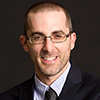
Colin Miller is a Professor of Law at the University of South Carolina's Joseph F. Rice School of Law, where he also holds the Thomas H. Pope Professorship in Trial Advocacy and previously served as Associate Dean for Faculty Development. He teaches Evidence, Criminal Law, and Criminal Adjudication, with expertise spanning Evidence, Criminal Law and Procedure, and Civil Procedure. He is the creator and Blog Editor of EvidenceProf Blog and the co-creator and co-host of the Undisclosed Podcast, which covers cases of possible wrongful convictions. Before joining South Carolina, he taught at UIC Law School and William and Mary, and practiced as an appellate court attorney and a litigation associate.
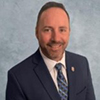
Jeff Martin is a certified Digital Forensics Expert with over 20 years of experience and a Digital Evidence Expert Witness at Evidence Solutions, Inc. He specializes in cell phone forensics, computer forensics, cybersecurity, EMR/EHR forensics, and audio/video/imagery forensics, and has conducted hundreds of digital forensics investigations involving the acquisition, preservation, and analysis of data in state and federal courts. Before joining Evidence Solutions, he served as an Advanced Digital Forensic Analyst with the Michigan State Police Computer Crimes Unit and earlier spent a decade as Chief Information & Security Officer in the financial industry. He is a licensed private investigator in Arizona, Texas, and Michigan.
On-Demand: July 16, 2026
2 hour CLE
Tuition: $195.00
Co-Sponsored by myLawCLE
Get this course, plus over 1,000+ of live webinars.
Learn More
Training 5 or more people?
Sign-up for a law firm subscription plan and each attorney in the firm receives free access to all CLE Programs
Program Summary
Social media surfaces in nearly every case now, but the admissibility standard has moved. Courts apply FRE 901 and 902 with real scrutiny once authorship is contested. Platforms have restructured how their data can be reached. The Stored Communications Act still limits what a direct subpoena pulls.
The gap between collected and admissible is where cases are lost. Miss the authentication foundation, and the post never reaches the jury. Lean on a screenshot over the native file, and best-evidence doctrine sinks it. Overlook a preservation trigger, and adverse-inference sanctions follow.
You leave with a working method. Authenticate posts and DMs under contested-authorship scrutiny, clear the hearsay and best-evidence hurdles, reach platform data within SCA limits, and capture content forensically with a defensible chain of custody. That’s enough to build a record that survives a foundation challenge — and to dismantle an opponent’s when theirs doesn’t.
What Will You Learn
Attorneys will learn how to authenticate social media evidence, apply hearsay and best evidence rules, capture content forensically, and collaborate with digital forensics experts.
What Will You Gain
Attendees will gain a practical framework for getting social media evidence admitted and for keeping the other side's evidence out when the foundation falls short.
Key topics to be discussed:
- Authentication & Authorship
Establish a post’s author under FRE 901 and 902 when the other side denies writing it.
This course is co-sponsored with myLawCLE.
 Closed-captioning available
Speakers
Colin Miller, Professor of Law | University of South Carolina’s Joseph F. Rice School of Law
Colin Miller is a Professor of Law at the University of South Carolina’s Joseph F. Rice School of Law, where he also holds the Thomas H. Pope Professorship in Trial Advocacy and previously served as Associate Dean for Faculty Development. He teaches Evidence, Criminal Law, and Criminal Adjudication, with expertise spanning Evidence, Criminal Law and Procedure, and Civil Procedure. He is the creator and Blog Editor of EvidenceProf Blog and the co-creator and co-host of the Undisclosed Podcast, which covers cases of possible wrongful convictions. Before joining South Carolina, he taught at UIC Law School and William and Mary, and practiced as an appellate court attorney and a litigation associate.
- Education & Credentials
Miller earned his J.D. from the William and Mary School of Law in 2003, graduating second in his class with a 3.8 GPA and election to the Order of the Coif. He holds a B.A. with Distinction in Political and Social Thought from the University of Virginia, where he was an Echols Scholar.
- Recognition & Leadership
He was named Professor of the Year in 2014 and received the Thumbs Up Award for making a significant difference for students with disabilities in 2020 and 2021. At UIC he received the Scholarly Achievement Award in 2011, and his article on judicial participation in plea discussions won the 2013 SEALS Call for Papers. EvidenceProf Blog was named to the ABA Blawg 100 in 2014, 2015, 2016, and 2017 and has drawn more than 15.5 million page views, while the Undisclosed Podcast has surpassed 375 million downloads and ranked among the 25 most downloaded podcasts in 2015 and 2016.
- Professional Involvement
Miller is a prolific legal scholar, with dozens of law review articles spanning evidence, criminal procedure, and constitutional law, including work on social media authentication, the best evidence rule, and the rule against hearsay. He has authored or contributed to numerous amici curiae briefs before the U.S. Supreme Court—several resolved in favor of the position advanced—and serves as a question drafter and expert reviewer for the National Conference of Bar Examiners.
- Experience
His pro bono work has produced tangible reforms, including assistance to the families of Breonna Taylor and Andre’ Hill in civil actions yielding multimillion-dollar settlements, and legislation enacted in South Carolina and Nebraska. The Undisclosed Podcast’s investigative work is associated with fifteen exonerations, and he created the Suits for Success Program, which donates professional clothing to law students for internships and jobs.
Jeff Martin, Digital Forensics Expert | Evidence Solutions
Jeff Martin is a certified Digital Forensics Expert with over 20 years of experience and a Digital Evidence Expert Witness at Evidence Solutions, Inc. He specializes in cell phone forensics, computer forensics, cybersecurity, EMR/EHR forensics, and audio/video/imagery forensics, and has conducted hundreds of digital forensics investigations involving the acquisition, preservation, and analysis of data in state and federal courts. Before joining Evidence Solutions, he served as an Advanced Digital Forensic Analyst with the Michigan State Police Computer Crimes Unit and earlier spent a decade as Chief Information & Security Officer in the financial industry. He is a licensed private investigator in Arizona, Texas, and Michigan.
- Education & Credentials
Martin holds a B.S. in Computer Information Systems from Northern Michigan University and an M.S. in Cyber Security & Information Assurance from Davenport University. His certifications include Certified Forensic Computer Examiner (CFCE), Cellebrite Certified Logical Operator, Cellebrite Certified Physical Analyst, Magnet Certified Forensic Examiner, X-Ways and Advanced X-Ways training, and Hawk Analytics cellular technology, mapping, and analysis training.
- Recognition & Leadership
He maintained a 100% conviction rate across his caseload with the Michigan State Police, and received an award for analyzing vehicle GPS data, cell tower triangulation, and cellphone records to locate a homicide victim buried in a remote forest.
- Professional Involvement
Martin is a faculty instructor at Northern Michigan University and Davenport University and an adjunct instructor teaching Cybercrime & Digital Forensics and the Computer Hacking Forensic Investigator (CHFI) certification course, as well as digital forensics search and seizure at the police academy. He serves as a certification coach for the CFCE credential through IACIS, has trained a dedicated group of judges, magistrates, and attorneys in digital evidence, and is a member of Michigan InfraGard, the Northern Michigan University Cyber Security Advisory Council, and IACIS.
- Experience
His forensic caseload spans over 550 drive imaging examinations, over 700 cellular phone analyses, and over 500 external media devices. He has qualified as an expert in digital forensics examinations in numerous jurisdictions across the United States and in the Cayman Islands. Earlier in his career he served from 1995 to 2007 in the United States Army and Michigan Army National Guard as a military police, protective services, and military intelligence officer.
Agenda
SESSION 1 – Admissibility of Social Media Evidence | 1:00pm – 2:00pm
Get social media evidence admitted under FRE 901 and 902. Master authentication, hearsay exceptions for posts and DMs, best-evidence rules, discovery pathways, Stored Communications Act limits, and spoliation duties—then keep the other side’s evidence out.
BREAK | 2:00pm – 2:10pm
SESSION 2 – Capturing, Preserving, and Presenting Social Media Evidence | 2:10pm – 3:10pm
Capture and preserve social media evidence in a technically defensible way. Learn forensic collection, chain-of-custody protocols, metadata, recovery of deleted content, the risks of attorney self-collection, and how to work with forensic experts at trial.
Credits
Alaska
Approved for CLE Credits
2 General
Alabama
Approved for Self-Study Credits
2 General
Arkansas
Approved for CLE Credits
2 General
Arizona
Approved for CLE Credits
2 General
California
Approved for CLE Credits
2 General
Colorado
Pending CLE Approval
2 General
Connecticut
Approved for CLE Credits
2 General
District of Columbia
No MCLE Required
No MCLE Required
Delaware
Pending CLE Approval
2 General
Florida
Pending CLE Approval
2 General
Georgia
Approved for CLE Credits
2 General
Hawaii
Approved for CLE Credits
2 General
Iowa
Pending CLE Approval
2 General
Idaho
Pending CLE Approval
2 General
Illinois
Approved for Self-Study Credits
2 General
Indiana
Approved For On-Demand Credits
2 General
Kansas
Pending CLE Approval
2 Substantive
Kentucky
Pending CLE Approval
2 General
Louisiana
Pending CLE Approval
2 General
Massachusetts
No MCLE Required
2 CLE Hour(s)
Maryland
No MCLE Required
2 CLE Hour(s)
Maine
Pending CLE Approval
2 General
Michigan
No MCLE Required
2 CLE Hour(s)
Minnesota
Pending CLE Approval
2 General
Missouri
Approved for CLE Credits
2.4 General
Mississippi
Pending CLE Approval
2 General
Montana
Pending CLE Approval
2 General
North Carolina
Pending CLE Approval
2 General
North Dakota
Approved for CLE Credits
2 General
Nebraska
Pending CLE Approval
2 General
New Hampshire
Approved for CLE Credits
120 General minutes
New Jersey
Approved for CLE Credits
2 General
New Mexico
Approved for Self-Study Credits
2 General
Nevada
Pending CLE Approval
2 General
New York
Approved for CLE Credits
2 General
Ohio
Approved for Self-Study Credits
2 General
Oklahoma
Pending CLE Approval
2 General
Oregon
Pending CLE Approval
2 General
Pennsylvania
Approved for Self-Study Credits
2 General
Rhode Island
Pending CLE Approval
2.5 General
South Carolina
Pending CLE Approval
2 General
South Dakota
No MCLE Required
2 CLE Hour(s)
Tennessee
Approved for Self-Study Credits
2 General
Texas
Approved for CLE Credits
2 General
Utah
Approved for Self-Study Credits
2 General
Virginia
Not Eligible
2 General Hours
Vermont
Approved for CLE Credits
2 General
Washington
Approved via Attorney Submission
2 Law & Legal Hours
Wisconsin
Approved for Self-Study Credits
2 General
West Virginia
Pending CLE Approval
2.4 General
Wyoming
Pending CLE Approval
2 General
Preview
More CLE Webinars
Trending CLE Webinars
Upcoming CLE Webinars

© 2026 Federal Bar Association