Prediction Markets, Shadow Trading, and Insider Risk in the Age of Algorithms: The Empirical Evidence Now Deciding Securities Cases
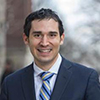
Joshua Mitts is the David J. Greenwald Professor of Law at Columbia Law School, where he uses advanced data science to conduct research on corporate and securities law. His primary focus is informed trading in capital markets and related topics in law and finance.
Live Video-Broadcast: November 18, 2026
2 hour CLE
Tuition: $195.00
Co-Sponsored by myLawCLE
Get this course, plus over 1,000+ of live webinars.
Learn More
Training 5 or more people?
Sign-up for a law firm subscription plan and each attorney in the firm receives free access to all CLE Programs
Program Summary
The Trade Nobody Noticed Is Now the Trade the Data Finds
People now bet on elections, corporate events, and government actions on prediction markets such as Kalshi and Polymarket. One study of Polymarket contracts flagged more than 210,000 suspicious bets with about 70% win rates and an estimated $143 million in profits. In stock markets, statistical and machinelearning tools now spot suspicious trading that would have gone unnoticed ten years ago.
An employee bets on the employer's earnings or deals, and the company carries a new insider risk. A trader uses one company's confidential information to trade another company's stock, and shadow trading after SEC v. Panuwat is in play. An executive trades under a 10b5-1 plan, and the plan can become evidence of intent. A platform fails to investigate, and surveillance and KYC duties can create liability. Meanwhile, the CFTC, the states, and the platforms still dispute who polices event contracts.
You leave with a practical framework for advising platforms, companies, and individuals, plus concrete compliance steps: blackout periods, pre-clearance, monitoring, and data-vendor controls. You also learn how trading-pattern evidence is built and how to challenge it under Daubert and Rule 702, judgment calls no algorithm makes for you.
Key topics to be discussed:
- Prediction Market Fundamentals
Assess how prediction markets work, what the Polymarket evidence shows about suspicious trading, and where classified or corporate nonpublic information ends and legitimate superior analysis begins. - Event-Contract Jurisdiction and Liability
Apply misappropriation, fraud, and breach-of-duty theories to event contracts while navigating CFTC authority, the federal–state gambling fight, and platform surveillance and KYC duties. - Manipulation and Election Risk
Spot wash trading, coordinated bets, and AI-generated rumors used to move prices, and weigh the legal risks of trading on outcomes in the 2026 elections. - Shadow Trading and 10b5-1
Evaluate shadow trading exposure after SEC v. Panuwat and when plans under the amended 10b5-1 rules, and their disclosures, can serve as evidence of intent. - Breaches, Shorts, and Activists
Distinguish legitimate information edge from actionable misconduct in trading before cybersecurity breach disclosures, short selling and securities lending, and activist and short-anddistort campaigns. - Evidence and Compliance Programs
Challenge statistical and machine-learning surveillance models under Daubert and Rule 702, and build compliance programs with blackout periods, pre-clearance, monitoring, prediction-market policies, and data-vendor controls.
This course is co-sponsored with myLawCLE.
Date / Time: November 18, 2026
- 12:00 pm – 2:10 pm Eastern
- 11:00 am – 1:10 pm Central
- 10:00 am – 12:10 pm Mountain
- 9:00 am – 11:10 am Pacific
 Closed-captioning available
Speakers
Joshua Mitts, David J. Greenwald Professor of Law | Columbia Law School
Joshua Mitts is the David J. Greenwald Professor of Law at Columbia Law School, where he uses advanced data science to conduct research on corporate and securities law. His primary focus is informed trading in capital markets and related topics in law and finance. Employing empirical methods including statistical analysis and machine learning, Professor Mitts studies short selling, securities lending, informed trading on cybersecurity breaches, information leakage and hedge fund activism, insider trading on corporate disclosures, and information transmission in financial markets— work that has made him a leading and frequently cited authority on the intersection of technology, trading, and market regulation.
- Education & Credentials
Professor Mitts holds a Ph.D. in Finance and Economics from Columbia Business School (2018), a J.D. from Yale Law School (2013), and a B.A. in Liberal Studies from Georgetown University (2010). His interest in data science dates back to high school, when he won the Microsoft Windows Forms Coding Hero Award for developing software for the Microsoft .NET platform.
- Recognition & Leadership
Professor Mitts joined the Columbia Law faculty in 2017 as associate professor of law and was named professor of law in 2022 before being appointed to the endowed David J. Greenwald professorship. He is a fellow of the Columbia Law School Program in the Law and Economics of Capital Markets and a member of the Center for Financial and Business Analytics at Columbia University’s Data Science Institute. A widely sought voice on market structure and regulation, he is regularly quoted in national outlets including the Associated Press, CNBC, and Bloomberg News on topics such as prediction markets, short selling, and informed trading.
- Professional Involvement
Professor Mitts frequently speaks at conferences, symposiums, and workshops, recently presenting his paper “A Legal Perspective on Technology and the Capital Markets: Social Media, Short Activism and the Algorithmic Revolution” at the New Special Study of the Securities Markets/FINRA Technology Conference. To help practitioners and scholars communicate more effectively with software engineers, he introduced the course Data and Predictive Coding for Lawyers to the Law School curriculum, and he taught at the Columbia Law Summer Program in American Law in Amsterdam in 2019. His research and commentary regularly inform public debate on emerging issues such as prediction markets and their implications for elections and securities regulation.
- Experience
Professor Mitts’s scholarship sits at the forefront of empirical corporate and securities law, applying quantitative methods to questions of market manipulation, disclosure, and the flow of information among sophisticated traders. His specialties span securities law, corporate law, financial contracts, law and finance, and empirical methods in law, and his teaching bridges the worlds of law, finance, and data science. Through his research, teaching, and public commentary—including analysis featured in litigation and policy debates over prediction markets—he has established himself as an influential scholar shaping how regulators, courts, and market participants understand technology’s growing role in the capital markets.
Agenda
SESSION 1 – Betting on Inside Information: Insider Trading, Manipulation, and Corporate Risk in Prediction Markets | 12:00pm – 1:00pm
This session examines the rise of informed trading on prediction markets such as Kalshi and Polymarket, where people now bet on elections, corporate events, government actions, and pop culture. Growth on these platforms has brought a wave of trades that appear to rely on classified, corporate, or other nonpublic information. The session draws on the speaker’s own study of Polymarket contracts, which flagged more than 210,000 suspicious bets with about 70% win rates and an estimated $143 million in profits. It explains why this activity is so hard to detect, how the same markets can be moved by false rumors and coordinated trading, and who has authority to police it: the CFTC, the states, or the platforms themselves. It also covers the new risk for companies whose employees can bet on their employer’s product launches, earnings, deals, or leadership changes. Attendees will leave with a practical framework for advising platforms, companies, and individuals in this fast-moving area.
BREAK | 1:00pm – 1:10pm
SESSION 2 – Beyond the Tipper and Tippee: Shadow Trading, 10b5-1 Plans, and How Data Analytics Is Changing Insider Trading Enforcement | 1:10pm – 2:10pm
This session addresses how insider trading law is expanding past the traditional tipper–tippee case. Regulators and plaintiffs now pursue shadow trading, meaning trades in other companies’ stock based on confidential information from one’s own company. They are also looking closely at trades made under 10b5-1 plans and at unusual trading before cybersecurity breaches and activist campaigns. At the same time, statistical and machine-learning tools can spot suspicious trading patterns that would have gone unnoticed ten years ago. The session covers the legal theories expanding liability, what the data shows about informed trading in stock markets, how regulators and litigants use trading-pattern analysis as evidence, and how that evidence can be challenged in court. Attendees will leave with concrete steps for building insider trading compliance programs that hold up under this new level of data-driven scrutiny.
Credits
Alaska
Approved for CLE Credits
2 General
Alabama
Pending CLE Approval
2 General
Arkansas
Approved for CLE Credits
2 General
Arizona
Approved for CLE Credits
2 General
California
Approved for CLE Credits
2 General
Colorado
Pending CLE Approval
2 General
Connecticut
Approved for CLE Credits
2 General
District of Columbia
No MCLE Required
2 CLE Hour(s)
Delaware
Pending CLE Approval
2 General
Florida
Approved via Attorney Submission
2 General Hours
Georgia
Pending CLE Approval
2 General
Hawaii
Approved for CLE Credits
2 General
Iowa
Pending CLE Approval
2 General
Idaho
Pending CLE Approval
2 General
Illinois
Pending CLE Approval
2 General
Indiana
Pending CLE Approval
2 General
Kansas
Pending CLE Approval
2 Substantive
Kentucky
Pending CLE Approval
2 General
Louisiana
Pending CLE Approval
2 General
Massachusetts
No MCLE Required
2 CLE Hour(s)
Maryland
No MCLE Required
2 CLE Hour(s)
Maine
Pending CLE Approval
2 General
Michigan
No MCLE Required
2 CLE Hour(s)
Minnesota
Pending CLE Approval
2 General
Missouri
Approved for CLE Credits
2.4 General
Mississippi
Pending CLE Approval
2 General
Montana
Pending CLE Approval
2 General
North Carolina
Pending CLE Approval
2 General
North Dakota
Approved for CLE Credits
2 General
Nebraska
Pending CLE Approval
2 General
New Hampshire
Approved for CLE Credits
120 General minutes
New Jersey
Approved for CLE Credits
2 General
New Mexico
Approved for CLE Credits
2 General
Nevada
Pending CLE Approval
2 General
New York
Approved for CLE Credits
2 General
Ohio
Pending CLE Approval
2 General
Oklahoma
Pending CLE Approval
2.5 General
Oregon
Pending CLE Approval
2 General
Pennsylvania
Approved for CLE Credits
2 General
Rhode Island
Pending CLE Approval
2.5 General
South Carolina
Pending CLE Approval
2 General
South Dakota
No MCLE Required
2 CLE Hour(s)
Tennessee
Pending CLE Approval
2 General
Texas
Approved for CLE Credits
2 General
Utah
Pending CLE Approval
2 General
Virginia
Not Eligible
2 General Hours
Vermont
Approved for CLE Credits
2 General
Washington
Approved via Attorney Submission
2 Law & Legal Hours
Wisconsin
Pending CLE Approval
2 General
West Virginia
Pending CLE Approval
2.4 General
Wyoming
Pending CLE Approval
2 General
More CLE Webinars
Trending CLE Webinars









Upcoming CLE Webinars




























© 2026 Federal Bar Association