Practicing Across State Lines: Remote Work, Firm Footprints, and Avoiding Unauthorized Practice

Amy E. Richardson is a Shareholder in Maynard Nexsen PC’s Litigation and Government Investigations & White-Collar Defense practice groups, practicing from the firm’s Raleigh, North Carolina and Washington, D.C. offices. Her work centers on legal ethics and professional responsibility, white-collar defense, and complex commercial litigation. She counsels and represents lawyers and law firms in disciplinary investigations, prosecutions, malpractice matters, and high-stakes arbitration, and guides legal-industry clients through shareholder admissions and departures and law firm dissolutions.
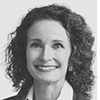
Jayne Reardon is a nationally recognized authority on legal ethics and professionalism who counsels lawyers and legal service providers on ethics, risk management, and regulatory matters. A partner in FisherBroyles' Chicago office, she also serves as the firm's Deputy General Counsel and chairs its Arbitration & Mediation practice. An experienced trial lawyer, she has tried cases in state and federal courts across Illinois, with appellate work reaching the United States Supreme Court, and she speaks nationally on the regulation of law practice, including remote working and the unauthorized practice of law.
On-Demand: September 17, 2026
2 hour CLE
Tuition: $195.00
Co-Sponsored by myLawCLE
Get this course, plus over 1,000+ of live webinars.
Learn More
Training 5 or more people?
Sign-up for a law firm subscription plan and each attorney in the firm receives free access to all CLE Programs
Program Summary
The Rule 5.5 you trained under may not survive the decade
Remote and hybrid practice are now permanent. Firms increasingly expect attorneys to handle matters tied to states where they are not admitted. Rule 5.5 was never built for that reality. It remains a patchwork of inconsistent, state-specific requirements. Meanwhile, a national reform movement is gathering momentum to rewrite the rule itself.
The stakes are already live. Practice where you are not admitted, and Rule 8.5 exposes you to discipline in every jurisdiction where you offer services. Get multijurisdictional practice wrong, and fee forfeiture and even criminal exposure follow. A website disclosure, virtual office, or client email can signal practice where no one is admitted. Remote, multistate staffing adds supervisory duties under Rules 5.1 and 5.3.
You walk out with structures designed to hold up if questioned: intake screening, local-counsel and pro hac vice protocols, disclosure language, internal policies. You also leave with the reform road map — ABA Formal Opinion 495, state remote-practice amendments, APRL’s proposed rewrite, and the ABA Issues Paper. Your structures work under today’s patchwork and under the rules that replace it.
Key topics to be discussed:
- The Patchwork Problem
How permanent remote and hybrid practice collides with Rule 5.5’s inconsistent, state-specific requirements and why that patchwork leaves multistate firms and lawyers exposed. - Where The Work Lives
Whether an attorney’s physical location alone creates unauthorized-practice risk, and how matters governed by another state’s law change the analysis. - Footprints And Supervision
When website disclosures, virtual offices, and client communications signal practice where no one is admitted and the supervisory duties Rules 5.1 and 5.3 impose on remote, multistate staffing. - Defensible Structures
How intake screening, local counsel and pro hac vice protocols, disclosure language, and internal policies position a practice to hold up under both the current patchwork and the rules to come. - Enforcement Stakes
Why reform is urgent now: discipline under Rule 8.5 in every jurisdiction where services are offered, fee forfeiture, and potential criminal exposure. - The Reform Landscape
How ABA Formal Opinion 495, express state remote-practice amendments, APRL’s proposed Rule 5.5 replacement, the ABA Issues Paper’s disclosure-based models, and regulatory sandboxes and new practitioner tiers are reshaping who may deliver legal services and where.
This course is co-sponsored with myLawCLE.
 Closed-captioning available
Speakers
Amy E. Richardson, Shareholder | Maynard Nexsen PC
Amy E. Richardson is a Shareholder in Maynard Nexsen PC’s Litigation and Government Investigations & White-Collar Defense practice groups, practicing from the firm’s Raleigh, North Carolina and Washington, D.C. offices. Her work centers on legal ethics and professional responsibility, white-collar defense, and complex commercial litigation. She counsels and represents lawyers and law firms in disciplinary investigations, prosecutions, malpractice matters, and high-stakes arbitration, and guides legal-industry clients through shareholder admissions and departures and law firm dissolutions.
- Education & Credentials
Ms. Richardson earned her J.D., cum laude, from the Duke University School of Law in 2002, and her B.A. in Communications, summa cum laude, from the University of North Carolina at Chapel Hill in 1998. She is admitted to the state bars of the District of Columbia and North Carolina and served as a law clerk to the Hon. N. Carlton Tilley of the U.S. District Court for the Middle District of North Carolina.
- Recognition & Leadership
Ms. Richardson holds a Band 1 ranking from Chambers USA for North Carolina Litigation, White Collar and Government Investigations. She has been recognized by Business North Carolina’s Legal Elite, Best Lawyers in North Carolina, and North Carolina Super Lawyers, including its Top 100: 2025 North Carolina Super Lawyers and Top 50: Women North Carolina Super Lawyers lists, and was previously named a Rising Star from 2015 to 2017. In 2023 she was named to North Carolina Lawyers Weekly’s Power List for Business Defense, and in 2025 she joined Law360’s Editorial Advisory Board on Legal Ethics.
- Professional Involvement
Beyond her practice, Ms. Richardson serves as an Adjunct Professor at the Georgetown University Law Center and a Senior Lecturing Fellow at the Duke University School of Law, teaching legal ethics and professional responsibility. She co-leads the North Carolina Chapter of the Women’s White Collar Defense Association, chairs the Professional Responsibility Committee of the ABA Business Law Section, and is a member of the Association of Professional Responsibility Lawyers (APRL) and the Federation of Defense & Corporate Counsel (FDCC). Her bar service includes a trusteeship on the North Carolina Bar Client Security Fund Board (2019–2025), the U.S. Court of Appeals for Veterans Affairs Committee on Admissions and Practice (2019–2025), the North Carolina State Bar Ethics Committee (2018–2021), and North Carolina Bar Association leadership as Litigation Council Vice Chair (2019–2020) and Chair (2020–2021) and as a Professionalism Committee Vice Chair (2019–2020) and member (2019–present).
- Experience
Ms. Richardson has presented matters before multiple state bars, federal courts, the USPTO Office of Enrollment and Discipline (OED), and the Office of Professional Responsibility (OPR), and has served as an expert witness offering opinions on legal ethics issues. She handles complex civil cases in federal court, state court, and arbitration proceedings throughout the United States, with matters spanning class actions, multidistrict litigation defense, and frequent trial work, along with communications-technology industry disputes involving the Telephone Consumer Protection Act (TCPA), intercarrier compensation, and access fees. She has successfully represented companies before federal and state regulatory agencies, the Department of Justice, and Offices of Inspector General, helping clients identify and comply with federal regulatory requirements and preparing them for grand jury appearances and trial. Two of her matters have been the subject of documentaries featured on Netflix and Peacock.
Jayne Reardon, Partner, Deputy General Counsel & Chair of Arbitration and Mediation | FisherBroyles, LLP
Jayne Reardon is a nationally recognized authority on legal ethics and professionalism who counsels lawyers and legal service providers on ethics, risk management, and regulatory matters. A partner in FisherBroyles’ Chicago office, she also serves as the firm’s Deputy General Counsel and chairs its Arbitration & Mediation practice. An experienced trial lawyer, she has tried cases in state and federal courts across Illinois, with appellate work reaching the United States Supreme Court, and she speaks nationally on the regulation of law practice, including remote working and the unauthorized practice of law.
- Education & Credentials
Jayne earned her J.D. from the University of Michigan in 1983 and her B.S. from the University of Notre Dame in 1979, and she has completed arbitration and mediation trainings through the Harvard Law School Program on Negotiation. She is admitted to practice in Illinois, before the United States District Court for the Northern District of Illinois, and before the United States Supreme Court.
- Recognition & Leadership
Jayne has been recognized nationally for her work in professional responsibility. She received the Michael Franck Professional Responsibility Award, the highest lifetime honor conferred by the ABA Center for Professional Responsibility, and she was appointed to chair the ABA’s Standing Committee on Professionalism for three consecutive years. She sits on the national rosters of the American Arbitration Association for Commercial and Consumer Arbitration and is a certified neutral in the Early Dispute Resolution Process.
- Professional Involvement
Jayne is active across the organized bar. Within the American Bar Association, she serves on the Law Practice Division’s Ethics & Professional Responsibility Committee and the Working Group on Reforms to Advertising Rules, and she formerly chaired the Center for Professional Responsibility’s Standing Committee on Professionalism. Her memberships also include the Association of Professional Responsibility Lawyers, the Illinois State Bar Association (Section on Alternative Dispute Resolution), the Chicago Bar Association (Professional Responsibility Committee), and the Women’s Bar Association of Illinois, and she previously served on the National Task Force on Lawyer Well-Being. She has delivered hundreds of CLE and other educational programs to law firms, law students, judges, and bar associations across Illinois and nationally, on topics including the unauthorized practice of law, remote working, conflicts of interest, the ethics of technology and artificial intelligence in the legal profession, and reform of legal regulations. Her publications include “Can Bots Commit UPL?” and “Does the Adoption of the Uniform Bar Examination Foreshadow Uniform Regulation.
- Experience
Jayne’s public-service experience includes serving as Executive Director of the Illinois Supreme Court Commission on Professionalism, an organization dedicated to promoting ethics and professionalism among lawyers and judges, and as disciplinary counsel for the Illinois Attorney Registration and Disciplinary Commission. Her prior law firm experience includes Kelley Drye & Warren and Locke Lord (formerly Wildman Harrold Allen & Dixon). At FisherBroyles she practices in arbitration and mediation, commercial litigation, cyber-risk, privacy and data security, legal ethics and professional responsibility, litigation and risk management, and professional and management liability.
Agenda
SESSION 1 – Practicing Across State Lines: Remote Work, Firm Footprints, and Avoiding Unauthorized Practice | 1:00pm – 2:00pm
Remote and hybrid practice are now permanent, and firms increasingly expect attorneys to handle matters tied to states where they are not admitted. Rule 5.5 was never built for this reality and remains a patchwork of inconsistent, state-specific requirements that leaves multistate firms and lawyers exposed. This program maps where the unauthorized-practice lines fall when work crosses jurisdictions. It addresses whether an attorney’s physical location alone creates risk, how matters governed by another state’s law change the analysis, and when a firm’s website disclosures, virtual offices, and client communications inadvertently signal practice where no one is admitted. It also addresses the supervisory responsibility questions that remote, multistate staffing raises under Rules 5.1 and 5.3. Attendees will leave with practical structures, including intake screening, local-counsel and pro hac vice protocols, disclosure language, and internal policies, designed to hold up if a multijurisdictional practice is ever questioned.
BREAK | 2:00pm – 2:10pm
SESSION 2 – The Race to Rewrite Rule 5.5: Reform Proposals, State Experiments, and What Comes Next for Multistate Practice | 2:10pm – 3:10pm
This session addresses how fast those lines are moving—and why the Rule 5.5 most lawyers trained under may not survive the decade. The consequences of getting multijurisdictional practice wrong remain serious, spanning discipline in every jurisdiction where a lawyer offers services under Rule 8.5, fee forfeiture, and potential criminal exposure, and that risk is precisely what is fueling a national reform movement. This session traces that movement from ABA Formal Opinion 495 on remote work through the growing roster of states that have amended their rules to expressly permit out-of-state lawyers to practice remotely from within their borders, to the proposals now on the table to replace Model Rule 5.5 altogether: APRL’s proposed rewrite permitting practice across jurisdictions with client disclosure and competence as the touchstones, and the ABA’s pending Issues Paper weighing competing disclosurebased models. It also situates Rule 5.5 reform within the broader re-regulation of legal services, regulatory sandboxes, alternative business structures, and new practitioner categories—that is reshaping who may deliver legal services and where. Attendees will leave understanding which reforms are likely to reach their states first, how the disclosure-based models would change day-to-day multistate practice, and what firms should build now so their structures work under both the current patchwork and the rules that replace it.
Credits
Alaska
Approved for CLE Credits
2 Ethics
Alabama
Approved for Self-Study Credits
2 Ethics
Arkansas
Approved for CLE Credits
2 Ethics
Arizona
Approved for CLE Credits
2 Professional Responsibility/Ethics
California
Approved for CLE Credits
2 Ethics
Colorado
Approved for Self-Study Credits
2 Ethics / Professionalism
Connecticut
Approved for CLE Credits
2 Ethics / Professionalism
District of Columbia
No MCLE Required
No MCLE Required
Delaware
Pending CLE Approval
2 Enhanced Ethics
Florida
Approved for CLE Credits
2.5 Ethics
Georgia
Approved for CLE Credits
2 Ethics
Hawaii
Approved for CLE Credits
2 Ethics or Professional Responsibility Education
Iowa
Pending CLE Approval
2 Ethics
Idaho
Pending CLE Approval
2 Ethics / Professionalism
Illinois
Approved for Self-Study Credits
2 Ethics
Indiana
Approved For On-Demand Credits
2 Ethics
Kansas
Pending CLE Approval
2 Ethics / Professionalism
Kentucky
Pending CLE Approval
2 Ethics
Louisiana
Pending CLE Approval
2 Ethics
Massachusetts
No MCLE Required
2 CLE Hour(s)
Maryland
No MCLE Required
2 CLE Hour(s)
Maine
Pending CLE Approval
2 General
Michigan
No MCLE Required
2 CLE Hour(s)
Minnesota
Approved for Self-Study Credits
2 Ethics
Missouri
Approved for Self-Study Credits
2.4 Ethics
Mississippi
Pending CLE Approval
2 Ethics
Montana
Pending CLE Approval
2 Professional Fitness and Integrity
North Carolina
Approved for Self-Study Credits
2 Ethics
North Dakota
Approved for CLE Credits
2 Ethics
Nebraska
Pending CLE Approval
2 Professional Responsibility
New Hampshire
Approved for CLE Credits
120 Ethics / Professionalism minutes
New Jersey
Approved for CLE Credits
2 Ethics / Professionalism
New Mexico
Approved for Self-Study Credits
2 Ethics / Professionalism
Nevada
Approved for Self-Study Credits
2 Ethics / Professionalism
New York
Approved for CLE Credits
2 Ethics / Professionalism
Ohio
Approved for Self-Study Credits
2 Professional Conduct
Oklahoma
Pending CLE Approval
2.5 Ethics / Professionalism
Oregon
Pending CLE Approval
2 Ethics
Pennsylvania
Approved for Self-Study Credits
2 Ethics / Professionalism
Rhode Island
Approved for CLE Credits
2 Ethics
South Carolina
Pending CLE Approval
2 Ethics / Professionalism
South Dakota
No MCLE Required
2 CLE Hour(s)
Tennessee
Approved for Self-Study Credits
2 Dual
Texas
Approved for CLE Credits
2 Ethics / Professionalism
Utah
Pending CLE Approval
2 Ethics / Professionalism
Virginia
Approved for Self-Study Credits
2 Ethics / Professionalism Hours
Vermont
Approved for CLE Credits
2 Ethics
Washington
Approved via Attorney Submission
2 Ethics Hours
Wisconsin
Approved for Self-Study Credits
2 General
West Virginia
Pending CLE Approval
2.4 Ethics / Professionalism
Wyoming
Approved for Self-Study Credits
2 Ethics / Professionalism
Preview
More CLE Webinars
Trending CLE Webinars










Upcoming CLE Webinars






















































© 2026 Federal Bar Association