Getting Clients Paid on Construction Projects: Mechanic’s Liens and the New 5% Retainage Caps
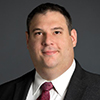
Marc J. Felezzola represents owners, developers, design professionals, and construction companies in mechanics’ lien claims, payment and performance bond claims, and other payment and contract performance disputes.
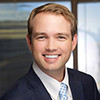
Matthew Rindt represents general contractors, subcontractors, and suppliers in construction payment disputes, including lien claims and bond claims.
Live Video-Broadcast: November 24, 2026
2 hour CLE
Tuition: $195.00
Co-Sponsored by myLawCLE
Get this course, plus over 1,000+ of live webinars.
Learn More
Training 5 or more people?
Sign-up for a law firm subscription plan and each attorney in the firm receives free access to all CLE Programs
Program Summary
The 5% Cap Did Not Reduce Your Client’s Risk. It Moved It
California SB 61, New York SB 5655, and Texas HB 2484 compress statutory retainage from 10% to 5%. The cushion that quietly backstopped payment at every contracting tier is now half its former size.
Miss a preliminary notice and the lien dies before filing. Misstate a furnishing date and the deadline calculation collapses. Leave a licensing gap and claimant eligibility is in play. Courts in Texas, Pennsylvania, New York, Massachusetts, North Carolina, and California have treated these strict-compliance failures as fatal. Commingle project funds and trust-fund diversion exposure follows.
You leave with a lien lifecycle checklist and a red-flag list of the most dangerous error points. You also leave with a three-remedy decision tree for bonds, prompt payment, and trust funds. A contract-review checklist tailored to lower retainage comes with it. These are judgment tools built from audited project files, not doctrine a research prompt can hand you.
Key topics to be discussed:
- Lien Lifecycle Mapping
Build a timeline from first furnishing through foreclosure, then test each preliminary notice for form, timing, service method, and proof of delivery. - Deadlines and Recording
Identify the event that triggers each statutory period and reconcile the claim amount against contracts, change orders, credits, payments, and retainage. - Fatal Defect Triage
Separate curable defects from claim-killing ones with a Texas, Pennsylvania, New York, Massachusetts, North Carolina, and California matrix instead of one state’s cure rules. - Enforcement Across Remedies
Confirm standing, venue, limitations periods, and pre-suit requirements, then sequence lien, bond, prompt-payment, and trust-fund notices without creating inconsistent positions. - Post-Cap Payment Enforcement
Apply California SB 61, New York SB 5655, and Texas HB 2484 to bond claim windows, approval periods, withholding rights, and project-fund accounting duties. - Contract and Client Strategy
Revise retainage, waiver, release, and flow-down clauses to the applicable caps, and counsel owners, contractors, subcontractors, and sureties on their distinct exposure.
This course is co-sponsored with myLawCLE.
Date / Time: November 24, 2026
- 12:00 pm – 2:10 pm Eastern
- 1:00 pm – 1:10 pm Central
- 11:00 am – 12:10 pm Mountain
- 10:00 am – 11:10 am Pacific
 Closed-captioning available
Speakers
Marc J. Felezzola, Shareholder | Babst Calland
Marc J. Felezzola represents owners, developers, design professionals, and construction companies in mechanics’ lien claims, payment and performance bond claims, and other payment and contract performance disputes. He also serves as outside general counsel to construction industry clients and focuses on construction contract review, drafting, and negotiation. A shareholder in Babst Calland’s Litigation and Environmental groups, he concentrates his practice on complex construction-related and environmental matters.
- Education & Credentials
Mr. Felezzola earned his J.D. cum laude from the University of Pittsburgh School of Law in 2011, where he served as Executive Editor on the Editorial Board of the University of Pittsburgh Law Review. He received his B.A. in History from Columbia University in 2005. During law school, he completed an externship with the Honorable Joseph K. Williams of the Court of Common Pleas of Allegheny County and served as a law clerk for an asbestos litigation firm in Pittsburgh and the Neighborhood Legal Services Association. He is licensed to practice in Pennsylvania, West Virginia, and New Jersey, and is admitted before the United States District Courts for the Middle and Western Districts of Pennsylvania, the Northern and Southern Districts of West Virginia, and the District of New Jersey.
- Recognition & Leadership
Mr. Felezzola has been ranked among Pennsylvania’s top construction lawyers in Chambers and Partners’ Chambers USA Guide since 2023. He has been listed in The Best Lawyers in America® for Construction Law and Litigation – Construction since 2026, and received Best Lawyers: Ones to Watch® in America recognition for Commercial Litigation and Litigation – Construction from 2021 to 2025. He was selected to the Pennsylvania Rising Stars lists from 2019 to 2021 and was elected to the Order of the Coif in law school.
- Professional Involvement
Mr. Felezzola is a member of the Allegheny County, Pennsylvania and American Bar associations. His writing and presentations on construction payment include “Lien and Bond Claims: A Subcontractor’s Security Blanket” (The Contractor’s Compass, 2018), “2 Recent Court Opinions Clarify Mechanics’ Lien Claim Practices, Procedures” (The Legal Intelligencer, 2020), and “Pennsylvania Construction Law: Getting Started, Getting Covered, Getting Paid” (PBI Press, 2014).
His recent work on contracts and project risk includes “Subcontractor Methods for Protection from Material Price Escalation” (The Contractor’s Compass, 2026), “What To Look for When Entering a Construction Contract” (The Contractor’s Compass, 2025), “Faulty Wiring: Fraud’s Growing Threat to Construction” (Breaking Ground Magazine, 2026), and “Supply Chain Considerations in Data Center Development” (Shale Power, 2026). He was interviewed by Sue Ostrowski for “3 Steps to Manage the Financial Risks in Your Construction Project” (Smart Business, 2022). His other publications and presentations include “Use of AI-Generative Tools Poses Significant Risk to Attorney-Client Privilege and/or Work-Product Protections” (Babst Calland Firm Alert, 2026), three 2020 pieces on COVID-19 and Pennsylvania construction activity, “Construction Law 2017: The Year in Review” (2018), “P3: The Future of the Construction Industry?” (Foundation Drilling Magazine, 2014), a labor law primer for the 29th Annual Construction Labor Symposium (2013), and a construction law update for the American Bar Association’s Forum on Construction Law (2012).
- Experience
On the construction side of his practice, Mr. Felezzola serves as outside general counsel for owners, developers, design professionals, and construction companies, and frequently represents them in a variety of commercial and construction-related disputes including construction bid protests, construction defect claims, differing site condition claims, delay and inefficiency claims, payment and performance bond claims, mechanics’ lien claims, as well as all other types of payment and contract performance disputes. Mr. Felezzola also specializes in construction contract review, drafting, and negotiation. He has extensive experience preparing and negotiating all forms of construction contracts, from customized forms to standard industry and government agreements, including the contracts of the American Institute of Architects (AIA) and ConsensusDocs.
The other side of Mr. Felezzola’s practice focuses on environmental litigation with an emphasis on contaminated sites and insurance recovery in the environmental context. He has extensive experience representing clients in large-scale cost recovery actions under CERCLA, RCRA, and other environmental statutes. Mr. Felezzola also advises clients on issues related to site remediation and pre-litigation matters involving responses to information requests, notice of liability letters, and enforcement orders from state and federal agencies and assists clients with navigating environmental liability issues and negotiating settlements and consent decrees with those agencies.
Mr. Felezzola has litigated on behalf of his clients before Pennsylvania, New Jersey, West Virginia, Ohio, and New York state trial level courts, the appellate courts of Pennsylvania, United States Federal District Courts throughout the country, and the United States Court of Appeals for the Third Circuit. Additionally, Mr. Felezzola has experience representing clients in disputes resolved by the American Arbitration Association, JAMS, and other private dispute resolution forums.
Matthew Rindt, Partner | Gerstle Snelson, LLP
Matthew Rindt represents general contractors, subcontractors, and suppliers in construction payment disputes, including lien claims and bond claims. His work for construction industry clients also covers assessing and managing risk, negotiating contracts, evaluating construction documents, and resolving claims. He litigates and arbitrates construction defect, delay, and wrongful termination matters, and handles construction transactional work alongside them. He grew up in the construction industry and works from a first-hand familiarity with the nuances of ground-up construction projects.
- Education & Credentials
Mr. Rindt earned his J.D. from Texas Tech University School of Law in 2015. He received his B.A. from Baylor University in 2012, graduating magna cum laude. He was admitted to the State Bar of Texas in 2015, and is admitted before the United States Southern, Western, and Northern District Courts.
- Recognition & Leadership
Mr. Rindt is Board Certified in Construction Law. He was elected to Phi Beta Kappa as an undergraduate at Baylor University. His legal scholarship includes The Texas Conservation Paradox: An Analysis of Texas Conservation Strategies and Their Accessibility to the General Population, 15 Texas Tech Admin. L. J. 355.
- Professional Involvement
Mr. Rindt is a member of the Construction Law Section of the State Bar of Texas. He is also a member of the Dallas Young Lawyer Association. His areas of practice are construction law, insurance law, and professional liability.
- Experience
Mr. Rindt’s primary practice is the representation of general contractors, subcontractors, and suppliers in construction litigation and arbitration. He regularly handles payment disputes for clients in the construction industry, including lien and bond claims, and advises those clients on assessing and managing risk, negotiating contracts, and evaluating construction documents. His litigation and arbitration matters include construction defect claims, delay claims, and wrongful termination, through to resolution. He also handles construction transactional matters, informed by a career that began in the construction industry itself.
Agenda
SESSION 1 – Perfecting and Enforcing the Mechanic’s Lien: Notices, Deadlines, and Fatal Defects | 12:00pm – 1:00pm
This session walks attorneys through the complete mechanic’s lien perfection and enforcement process, from potential prohibitory contract language to avoid, to preliminary notice requirements through lien foreclosure, with emphasis on the procedural defects that courts have held are fatal to recovery. Attendees will learn how courts in Pennsylvania, New York, Massachusetts, North Carolina, and California, among others, are treating strict-compliance failures, licensing gaps, incorrect furnishing dates, and filing missteps. Attorneys will leave with a working checklist of the most dangerous error points in the lien lifecycle and a framework for spotting and correcting defects before they become case-dispositive.
BREAK | 1:00pm – 1:10pm
SESSION 2 – Payment Bonds, Prompt-Payment Acts, and Trust Funds After the 2026 Retainage Caps | 1:10pm – 2:10pm
Explain why payment bonds, prompt-payment statutes, and construction trust funds become more important as statutory retainage caps decrease from 10% to 5%. Assess the combined effects of California SB 61, New York SB 5655, and Texas HB 2484 on owners, general contractors, subcontractors, and sureties. Update contract administration practices to account for reduced payment security and heightened enforcement obligations. Build a coordinated strategy for preserving overlapping payment remedies.
Credits
Alaska
Approved for CLE Credits
2 General
Alabama
Approved for CLE Credits
2 General
Arkansas
Approved for CLE Credits
2 General
Arizona
Approved for CLE Credits
2 General
California
Approved for CLE Credits
2 General
Colorado
Pending CLE Approval
2 General
Connecticut
Approved for CLE Credits
2 General
District of Columbia
No MCLE Required
2 CLE Hour(s)
Delaware
Pending CLE Approval
2 General
Florida
Approved via Attorney Submission
2 General Hours
Georgia
Approved for CLE Credits
2 General
Hawaii
Approved for CLE Credits
2 General
Iowa
Pending CLE Approval
2 General
Idaho
Pending CLE Approval
2 General
Illinois
Approved for CLE Credits
2 General
Indiana
Approved for CLE Credits
2 General
Kansas
Pending CLE Approval
2 Substantive
Kentucky
Pending CLE Approval
2 General
Louisiana
Pending CLE Approval
2 General
Massachusetts
No MCLE Required
2 CLE Hour(s)
Maryland
No MCLE Required
2 CLE Hour(s)
Maine
Pending CLE Approval
2 General
Michigan
No MCLE Required
2 CLE Hour(s)
Minnesota
Pending CLE Approval
2 General
Missouri
Approved for CLE Credits
2.4 General
Mississippi
Pending CLE Approval
2 General
Montana
Pending CLE Approval
2 General
North Carolina
Pending CLE Approval
2 General
North Dakota
Approved for CLE Credits
2 General
Nebraska
Pending CLE Approval
2 General
New Hampshire
Approved for CLE Credits
120 General minutes
New Jersey
Approved for CLE Credits
2 General
New Mexico
Approved for CLE Credits
2 General
Nevada
Approved for CLE Credits
2 General
New York
Approved for CLE Credits
2 General
Ohio
Approved for CLE Credits
2 General
Oklahoma
Pending CLE Approval
2.5 General
Oregon
Pending CLE Approval
2 General
Pennsylvania
Approved for CLE Credits
2 General
Rhode Island
Pending CLE Approval
2.5 General
South Carolina
Pending CLE Approval
2 General
South Dakota
No MCLE Required
2 CLE Hour(s)
Tennessee
Approved for CLE Credits
2 General
Texas
Approved for CLE Credits
2 General
Utah
Pending CLE Approval
2 General
Virginia
Not Eligible
2 General Hours
Vermont
Approved for CLE Credits
2 General
Washington
Approved via Attorney Submission
2 Law & Legal Hours
Wisconsin
Pending CLE Approval
2 General
West Virginia
Pending CLE Approval
2.4 General
Wyoming
Pending CLE Approval
2 General
More CLE Webinars
Trending CLE Webinars










Upcoming CLE Webinars
















































© 2026 Federal Bar Association