Defending Employment Claims from AI-Armed Pro Se Plaintiffs: Agency Charge Through Settlement
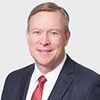
Joseph C. O’Keefe is a first-chair employment trial lawyer in Faegre Drinker’s New York office with more than 30 years of experience representing employers in complex disputes, including class actions and multidistrict litigation.

Deborah Brouwer is the managing partner and majority owner of Nemeth Bonnette Brouwer PC, a Detroit-based, woman-owned firm that has represented management exclusively in labor and employment disputes for more than 30 years.
On-Demand: October 2, 2026
2 hour CLE
Tuition: $195.00
Co-Sponsored by myLawCLE
Get this course, plus over 1,000+ of live webinars.
Learn More
Training 5 or more people?
Sign-up for a law firm subscription plan and each attorney in the firm receives free access to all CLE Programs
Program Summary
A Polished Complaint No Longer Means a Lawyer — or a Case
General-purpose AI writing tools have changed pro se employment litigation. Plaintiffs without counsel now file EEOC charges and federal complaints that read as lawyer-drafted: formulaic language, precise legal terminology, boilerplate adverse-action checklists. The polish is new; the legal hollowness underneath often is not.
Miss the AI hallmarks, and a hollow charge gets answered as if it had merit. Skip a facial-deficiency dismissal request, and the investigation runs on. Overlook fabricated citations and invented case names, and Rule 11 leverage is lost. Treat discovery as routine, and costs outrun Rule 26(b)(1) proportionality. Value the case on old math, and the persistence premium eats the reserve.
This two-session program converts the shift into work product: frameworks for targeted position statements, checklists for building a dispositive motion record, and revised settlement valuation approaches. It adds the ethical guardrails — Model Rules 3.3 and 4.3 — and the litigation-hold, HR early case assessment, and EPLI reporting practices AI-assisted charges now demand.
Key topics to be discussed:
- The AI Pro Se Surge
Volume data on the AI-accelerated rise in pro se filings, employer exposure, and how pro se plaintiffs are actually using AI tools. - Spotting AI-Drafted Filings
AI hallmarks in EEOC charges — formulaic language, inapplicable protected classes, boilerplate adverse-action checklists — hallucination red flags, and distinguishing AI-drafted from attorney-assisted filings for Rule 11 strategy. - Agency-Stage Response
Position statements, exhaustion defenses, EEOC investigator dynamics, AI-drafted rebuttals, dismissal requests for facially deficient charges, and AI-generated mediation demand packages. - Federal Court Defenses
Rule 11 motions, AI disclosure orders and standing orders on AI use, sanctions precedent, and 12(b)(6) strategies for AI-polished but legally deficient complaints. - Discovery Through Settlement
Proportionality objections and protective orders, discoverability of plaintiff AI prompts and outputs, the summary judgment evidence gap, and persistence-premium settlement valuation. - Ethics and Client Management
Candor to the tribunal under Model Rule 3.3, Model Rule 4.3 boundaries with unrepresented persons, defense counsel’s own AI-use disclosure, litigation holds, HR early case assessment, and EPLI reporting.
This course is co-sponsored with myLawCLE.
Date / Time:
 Closed-captioning available
Speakers
Joseph C. O’Keefe, Partner | Faegre Drinker Biddle & Reath LLP
Joseph C. O’Keefe is a first-chair employment trial lawyer in Faegre Drinker’s New York office with more than 30 years of experience representing employers in complex disputes, including class actions and multidistrict litigation. He counsels employers on the integration of artificial intelligence in the workplace, the emerging AI regulatory framework, and the related risk management and legal issues.
- Education & Credentials
Joe earned his J.D. from George Washington University Law School in 1991 and his B.A. in Political Science from the College of the Holy Cross in 1988. He is admitted to the bars of New York and New Jersey, the U.S. Courts of Appeals for the Second and Third Circuits, and the U.S. District Courts for the District of New Jersey, the Eastern and Southern Districts of New York, and the Eastern District of Michigan.
- Recognition & Leadership
Best Lawyers in America has recognized Joe for Employment Law – Management (2023–2026). Benchmark Litigation named him among its Labor & Employment Stars (2019–2021, 2024), and The Legal 500 United States recommended him for labor and employment disputes defense (2019–2021) and trade secrets litigation (2021). He has also been listed by Super Lawyers (2015–2017, 2024) and received The Legal Aid Society’s Pro Bono Award (2006–2007).
- Professional Involvement
Joe is a member of the American Bar Association and a frequent speaker and author on artificial intelligence in the workplace, with co-authored pieces in Law360, Bloomberg Law, Westlaw Today, and Global Legal Insights, and firm CLE webinars on AI at work in 2025 and 2026. His pro bono practice includes amicus representations in matters involving gun safety, voter disenfranchisement, and DHS rules concerning student visas.
- Experience
Joe has taken employment matters to defense verdicts, decisions, and awards before judges, juries, and FINRA and AAA arbitral tribunals across the country. Representative results include a two-week jury trial victory in the District of New Jersey, a defense verdict in an eight-week New Jersey Superior Court jury trial, summary judgment in a gender discrimination and sexual harassment suit affirmed by the Second Circuit, and dismissals affirmed by the New York Court of Appeals and the Appellate Division. His class and collective work spans pay equity, wage and hour, and discrimination claims for clients in financial services, higher education, pharmaceuticals, health care, technology, and other sectors.
Deborah Brouwer, Managing Partner | Nemeth Bonnette Brouwer PC
Deborah Brouwer is the managing partner and majority owner of Nemeth Bonnette Brouwer PC, a Detroit-based, woman-owned firm that has represented management exclusively in labor and employment disputes for more than 30 years. Her practice centers on defending employers against claims of race, age, religion, national origin, gender, and disability discrimination, harassment, and retaliation, as well as FLSA, FMLA, and non-competition suits.
- Education & Credentials
Deborah earned her Juris Doctor from Wayne State University School of Law in 1980, her Master of Arts from the University of Michigan in 1975, and her Bachelor of Arts, With Distinction, from the University of Michigan in 1973. She holds Martindale-Hubbell’s AV rating, the peer-review system’s highest rating for legal ability and ethics (2023). Deborah holds Martindale-Hubbell’s AV rating, the peer-review system’s highest rating for legal ability and ethics (2023).
- Recognition & Leadership
Deborah has been named to Best Lawyers in America (2021 and 2022) and repeatedly selected as a Michigan Super Lawyer. DBusiness has listed her among its Top Lawyers in appellate law (2020) and in labor and employment law (2022 and 2023). Crain’s Detroit Business recognized her as a Notable Woman in Law (2019) and a Notable Leader in Employment and Labor Law (2023), and Michigan Lawyers Weekly named her a Go-To Lawyer in business law (2020) and to its Women in the Law class (2018).
- Professional Involvement
Deborah is a frequent commentator on EEOC enforcement, including Law360 coverage of the agency’s information requests to the University of Pennsylvania and its suit against a Coca-Cola distributor. She provides employer training, delivers harassment prevention and civility programs, and conducts workplace investigations on behalf of employers.
- Experience
Before joining the firm, Deborah spent twenty years as in-house counsel at the UAW Legal Services Plan, building depth in traditional labor law, ERISA benefits litigation, employment discrimination claims, and legal malpractice defense. She has appeared before administrative agencies including the EEOC, MDCR, MIOSHA, OSHA, and the NLRB, appears frequently before the Michigan Court of Appeals and the Sixth Circuit Court of Appeals, and purchased the firm with partner Terry Bonnette in January 2020, renaming it Nemeth Bonnette Brouwer in 2022.
Agenda
SESSION 1 – Responding to AI-Drafted Pro Se Charges and Complaints in Employment Cases | 12:00pm – 1:00pm
This session equips employment defense attorneys with tactical tools to identify, challenge, and respond to AI-drafted pro se EEOC charges and federal complaints. Attendees will learn how AI is reshaping the volume and surface quality of pro se filings, what structural patterns betray AI-generated charges and complaints, and how to deploy Rule 11 motions, AI disclosure rules, sanctions precedent, and discovery demands to level the litigation field. Attorneys will leave able to spot AI hallmarks at the charge stage, craft targeted position statements, and file dispositive motions that expose the legal deficiencies lurking beneath polished AI-generated language.
BREAK | 1:00pm – 1:10pm
SESSION 2 – Discovery Control, Summary Judgment, and Settlement Valuation in AI-Assisted Pro Se Employment Cases | 1:10pm – 2:10pm
This session equips defense-side employment attorneys with tactical frameworks for managing discovery, building a dispositive motion record, and recalibrating settlement strategy when facing pro se plaintiffs who use AI tools. Attorneys will learn how to identify AI-assisted filings, deploy proportionality objections and protective orders, exploit the gap between AI-generated legal arguments and admissible evidence at summary judgment, and construct revised settlement valuations that account for the persistence premium and inflated costs these plaintiffs create. By the end of this session, attendees will be able to apply concrete, court-tested strategies from sanctions precedent through settlement to AI-assisted pro se employment litigation.
Credits
Alaska
Approved for CLE Credits
2 General
Alabama
Approved for Self-Study Credits
2 General
Arkansas
Approved for CLE Credits
2 General
Arizona
Approved for CLE Credits
2 General
California
Approved for CLE Credits
2 General
Colorado
Pending CLE Approval
2 General
Connecticut
Approved for CLE Credits
2 General
District of Columbia
No MCLE Required
2 CLE Hour(s)
Delaware
Pending CLE Approval
2 General
Florida
Approved for CLE Credits
2.5 General
Georgia
Approved for CLE Credits
2 General
Hawaii
Approved for CLE Credits
2 General
Iowa
Pending CLE Approval
2 General
Idaho
Pending CLE Approval
2 General
Illinois
Approved for Self-Study Credits
2 General
Indiana
Approved For On-Demand Credits
2 General
Kansas
Pending CLE Approval
2 Substantive
Kentucky
Pending CLE Approval
2 General
Louisiana
Pending CLE Approval
2 General
Massachusetts
No MCLE Required
2 CLE Hour(s)
Maryland
No MCLE Required
2 CLE Hour(s)
Maine
Pending CLE Approval
2 General
Michigan
No MCLE Required
2 CLE Hour(s)
Minnesota
Pending CLE Approval
2 General
Missouri
Approved for Self-Study Credits
2.4 General
Mississippi
Pending CLE Approval
2 General
Montana
Pending CLE Approval
2 General
North Carolina
Pending CLE Approval
2 General
North Dakota
Approved for CLE Credits
2 General
Nebraska
Pending CLE Approval
2 General
New Hampshire
Approved for CLE Credits
120 General minutes
New Jersey
Approved for CLE Credits
2 General
New Mexico
Approved for Self-Study Credits
2 General
Nevada
Approved for Self-Study Credits
2 General
New York
Approved for CLE Credits
2 General
Ohio
Approved for Self-Study Credits
2 General
Oklahoma
Pending CLE Approval
2.5 General
Oregon
Pending CLE Approval
2 General
Pennsylvania
Approved for Self-Study Credits
2 General
Rhode Island
Pending CLE Approval
2.5 General
South Carolina
Pending CLE Approval
2 General
South Dakota
No MCLE Required
2 CLE Hour(s)
Tennessee
Approved for Self-Study Credits
2 General
Texas
Approved for CLE Credits
2 General
Utah
Pending CLE Approval
2 General
Virginia
Not Eligible
2 General Hours
Vermont
Approved for CLE Credits
2 General
Washington
Approved via Attorney Submission
2 Law & Legal Hours
Wisconsin
Approved for Self-Study Credits
2 General
West Virginia
Pending CLE Approval
2.4 General
Wyoming
Pending CLE Approval
2 General
Preview
More CLE Webinars
Trending CLE Webinars









Upcoming CLE Webinars












































© 2026 Federal Bar Association