Defending the College Athlete Against the Revenue-Share Buyout Demand

Andrew John (AJ) Rudowitz has built a national sports law practice representing professional athletes and coaches, universities, NIL collectives and agencies, and sports-related companies, and he is particularly sought after for disputes and investigations at the intersection of athletics, compliance, and commercial risk
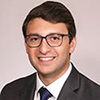
Bryan N. Shapiro draws on his background as a former collegiate basketball player to advise stakeholders across the sports and gaming industries, and he authors articles on the wide range of issues affecting professional and collegiate sports, including NIL rights and their implications for scholarships and revenue for students and schools.
On-Demand: October 7, 2026
2 hour CLE
Tuition: $195.00
Co-Sponsored by myLawCLE
Get this course, plus over 1,000+ of live webinars.
Learn More
Training 5 or more people?
Sign-up for a law firm subscription plan and each attorney in the firm receives free access to all CLE Programs
Program Summary
The Buyout Clause Has Become the School's Enforcement Weapon
The House settlement framework rewired college athletics. Schools now sign athletes to revenue-share and NIL agreements loaded with buyout and transfer-restriction language. The first wave of enforcement litigation has arrived. Live disputes such as UGAA v. Wilson and Duke v. Mensah are testing these clauses in real time.
The stakes escalate fast. A school demands a buyout, then retains the athlete's unpaid contract funds anyway. An eighteen-year-old signs a multi-year form contract without independent advice, and the clause follows the transfer. TRO applications and portal-entry blocks turn timing into leverage. A missed CSC clearance can undermine the entire enforcement position.
Attendees leave with practitioner work product, not a doctrine recap. The program delivers a framework for deconstructing school-drafted liquidated damages clauses under Restatement § 356. It maps procedural attacks on the arbitration clause itself. It shows how to convert a one-sided demand into a forum where the athlete holds real leverage.
Key topics to be discussed:
- The New Buyout Landscape
How live cases under the House settlement framework reshape athlete transfer disputes. - Penalty Clause Doctrine
Attacking school-drafted buyouts as unenforceable penalties rather than legitimate liquidated damages. - Unconscionability and Non-Compete Defenses
Deploying unconscionability, adhesion arguments, and state non-compete statutes against transfer restrictions. - Procedural Arbitration Attacks
Defeating the arbitration clause through standing, assignment, and contract-formation challenges. - Counter-Leverage Strategies
Converting counterclaims and TRO opposition into leverage while avoiding common defense mistakes. - CSC Compliance Angles
Using CSC arbitration and clearance failures as both shield and sword.
This course is co-sponsored with myLawCLE.
 Closed-captioning available
Speakers
Andrew John (AJ) Rudowitz, Partner | Duane Morris LLP
Andrew John (AJ) Rudowitz has built a national sports law practice representing professional athletes and coaches, universities, NIL collectives and agencies, and sports-related companies, and he is particularly sought after for disputes and investigations at the intersection of athletics, compliance, and commercial risk. A partner in Duane Morris LLP’s Trial Practice Group in Philadelphia, he is a seasoned trial lawyer who has served as first chair in jury trials, bench trials, and arbitrations, and his broader practice spans complex commercial disputes, antitrust and competition litigation, white-collar criminal defense, non-compete and trade secret litigation, and False Claims Act matters. A former collegiate and professional basketball player who spent four years playing professionally in Germany, he also conducts internal investigations for higher education institutions and other organizations.
- Education & Credentials
Mr. Rudowitz earned his J.D., summa cum laude, from Temple University Beasley School of Law in 2017, where he served as Articles Editor of the Temple Law Review, and he received his undergraduate degree from Stonehill College in 2010. During law school he was a judicial intern to the Honorable Juan R. Sánchez of the U.S. District Court for the Eastern District of Pennsylvania. He is admitted to practice in Pennsylvania and before the U.S. District Courts for the Eastern and Middle Districts of Pennsylvania and the Northern and Southern Districts of Indiana.
- Recognition & Leadership
Mr. Rudowitz was selected by the Philadelphia Business Journal as a 2026 “40 Under 40” honoree and was named a 2025 “Lawyer on the Fast Track” large firm honoree by The Legal Intelligencer’s Pennsylvania Legal Awards. He has been named to Best Lawyers “Ones to Watch” from 2023 through 2027. He is currently an adjunct professor of Sports Law at New York University, where he teaches on the legal and business issues shaping modern athletics.
- Professional Involvement
Mr. Rudowitz speaks frequently on college athletics and NIL, including on the representation of college athletes at the Temple Law Review Symposium on the changing landscape of college athletics, on the attorney-athlete relationship at the Brooklyn Law School Sports Law Symposium, and on NIL at the New York Intellectual Property Law Association IP Transactions Bootcamp. A contributor to the Duane Morris Sports Law and Antitrust Law blogs, he has co-authored client alerts on the federal court approval of the House v. NCAA settlement, Title IX guidance concerning NIL and revenue-sharing compensation, the enforceability of NIL deals, and NCAA transfer rule changes. He is a member of the American Bar Association, the Pennsylvania Bar Association, and the Philadelphia Bar Association, and is active in Duane Morris’s Pro Bono Program with a focus on Veterans’ Rights and Juvenile Lifers Without Parole matters.
- Experience
Mr. Rudowitz represented Temple University football defensive tackle Sekou Kromah in securing a preliminary injunction against the NCAA allowing Kromah to compete during the 2026-27 season, after filing a complaint contending that students who graduated high school in 2022 were arbitrarily excluded from the NCAA rule change granting five years of eligibility. He represented a former professional football player in successfully obtaining summary judgment on all claims with an award of punitive damages, and he has tried multi-day arbitration hearings involving a pharmaceutical manufacturing plant sale and a clean energy technology exclusivity dispute. His practice also includes representing clients before the U.S. Department of Justice, the Federal Trade Commission, and other state and federal agencies, including the defense of a former pharmaceutical executive against monopolization claims under the Sherman Act and the representation of health systems in restrictive covenant and unfair competition litigation.
Bryan N. Shapiro, Senior Associate | Duane Morris LLP
Bryan N. Shapiro draws on his background as a former collegiate basketball player to advise stakeholders across the sports and gaming industries, and he authors articles on the wide range of issues affecting professional and collegiate sports, including NIL rights and their implications for scholarships and revenue for students and schools. A member of Duane Morris LLP’s Trial Practice Group in Philadelphia, he focuses his practice on complex commercial disputes, antitrust and competition litigation, white-collar criminal defense, non-compete and trade secrets matters, and False Claims Act cases, with extensive experience in expedited and non-expedited proceedings in federal and state courts nationwide and an emphasis on non-competition agreements, restrictive covenants, trade secrets, and unfair competition litigation. As a member of the firm’s Gaming Industry Group, he advises clients on the regulatory landscape governing commercial gaming and sports law, including sports wagering operators and other industry stakeholders.
- Education & Credentials
Mr. Shapiro is a 2020 magna cum laude graduate of Temple University Beasley School of Law, where he served as Note/Comment Editor of the Temple Law Review and was elected to the Order of the Coif, and a magna cum laude graduate of Washington College. Prior to joining the firm, he served as law clerk to the Honorable Cynthia M. Rufe of the U.S. District Court for the Eastern District of Pennsylvania. He is admitted to practice in Pennsylvania and before the U.S. District Court for the Eastern District of Pennsylvania.
- Recognition & Leadership
Mr. Shapiro was named a Super Lawyers Business Litigation Rising Star in 2025 and was named to Best Lawyers “Ones to Watch” in 2024 and 2025. He is currently an adjunct professor of Sports Law at New York University.
- Professional Involvement
Mr. Shapiro is a contributor to the Duane Morris Sports Law and Antitrust Law blogs and has co-authored client alerts on the federal court approval of the House v. NCAA settlement, the Title IX implications of the NCAA settlement on NIL, NCAA transfer rule changes, and state and federal developments in noncompetition law. He has been quoted on college athlete pay disputes and sports investment in Law360, The Detroit News, and The Philadelphia Inquirer. He serves as a child advocate attorney with the Support Center for Child Advocates in Philadelphia and is a NextGen Committee member of Philadelphia Youth Basketball.
- Experience
Mr. Shapiro’s litigation experience centers on restrictive covenant and non-compete enforcement disputes, including obtaining a consent injunction on behalf of Power Home Remodeling Group against former sales representatives, a consent injunction on behalf of Ricoh USA following a grant of summary judgment, denial of a temporary restraining order sought against a former underwriter in NSM Insurance Group v. Nasman, a preliminary injunction on behalf of an HR consulting company in PeopleStrategy, Inc. v. Lively Employer Services, and assistance to the trial team that obtained an $8 million verdict, including punitive damages, for Aramark and its subsidiary. He also defends gaming industry clients in consumer disputes, False Claims Act litigation, and state enforcement actions, and advises on sports betting and gaming compliance, licensing, and multi-jurisdictional proceedings.
Agenda
SESSION 1 – Attacking the Liquidated Damages Clause in the Athlete’s Buyout Defense | 2:30pm – 3:30pm
This session examines how defense counsel can challenge liquidated damages clauses in college athlete NIL and revenue-share buyout agreements, drawing on the first wave of litigation under the House settlement framework. Attorneys will analyze the penalty-vs.-liquidated-damages doctrine, unconscionability and adhesion contract arguments, non-compete statute overlaps, and offensive counterclaim strategies. Attendees will leave with a practical framework for deconstructing school-drafted buyout clauses and protecting athlete mobility rights in active and anticipated disputes.
BREAK | 3:30pm – 3:40pm
SESSION 2 – Arbitration Fights and Counter-Leverage in the Athlete’s Buyout Defense | 3:40pm – 4:40pm
This session examines how defense counsel can fight—and exploit—the arbitration process in college athlete revenue-share buyout disputes. Attorneys will analyze procedural defenses to arbitration clauses, affirmative counterclaim strategies drawn from live cases such as UGAA v. Wilson and Duke v. Mensah, and non-litigation counter-leverage tactics including CSC compliance arguments, employment-classification theories, and restraint-of-trade challenges. Attendees will leave with a practical framework for converting an arbitration demand from a one-sided enforcement tool into a forum where the athlete holds meaningful leverage.
Credits
Alaska
Approved for CLE Credits
2 General
Alabama
Approved for Self-Study Credits
2 General
Arkansas
Approved for CLE Credits
2 General
Arizona
Approved for CLE Credits
2 General
California
Approved for CLE Credits
2 General
Colorado
Pending CLE Approval
2 General
Connecticut
Approved for CLE Credits
2 General
District of Columbia
No MCLE Required
2 CLE Hour(s)
Delaware
Pending CLE Approval
2 General
Florida
Pending CLE Approval
2 General
Georgia
Approved for CLE Credits
2 General
Hawaii
Approved for CLE Credits
2 General
Iowa
Pending CLE Approval
2 General
Idaho
Pending CLE Approval
2 General
Illinois
Pending CLE Approval
2 General
Indiana
Approved For On-Demand Credits
2 General
Kansas
Pending CLE Approval
2 Substantive
Kentucky
Pending CLE Approval
2 General
Louisiana
Pending CLE Approval
2 General
Massachusetts
No MCLE Required
2 CLE Hour(s)
Maryland
No MCLE Required
2 CLE Hour(s)
Maine
Pending CLE Approval
2 General
Michigan
No MCLE Required
2 CLE Hour(s)
Minnesota
Pending CLE Approval
2 General
Missouri
Approved for Self-Study Credits
2.4 General
Mississippi
Pending CLE Approval
2 General
Montana
Pending CLE Approval
2 General
North Carolina
Pending CLE Approval
2 General
North Dakota
Approved for CLE Credits
2 General
Nebraska
Pending CLE Approval
2 General
New Hampshire
Approved for CLE Credits
120 General minutes
New Jersey
Approved for CLE Credits
2 General
New Mexico
Approved for Self-Study Credits
2 General
Nevada
Pending CLE Approval
2 General
New York
Approved for CLE Credits
2 General
Ohio
Approved for Self-Study Credits
2 General
Oklahoma
Pending CLE Approval
2.5 General
Oregon
Pending CLE Approval
2 General
Pennsylvania
Approved for Self-Study Credits
2 General
Rhode Island
Pending CLE Approval
2.5 General
South Carolina
Pending CLE Approval
2 General
South Dakota
No MCLE Required
2 CLE Hour(s)
Tennessee
Approved for Self-Study Credits
2 General
Texas
Approved for CLE Credits
2 General
Utah
Pending CLE Approval
2 General
Virginia
Not Eligible
2 General Hours
Vermont
Approved for CLE Credits
2 General
Washington
Approved via Attorney Submission
2 Law & Legal Hours
Wisconsin
Approved for Self-Study Credits
2 General
West Virginia
Pending CLE Approval
2.4 General
Wyoming
Pending CLE Approval
2 General
Preview
More CLE Webinars
Trending CLE Webinars










Upcoming CLE Webinars
















































© 2026 Federal Bar Association