Commercial Arbitration: Federal Jurisdiction, Arbitrability, and Federal Arbitration Act Vacatur Risks
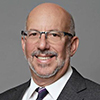
Steven M. Bauer serves as a JAMS neutral resolving complex commercial disputes in the life sciences, technology, and intellectual property fields, including disputes arising from R&D collaborations, licensing agreements, and IP litigation.

Richard A. Bales serves as an arbitrator in commercial, labor, employment, and consumer disputes and is a member of the National Academy of Arbitrators.
Live Video-Broadcast: October 23, 2026
2 hour CLE
Tuition: $195.00
Co-Sponsored by myLawCLE
Get this course, plus over 1,000+ of live webinars.
Learn More
Training 5 or more people?
Sign-up for a law firm subscription plan and each attorney in the firm receives free access to all CLE Programs
Program Summary
Most commercial arbitrations are won or lost outside the merits
Badgerow v. Walters closed the federal courthouse door to many petitions to confirm or vacate. Smith v. Spizzirri changed what a court does with the case that remains. Coinbase v. Suski left contracting parties fighting over which agreement decides arbitrability.
Draft two agreements with inconsistent forum clauses and you litigate arbitrability before anyone reaches the dispute. Miss a disclosure and evident partiality follows the award. Write conclusions without reasoning and FAA § 10(a) supplies the challenge, with a live manifest-disregard circuit split behind it.
You leave with a method for preserving federal jurisdiction and a disclosure-review routine under the AAA and JAMS rules. You also leave with hearing orders that protect the record and a pre-issuance stress test for the award. These are judgment calls a model cannot make for you.
Key topics to be discussed:
- Preserving Federal Jurisdiction
Apply Badgerow v. Walters, Smith v. Spizzirri, and Jules v. Andre Balazs Properties to determine whether a petition to compel arbitration, or to confirm or vacate an award, belongs in federal court. - Who Decides Arbitrability
Use Coinbase v. Suski to work through related contracts carrying inconsistent arbitration and forum-selection provisions, and draft so the question never becomes preliminary litigation. - Arbitrator Selection and Disclosures
Rank candidates, evaluate qualifications, and investigate disclosures under the AAA and JAMS procedures, with evident partiality and the durability of the award in view. - Preserving a Reviewable Arbitration Record
Identify objections, procedural rulings, evidentiary disputes, credibility determinations, and other issues that should be preserved for potential judicial review, while avoiding unnecessary expansion of the record. - AI, Confidentiality, and Award Integrity
Evaluate AI-assisted advocacy and award preparation, protect confidential arbitration materials, consider when arbitrator AI use should be disclosed, and assess the reliability and authenticity of AI-generated or altered evidence. - Reasoned Awards and Vacatur
Determine when a reasoned award is required, identify the findings and explanations necessary to support the result, and stress-test the award against FAA § 10(a), evident partiality, excess-of-authority arguments, due-process challenges, and the continuing circuit split over manifest disregard.
This course is co-sponsored with myLawCLE.
Date / Time: October 23, 2026
- 12:00 pm – 2:10 pm Eastern
- 11:00 pm – 1:10 pm Central
- 10:00 am – 12:10 pm Mountain
- 9:00 am – 11:10 am Pacific
 Closed-captioning available
Speakers
Steven M. Bauer, Esq., FCIArb, Neutral | JAMS
Steven M. Bauer serves as a JAMS neutral resolving complex commercial disputes in the life sciences, technology, and intellectual property fields, including disputes arising from R&D collaborations, licensing agreements, and IP litigation. His practice is national and international, involving parties from around the world, with cases administered by JAMS, AAA/ICDR, and the ICC. He sits as arbitrator, mediator, court-appointed neutral, referee, special master, neutral evaluator, and hearing officer, working from Boston and London. His subject matter spans biotechnology, medical devices, semiconductors, telecommunications, encryption, artificial intelligence, and advanced materials.
- Education & Credentials
Bauer earned a B.S. in electrical engineering on the life sciences track from MIT in 1979 and an M.S. in electrical engineering and computer science from MIT in 1980. He received his J.D., cum laude, from Boston University School of Law in 1983, and then served as law clerk and technical advisor to Senior Judge Philip Nichols Jr. of the U.S. Court of Appeals for the Federal Circuit from 1983 to 1984. He is a Fellow of the Chartered Institute of Arbitrators and a Fellow of the College of Commercial Arbitrators. His technical training also covers biomedical systems.
- Recognition & Leadership
Bauer chairs the ADR Committee of the International Association for the Protection of Intellectual Property, a role he has held since 2012, and serves on the Board of Directors of the Silicon Valley Arbitration & Mediation Center, where he has also served as Treasurer and Secretary. Chambers USA ranked him in Band 1 for Massachusetts intellectual property from 2004 through 2020, and Chambers Global recognized him in USA Intellectual Property: Patents in 2020. Further recognition includes IAM IP Global Leader (2020), Best Lawyers in America (2007–2025), Benchmark Litigation Star (2011–2021), Massachusetts Super Lawyers including its Top 100 Lawyers list (2006–2020), Acritas Star Lawyer (2018–2020), The Legal 500 United States for commercial litigation (2015–2017), and Global Law Experts’ Technology Litigation Attorney of the Year in Massachusetts (2015).
- Professional Involvement
He is an admitted neutral of the Unified Patent Court’s Patent Mediation and Arbitration Centre for the 2026–2031 term and a Distinguished Panelist of the International Institute for Conflict Prevention & Resolution. He serves on the ADR panel of the World Intellectual Property Organization and appears on the Silicon Valley Arbitration & Mediation Center’s Tech List. He has served the Boston Patent Law Association as co-chair of its antitrust and litigation committees, the Intellectual Property Owners Association as vice chair of its patent litigation committee, and the American Intellectual Property Law Association as editor of the AIPLA Quarterly Journal. He is a board member and counselor of the Alan D. Lourie Boston IP Inn of Court. He is the author of “Unique Problems Posed by Intellectual Property Disputes,” Chapter 18 of The Alternative Dispute Resolution Practice Guide (Thomson Reuters).
- Experience
Before joining JAMS, Bauer was a partner at Proskauer from 2004 to 2020, where he co-chaired the firm’s intellectual property practice and its 200-lawyer Litigation Department, headed the Boston office, and served on the Executive Committee. He co-chaired the intellectual property practice group at Testa, Hurwitz & Thibeault from 1990 to 2004 and practiced earlier at Allegretti & Witcoff. He taught intellectual property as an adjunct professor at Boston University School of Law from 1987 to 2004 and returned there as a lecturer-in-law in 2022, and he was a visiting lecturer at MIT from 2012 to 2022. His engineering work began at the U.S. Naval Surface Weapons Center and Systems Planning Corporation.
Richard A. Bales, Professor of Law and Former Dean | Ohio Northern University College of Law
Richard A. Bales serves as an arbitrator in commercial, labor, employment, and consumer disputes and is a member of the National Academy of Arbitrators. He sits on the Eighth Panel of the Beijing Arbitration Commission/Beijing International Arbitration Center and is a panelist with the Abu Dhabi Global Market Arbitration Centre. He is a Professor of Law and former Dean at Ohio Northern University College of Law, where he teaches alternative dispute resolution alongside torts and civil procedure. He is admitted in Texas (bar no. 00787030) and Kentucky (bar no. 88816).
- Education & Credentials
Bales holds a J.D. from Cornell University and a B.A. from Trinity University. He is a member of the National Academy of Arbitrators, the College of Labor and Employment Lawyers, and the American Bar Foundation.
- Recognition & Leadership
He served as Dean of Ohio Northern University College of Law and continues there as Professor of Law. He has held Fulbright Specialist designations at Monash University in Malaysia and at the University of Tarumanagara in Indonesia, and he teaches regularly at the China University of Political Science and Law and at the Peking School of Transnational Law.
- Professional Involvement
Bales serves on the rosters of the American Arbitration Association, the Federal Mediation and Conciliation Service, the State Employment Relations Board in Ohio, the Minnesota Bureau of Mediation Services, and the Michigan Employment Relations Commission, in addition to the Beijing Arbitration Commission/Beijing International Arbitration Center and the Abu Dhabi Global Market Arbitration Centre. He maintains an independent arbitration practice through Bales Arbitration.
- Experience
His books include Arbitration Law, now in its fifth edition (2024); The Federal Arbitration Act: Successes, Failures, and a Roadmap for Reform (Cambridge University Press, 2024); and the forthcoming Cambridge Handbook of Arbitration in China. He is also an author of Labor Law: Collective Bargaining in a Free Society, eighth edition (West, 2024), and Employment Law, fifth edition (Aspen, 2023), and he has written more than 100 scholarly articles. His scholarship and presentations have addressed reasoned arbitration awards, FAA reform, international arbitration, online hearings, and the use of artificial intelligence in arbitration. His scholarly focus includes global approaches to resolving labor and employment disputes.
Agenda
SESSION 1 – Federal Jurisdiction, Arbitrability, and Arbitrator Disclosures: Preventing Pre-Merits Challenges | 12:00pm – 1:00pm
This session examines decisions that can shape a commercial arbitration before the merits are ever reached: selecting the right arbitrator and preserving access to federal court. We will discuss how Badgerow v. Walters, Smith v. Spizzirri, and Jules v. Andre Balazs Properties affect federal jurisdiction over proceedings to compel arbitration and to confirm or vacate an award. We will also examine Coinbase v. Suski and the problems created when related contracts contain inconsistent arbitration and forum-selection provisions.
The session will then turn to the practical mechanics of selecting arbitrators under the AAA and JAMS rules, including ranking candidates, evaluating qualifications and investigating disclosures. Attendees will leave with practical guidance for preserving federal jurisdiction, arbitrator selection and disclosure review, and drafting recommendations designed to avoid preliminary litigation over whether a dispute belongs in court or arbitration.
BREAK | 1:00pm – 1:10pm
SESSION 2 – Preserving the Record and Drafting an Award That Survives FAA Review | 1:10pm – 2:10pm
This session focuses on the two points at which arbitrators and advocates most directly shape whether a commercial arbitration will withstand judicial review: managing the hearing and drafting the award. Participants will examine hearing procedures, record preservation, credibility determinations, interpreter use, arbitrator disclosures, and bias avoidance. The session then turns to what makes an arbitration award genuinely “reasoned,” including how an award should address significant issues and arguments, determinative factual findings, damages, and other relief without becoming full findings of fact and conclusions of law. The session concludes with the principal grounds for vacatur under FAA § 10(a), the continuing circuit split over manifest disregard, and practical drafting techniques for reducing post-award vulnerability.
Credits
Alaska
Approved for CLE Credits
2 General
Alabama
Approved for CLE Credits
2 General
Arkansas
Approved for CLE Credits
2 General
Arizona
Approved for CLE Credits
2 General
California
Approved for CLE Credits
2 General
Colorado
Pending CLE Approval
2 General
Connecticut
Approved for CLE Credits
2 General
District of Columbia
No MCLE Required
2 CLE Hour(s)
Delaware
Pending CLE Approval
2 General
Florida
Approved via Attorney Submission
2 General Hours
Georgia
Approved for CLE Credits
2 General
Hawaii
Approved for CLE Credits
2 General
Iowa
Pending CLE Approval
2 General
Idaho
Pending CLE Approval
2 General
Illinois
Approved for CLE Credits
2 General
Indiana
Approved for CLE Credits
2 General
Kansas
Pending CLE Approval
2 Substantive
Kentucky
Pending CLE Approval
2 General
Louisiana
Pending CLE Approval
2 General
Massachusetts
No MCLE Required
2 CLE Hour(s)
Maryland
No MCLE Required
2 CLE Hour(s)
Maine
Pending CLE Approval
2 General
Michigan
No MCLE Required
2 CLE Hour(s)
Minnesota
Pending CLE Approval
2 General
Missouri
Approved for CLE Credits
2.4 General
Mississippi
Pending CLE Approval
2 General
Montana
Pending CLE Approval
2 General
North Carolina
Pending CLE Approval
2 General
North Dakota
Approved for CLE Credits
2 General
Nebraska
Pending CLE Approval
2 General
New Hampshire
Approved for CLE Credits
120 General minutes
New Jersey
Approved for CLE Credits
2 General
New Mexico
Approved for CLE Credits
2 General
Nevada
Approved for CLE Credits
2 General
New York
Approved for CLE Credits
2 General
Ohio
Approved for CLE Credits
2 General
Oklahoma
Pending CLE Approval
2.5 General
Oregon
Pending CLE Approval
2 General
Pennsylvania
Approved for CLE Credits
2 General
Rhode Island
Pending CLE Approval
2.5 General
South Carolina
Pending CLE Approval
2 General
South Dakota
No MCLE Required
2 CLE Hour(s)
Tennessee
Approved for CLE Credits
2 General
Texas
Approved for CLE Credits
2 General
Utah
Pending CLE Approval
2 General
Virginia
Not Eligible
2 General Hours
Vermont
Approved for CLE Credits
2 General
Washington
Approved via Attorney Submission
2 Law & Legal Hours
Wisconsin
Pending CLE Approval
2 General
West Virginia
Pending CLE Approval
2.4 General
Wyoming
Pending CLE Approval
2 General
More CLE Webinars
Trending CLE Webinars









Upcoming CLE Webinars

















© 2026 Federal Bar Association