
Small Estate Affidavits in 2026: Building the File and Making the Institution Honor It
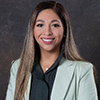
Susie Coons is a co-owner of McDonald Coons Law Group, APC, in Bakersfield, California, where her practice concentrates on estate planning, trust administration, trust litigation, and probate.
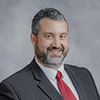
Jared R. Clemence is a Bakersfield, California probate and trust attorney who practices at Eagle Heritage Law PC centers on small estate transfers, decedent estate administration, trust administration, and probate litigation.
Live Video-Broadcast: October 16, 2026
2 hour CLE
Tuition: $195.00
Co-Sponsored by myLawCLE
Get this course, plus over 1,000+ of live webinars.
Learn More
Training 5 or more people?
Sign-up for a law firm subscription plan and each attorney in the firm receives free access to all CLE Programs
Program Summary
The thresholds went up. The bank's willingness to honor your affidavit did not
In 2024 and 2025 a wave of states raised their small estate affidavit thresholds, and California, Illinois, Arizona, and Colorado now let far larger estates bypass formal probate. Eligibility is no longer a quick arithmetic check. Whether the cap keys to the date of death or the date of filing, which assets count, and how they are valued now decide whether the affidavit route exists at all.
Misclassify a non-probate asset and the estate looks too large. Miss the real property dividing line and formal probate becomes mandatory. Sign an incomplete affidavit and the affiant carries the duties and liabilities. Present a proper file and the bank may still refuse it. California, Nebraska, Illinois, Washington, and UPC-adoption states supply statutory enforcement mechanisms and fee-shifting, mandatory in some and discretionary in others, but only if the argument was preserved before suit.
You leave with a threshold and asset-classification method for intake, a file-assembly checklist built for institutional review, and a pre-litigation escalation protocol that runs from statute to manager to legal department to demand letter. You also take a demand-letter framework that turns the institution's safe harbor against its refusal, plus the forum, burden, and fee-recovery considerations for a compelled-transfer action.
Key topics to be discussed:
- New Threshold Triggers
How the 2024–2025 increases in California, Illinois, Arizona, and Colorado change eligibility, and whether each cap keys to the date of death or the date of filing. - Asset Classification and Valuation
Which probate and non-probate assets count toward the cap, how they must be valued, and when real property ownership forces formal probate instead of the affidavit. - Institution-Ready File Assembly
What must be assembled before the affidavit is presented, the duties and liabilities the affiant assumes on signing, and the errors that get affidavits invalidated or rejected. - Reading the Bank's Refusal
The institutional compliance patterns behind refusals, the legitimate grounds a bank may raise, and the statutory safe harbor you turn back on the institution to overcome resistance. - Pre-Litigation Escalation
The statute-to-manager-to-legal-department-to-demand-letter sequence, and the steps that preserve the fee-shifting argument before any suit is filed. - Enforcement and Fee Recovery
Mandatory versus discretionary fee-shifting in California, Nebraska, Illinois, Washington, and UPC-adoption states, and the forum, burden, and fee recovery in a compelled-transfer action.
This course is co-sponsored with myLawCLE.
Date / Time: October 16, 2026
- 2:30 pm – 4:40 pm Eastern
- 1:30 pm – 3:40 pm Central
- 12:30 pm – 2:40 pm Mountain
- 11:30 am – 1:40 pm Pacific
 Closed-captioning available
Speakers
Susie Coons, Co-Owner | McDonald Coons Law Group, APC
Susie Coons is a co-owner of McDonald Coons Law Group, APC, in Bakersfield, California, where her practice concentrates on estate planning, trust administration, trust litigation, and probate. She represents individuals, families, fiduciaries, and beneficiaries through every stage of settling an estate, and serves clients in both English and Spanish.
- Education & Credentials
Susie holds her Juris Doctor from The Santa Barbara & Ventura Colleges of Law and is licensed by the State Bar of California. She practices from McDonald Coons Law Group’s Bakersfield office, a firm built to concentrate exclusively on estate planning, probate administration, trust administration, and the establishment of conservatorships — a focus that allows her to work these matters at depth rather than as an adjunct to a general practice.
- Recognition & Leadership
Susie serves as Treasurer of the Probate Section of the Kern County Bar Association, an elected officer role within her local probate bar. She co-founded McDonald Coons Law Group with Stevie McDonald and serves as the firm’s Vice President and co-owner, sharing responsibility for the firm’s practice standards, client service, and operations.
- Professional Involvement
Through her role with the Kern County Bar Association’s Probate Section, Susie stays engaged with the practitioners, court staff, and procedures that shape probate practice in Kern County. She also volunteers her time with local Mock Trial competitions, working with student teams on advocacy and courtroom skills. Before co-founding McDonald Coons Law Group, she practiced as an attorney with Rossi Law Group.
- Experience
Susie’s practice covers the full arc of estate administration: intake and asset analysis, identifying which assets pass through probate and which transfer outside it, small estate and simplified transfer procedures, formal probate administration, trust funding and administration, and disputes that arise between fiduciaries and beneficiaries. At McDonald Coons Law Group this work sits alongside the firm’s broader practice in wills, trusts, special needs trusts, guardianships, conservatorships, and living wills.
Because the firm serves clients in both English and Spanish, Susie regularly works with families for whom the probate system is unfamiliar territory — a population that often arrives without documentation in order and without a clear picture of what the process requires. That experience informs a practical, step-by-step approach to building a complete file.
Jared R. Clemence, Attorney | Eagle Heritage Law PC
Jared R. Clemence is a Bakersfield, California probate and trust attorney who practices at Eagle Heritage Law PC centers on small estate transfers, decedent estate administration, trust administration, and probate litigation. He writes regularly on California small estate procedures, including what to do when a bank refuses a California small estate affidavit and the mistakes that sink Kern County DE-310 primary residence petitions.
- Education & Credentials
Jared earned his J.D. from Monterey College of Law and is licensed by the State Bar of California. He completed his undergraduate studies at Drexel University, where he taught graduate-level mathematics in the Mathematics Department’s tutoring center and developed statistical analysis software for institutional survey data. He also holds a California real estate license and has worked in California real estate since 2021, affiliated with Watson Realty Services Inc. in Bakersfield — a dual credential that shapes his approach to estates holding real property.
- Recognition & Leadership
He is the author of No Will? No Problem! published January 5, 2023, and available through Amazon and the Kindle Store. Following the book’s publication, he was accepted as a 2023 member of Lawyers of Distinction, and his work has been featured in The New York Times. He serves on the Board of Directors of the Kern County Bar Association.
- Professional Involvement
Jared publishes an ongoing series of practitioner- and family-facing articles on California probate, small estate transfers, trust administration, and real estate law, covering topics such as bank refusals of small estate affidavits, probate sales with court confirmation, managing access to digital estates, a trustee’s duty to inform beneficiaries, and buying out siblings from an inherited house. He has also served on the Bakersfield Chamber of Commerce’s Business Development Committee.
- Experience
Before founding Eagle Heritage Law, Jared spent four years at Coleman & Horowitt, LLP, a Primerus member firm with offices in Fresno and Bakersfield, representing clients in probate litigation, estate planning, unlawful detainer, and real estate litigation.
His probate and inheritance practice covers small estate transfers, decedent estate administration, trust administration and litigation, beneficiary representation, and undue influence and financial elder abuse cases. On the real estate side, he handles title disputes, partition actions, quiet title lawsuits, and unlawful detainers, and he also practices family law and childcare license defense.
Agenda
SESSION 1 – Building the Small Estate Affidavit File Under the New State Thresholds | 2:30pm – 3:30pm
This session covers the 2024–2025 wave of state threshold increases reshaping small estate affidavit eligibility, the mechanics of accurate asset classification and valuation, and the documentation requirements for building a complete, institution-ready file. Attorneys will learn to distinguish probate from non-probate assets, apply filing-date versus death-date triggers across key jurisdictions, and avoid the most common errors that invalidate or delay affidavits. Practitioners gain practical competency in intake analysis, threshold calculation, and file assembly under the new statutory frameworks in California, Illinois, Arizona, Colorado, and other high-population states.
BREAK | 3:30pm – 3:40pm
SESSION 2 – When the Bank Refuses the Affidavit: Escalation, Enforcement, and Fee Recovery | 3:40pm – 4:40pm
This session equips attorneys to respond when a financial institution refuses to honor a properly executed small estate affidavit. Attendees will learn a structured pre-litigation escalation protocol, the statutory enforcement mechanisms available in California, Nebraska, Illinois, Washington, and UPC-adoption states, and how to invoke mandatory and discretionary fee-shifting provisions to recover attorney fees. Practitioners leave with a demand-letter framework, an understanding of institutional safe harbors, and litigation filing considerations for compelled-transfer actions.
Credits
Alaska
Approved for CLE Credits
2 General
Alabama
Approved for CLE Credits
2 General
Arkansas
Approved for CLE Credits
2 General
Arizona
Approved for CLE Credits
2 General
California
Approved for CLE Credits
2 General
Colorado
Pending CLE Approval
2 General
Connecticut
Approved for CLE Credits
2 General
District of Columbia
No MCLE Required
2 CLE Hour(s)
Delaware
Pending CLE Approval
2 General
Florida
Approved via Attorney Submission
2 General Hours
Georgia
Approved for CLE Credits
2 General
Hawaii
Approved for CLE Credits
2 General
Iowa
Pending CLE Approval
2 General
Idaho
Pending CLE Approval
2 General
Illinois
Pending CLE Approval
2 General
Indiana
Pending CLE Approval
2 General
Kansas
Pending CLE Approval
2 Substantive
Kentucky
Pending CLE Approval
2 General
Louisiana
Pending CLE Approval
2 General
Massachusetts
No MCLE Required
2 CLE Hour(s)
Maryland
No MCLE Required
2 CLE Hour(s)
Maine
Pending CLE Approval
2 General
Michigan
No MCLE Required
2 CLE Hour(s)
Minnesota
Pending CLE Approval
2 General
Missouri
Approved for CLE Credits
2.4 General
Mississippi
Pending CLE Approval
2 General
Montana
Pending CLE Approval
2 General
North Carolina
Pending CLE Approval
2 General
North Dakota
Approved for CLE Credits
2 General
Nebraska
Pending CLE Approval
2 General
New Hampshire
Approved for CLE Credits
120 General minutes
New Jersey
Approved for CLE Credits
2 General
New Mexico
Approved for CLE Credits
2 General
Nevada
Pending CLE Approval
2 General
New York
Approved for CLE Credits
2 General
Ohio
Approved for CLE Credits
2 General
Oklahoma
Pending CLE Approval
2.5 General
Oregon
Pending CLE Approval
2 General
Pennsylvania
Approved for CLE Credits
2 General
Rhode Island
Pending CLE Approval
2.5 General
South Carolina
Pending CLE Approval
2 General
South Dakota
No MCLE Required
2 CLE Hour(s)
Tennessee
Approved for CLE Credits
2 General
Texas
Approved for CLE Credits
2 General
Utah
Pending CLE Approval
2 General
Virginia
Not Eligible
2 General Hours
Vermont
Approved for CLE Credits
2 General
Washington
Approved via Attorney Submission
2 Law & Legal Hours
Wisconsin
Pending CLE Approval
2 General
West Virginia
Pending CLE Approval
2.4 General
Wyoming
Pending CLE Approval
2 General
More CLE Webinars
Trending CLE Webinars










Upcoming CLE Webinars




























© 2026 Federal Bar Association