Standards of Review: Framing the Issue to Fit De Novo, Clear Error, or Abuse of Discretion
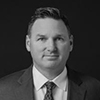
John Sullivan’s extensive experience in representing law firms of all sizes allows him to understand claims raised by aggrieved clients and work with firms to respond to and resolve those claims informally or, when necessary, through litigation. He has been recognized by the Daily Journal as one of the top professional responsibility lawyers in California.

Cari L. Sheehan’s primary research focus is the ethics of artificial intelligence and its effect on the legal and business communities. As Assistant General Counsel at Taft Stettinius & Hollister LLP in Indianapolis, she counsels the firm’s attorneys on ethics compliance, risk prevention, and conflicts of interest, and helps train the firm’s attorneys and staff on their ethical obligations.
Live Video-Broadcast: October 27, 2026
2 hour CLE
Tuition: $195.00
Co-Sponsored by myLawCLE
Get this course, plus over 1,000+ of live webinars.
Learn More
Training 5 or more people?
Sign-up for a law firm subscription plan and each attorney in the firm receives free access to all CLE Programs
Program Summary
“The Partner Approved It” Is Not a Defense
Citations to cases that do not exist have changed the stakes of a routine filing. AI-generated briefs have set off a wave of court sanctions and bar referrals. Courts and disciplinary bodies now enforce a new lawyer’s daily ethical obligations with increasing seriousness. Two areas carry the most risk: filing verification and client billing.
Sign or later advocate a filing, and you certify it under Rule 11 of the Federal Rules of Civil Procedure. Cite a case that does not exist, and sanctions under Rule 11 or 28 U.S.C. § 1927 can follow. Draw a sanctions order, and a bar referral can follow it. Point to a partner’s approval, and Rule 5.2 still defines your personal duty. Bill your own learning curve, and Rule 1.5 is in play. Leave a client uninformed, and Rule 1.4 exposure follows. Mishandle the trust account, and the discipline turns serious.
You leave with practice-ready work product, not abstract doctrine: a pre-filing verification checklist, a billing judgment framework, defensible time-entry language, engagement letter guidance, and trust account protocols. These are judgment calls no software makes for you, and ones firm culture may never teach.
Key topics to be discussed:
- Rule 11 Verification Duties
Know what you certify when you sign or later advocate a filing under Rule 11’s objective standard, and run the verification steps that catch AI-generated citations to nonexistent cases before any filing leaves the office. - Sanctions-to-Discipline Pipeline
Trace how a court sanctions order under Rule 11 or 28 U.S.C. § 1927 moves through the referral pipeline into a bar disciplinary proceeding. - Supervision and Personal Duty
Apply Model Rules 5.1, 5.2, and 5.3 to see why a supervising partner’s direction or approval does not move your certification responsibility upward. - Defensible Time Entries
Decide what time is ethically billable, what to write off as your own learning curve, and how to keep block billing out of entries you can defend. - Client Communication Cadence
Use Rule 1.4 to settle what you must tell a client and how often to update them, even when nothing in the matter has happened. - Fees, Trust, and Disputes
Structure engagement letters and scope limitations that protect client and firm, avoid the associate-level trust account errors behind serious discipline, and meet your procedural obligations once a client challenges a bill.
This course is co-sponsored with myLawCLE.
Date / Time: October 27, 2026
- 2:30 pm – 4:40 pm Eastern
- 1:30 pm – 3:40 pm Central
- 12:30 pm – 2:40 pm Mountain
- 11:30 am – 1:40 pm Pacific
 Closed-captioning available
Speakers
John B. Sullivan, Partner | Long & Levit LLP
John Sullivan’s extensive experience in representing law firms of all sizes allows him to understand claims raised by aggrieved clients and work with firms to respond to and resolve those claims informally or, when necessary, through litigation. He has been recognized by the Daily Journal as one of the top professional responsibility lawyers in California.
- Education & Credentials
John received his J.D. from the University of California, Hastings College of the Law in 2005. While at Hastings, he served as an extern for the Hon. Paul Alvarado (Ret.), San Francisco Superior Court.
Academics: Santa Clara University | B.S.C., Finance, 2002; UC Law San Francisco | J.D., 2005. Admissions: Member of the California Bar; USDC: Northern District of California; US Court of Appeals for the Ninth Circuit.
- Recognition & Leadership
John currently serves as the Chair of the San Francisco Bar Association Legal Malpractice Section. He frequently presents on professional liability topics. John also has been asked to comment for publications on California Court of Appeal decisions relevant to ethics and professional liability.
Professional Recognition: “Top Professional Liability Lawyer” in Daily Journal, 2023-2026.
- Professional Involvement
Professional Affiliations: Edward J. McFetridge Inn of Court; San Francisco Bar Association; San Francisco Bar Association Legal Malpractice Section; St. Thomas More Society; American Bar Association, Standing Committee of Legal Malpractice, Member Recent Presentations/Publications: “New Guidance Regarding the Role of Legal Assistants in Law Offices,” San Francisco Daily Journal, July 5, 2023; “Ethical Lessons for Litigators From the California Courts of Appeal,” San Francisco Daily Journal, March 1, 2023; “Don’t Jeopardize Your Fee,” San Francisco Daily Journal, February 15, 2023; Speaker, “Legal Malpractice and Ethics – 2022 in Review,” Bar Association of San Francisco, San Francisco, CA, January 25, 2023; Speaker, “Case Law Updates,” ABA 2022 National Legal Malpractice Conference, Seattle, WA, September 22, 2022; Speaker, “Legal Malpractice and Ethics: 2021 in Review,” Bar Association of San Francisco, Legal Malpractice Section, San Francisco, CA, January 21, 2022; Speaker, “Legal Malpractice and Ethics: 2020 in Review,” Bar Association of San Francisco, Legal Malpractice Section, San Francisco, CA, January 12, 2021; Speaker, “Legal Malpractice and Ethics: 2019 in Review,” Bar Association of San Francisco, Legal Malpractice Section, San Francisco, CA, January 22, 2020; Speaker, “Insurance 101 For Law Firms,” Bar Association of San Francisco, Legal Malpractice Section, San Francisco, CA, January 23, 2019; Speaker, “Legal Malpractice and Ethics: 2018 in Review,” Bar Association of San Francisco, Legal Malpractice Section, San Francisco, CA, January 23, 2019; Speaker;
“Wake Up to the New Ethical World: California’s Revamped Rules of Professional Conduct,” Norther District Bankruptcy Conference, San Francisco, CA, October 12, 2018; Speaker, “Legal Malpractice and Ethics: 2017 in Review,” Bar Association of San Francisco, Legal Malpractice Section, San Francisco, CA, January 17, 2018; Speaker, “What Could I Have Done Differently? Tips for Avoiding Client Disputes,” Bar Association of San Francisco, Legal Malpractice Section, San Francisco, CA, January 17, 2018; Speaker, “Indecent Contact: Ethical Challenges With Contacts With Putative Class Members,” California State Bar, Litigation Section, January 27, 2016; Presenter, “Lawyers In The Cross-Hairs: Recent Trends In Claims Against Attorneys, Related Ethical And Insurance Issues, And Defense Strategies,” Bar Association of San Francisco, Legal Malpractice Section, San Francisco, CA, June 3, 2015; “Transactional Lawyers in the Crosshairs,” Article, July 22, 2015.
- Experience
Since joining Long & Levit in 2005, he has focused his practice almost exclusively on law firm defense. John has defended attorneys in state and federal courts, resolving claims at the pleading stage, summary judgment, mediation, trial and arbitration. During this time, he also has represented attorneys in State Bar matters, advised firms regarding partnership disputes, and prosecuted fee claims. John also counsels firms on liability and ethics issues.
Aside from representing professionals, John has experience handling personal injury and product liability cases as well as commercial and corporate disputes. In defending claims against attorneys, John has gained in depth experience in numerous areas of law, including antitrust, class actions, water rights, federal tax, public finance, employment, and issues involving corporate governance.
Cari L. Sheehan, Assistant General Counsel | Taft Stettinius & Hollister LLP
Cari L. Sheehan’s primary research focus is the ethics of artificial intelligence and its effect on the legal and business communities. As Assistant General Counsel at Taft Stettinius & Hollister LLP in Indianapolis, she counsels the firm’s attorneys on ethics compliance, risk prevention, and conflicts of interest, and helps train the firm’s attorneys and staff on their ethical obligations.
- Education & Credentials
Sheehan graduated magna cum laude from Indiana University Robert H. McKinney School of Law in 2007, and cum laude from the University of Southern Indiana in 2004. She is admitted in Indiana and Illinois, and before the U.S. Court of Appeals for the Seventh Circuit; the Northern and Southern District Courts of Indiana; the Northern and Southern District Courts of Illinois; the Michigan Eastern District Court; the Indiana Southern Bankruptcy Court; and the Illinois Northern Bankruptcy Court.
- Recognition & Leadership
Sheehan is a member of the State of Indiana AI Task Force, created by SEA 150, and in August 2025 was reappointed to an artificial intelligence taskforce. She also sits on the Ethics Committee of the Indiana State Bar Association. LexVid named her a recipient of its Top Live Faculty Award (2024-2025).
- Professional Involvement
Sheehan writes recurring pieces on the Ethics Curbstone for Res Gestae, where her recent articles address generative artificial intelligence, the ethics of AI under United States v. Heppner, and the use of AI in legal practice. She has presented more than 200 seminars on ethics and professionalism to local and national audiences, and publications have quoted her on ethical topics.
She teaches Professional Responsibility as an Adjunct Professor at the IU Robert H. McKinney School, and previously taught as an Assistant Clinical Professor of Business Law and Ethics at the Kelley School of Business. She is a member of the Sagamore American Inn of Court and the American Bar Association.
- Experience
Sheehan has practiced for more than 15 years across civil litigation, conflicts of interest, and professional responsibility. In her in-house role she helps review and negotiate engagement letters, conflict waivers, outside counsel guidelines, and other matters that carry ethical implications, alongside her advisory work on compliance, risk prevention, and conflicts.
Agenda
SESSION 1 – Verification, Supervision, and How a sanctions Order Becomes Bar Discipline | 2:30pm – 3:30pm
The wave of court sanctions and bar referrals triggered by AI-generated citations to nonexistent cases has put a sharp spotlight on the daily ethical obligations new associates carry the moment they enter practice — obligations that courts and disciplinary bodies are now enforcing with increasing seriousness. This program addresses those obligations directly, equipping junior lawyers with the practical skills and concrete habits needed to navigate two of the highest-risk areas of early-career practice: filing verification and client billing. Attendees will learn how federal court rules, including Rule 11 of the Federal Rules of Civil Procedure and 28 U.S.C. § 1927, and the American Bar Association’s Model Rules of Professional Conduct intersect in real disciplinary outcomes, why personal certification responsibility cannot be delegated upward, and how to make sound judgment calls on billing and client communication even when firm culture provides little active guidance. The program produces usable, practice-ready deliverables — verification checklists, billing judgment frameworks, defensible time-entry language, and trust account protocols — rather than abstract doctrine.
BREAK | 3:30pm – 3:40pm
SESSION 2 – Client Communication and Billing Judgment: From the First Time EntryThrough the Fee Dispute | 3:40pm – 4:40pm
This session covers the ethical obligations new associates encounter at every stage of the billing and client communication lifecycle—from drafting the first time entry and engagement letter through responding to fee disputes and trust account obligations. Attorneys will learn how Model Rules 1.4 and 1.5 apply to daily practice decisions, where disciplinary risk concentrates for junior lawyers, and how to exercise billing judgment in a firm culture that may not actively reinforce it. Attendees leave with concrete, judgment-level skills for writing defensible time entries, structuring fee agreements, managing client communication cadence, and avoiding the trust account errors that produce the most serious sanctions.
Credits
Alaska
Approved for CLE Credits
2 Ethics
Alabama
Pending CLE Approval
2 Ethics
Arkansas
Approved for CLE Credits
2 Ethics
Arizona
Approved for CLE Credits
2 Professional Responsibility/Ethics
California
Approved for CLE Credits
2 Ethics
Colorado
Pending CLE Approval
2 Ethics / Professionalism
Connecticut
Approved for CLE Credits
2 Ethics / Professionalism
District of Columbia
No MCLE Required
2 CLE Hour(s)
Delaware
Pending CLE Approval
2 Enhanced Ethics
Florida
Approved via Attorney Submission
2 Ethics Hours
Georgia
Pending CLE Approval
2 Ethics
Hawaii
Approved for CLE Credits
2 Ethics or Professional Responsibility Education
Iowa
Pending CLE Approval
2 Ethics
Idaho
Pending CLE Approval
2 Ethics / Professionalism
Illinois
Pending CLE Approval
2 Ethics, Civility, Professionalism
Indiana
Pending CLE Approval
2 Ethics
Kansas
Pending CLE Approval
2 Ethics / Professionalism
Kentucky
Pending CLE Approval
2 Ethics
Louisiana
Pending CLE Approval
2 Ethics
Massachusetts
No MCLE Required
2 CLE Hour(s)
Maryland
No MCLE Required
2 CLE Hour(s)
Maine
Pending CLE Approval
2 Ethics / Professionalism
Michigan
No MCLE Required
2 CLE Hour(s)
Minnesota
Pending CLE Approval
2 Ethics
Missouri
Approved for CLE Credits
2.4 Ethics
Mississippi
Pending CLE Approval
2 Ethics
Montana
Pending CLE Approval
2 Professional Fitness and Integrity
North Carolina
Pending CLE Approval
2 Ethics
North Dakota
Approved for CLE Credits
2 Ethics
Nebraska
Pending CLE Approval
2 Professional Responsibility
New Hampshire
Approved for CLE Credits
120 Ethics / Professionalism minutes
New Jersey
Approved for CLE Credits
2 Ethics / Professionalism
New Mexico
Approved for CLE Credits
2 Ethics / Professionalism
Nevada
Pending CLE Approval
2 Ethics / Professionalism
New York
Approved for CLE Credits
2 Ethics / Professionalism
Ohio
Pending CLE Approval
2 Professional Conduct
Oklahoma
Pending CLE Approval
2.5 Ethics / Professionalism
Oregon
Pending CLE Approval
2 Ethics
Pennsylvania
Approved for CLE Credits
2 Ethics / Professionalism
Rhode Island
Pending CLE Approval
2.5 Ethics / Professionalism
South Carolina
Pending CLE Approval
2 Ethics / Professionalism
South Dakota
No MCLE Required
2 CLE Hour(s)
Tennessee
Pending CLE Approval
2 Dual
Texas
Approved for CLE Credits
2 Ethics / Professionalism
Utah
Pending CLE Approval
2 Ethics / Professionalism
Virginia
Not Eligible
2 Ethics / Professionalism Hours
Vermont
Approved for CLE Credits
2 Ethics
Washington
Approved via Attorney Submission
2 Ethics Hours
Wisconsin
Pending CLE Approval
2 Ethics
West Virginia
Pending CLE Approval
2.4 Ethics / Professionalism
Wyoming
Pending CLE Approval
2 Ethics / Professionalism
More CLE Webinars
Trending CLE Webinars










Upcoming CLE Webinars































© 2026 Federal Bar Association