
Trust and Elder Financial Abuse Litigation: From Intake Through Mediation and Trial
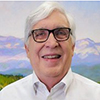
Michael A. Hackard is the founding attorney of Hackard Law, a Sacramento-based firm devoted to estate, trust, and probate litigation. Admitted to the California State Bar in 1976, he has spent five decades representing abused beneficiaries and victims of elder financial exploitation in California and federal courts, including out-of-state clients with California-related matters.

Matthew D. Davis is a partner at Walkup, Melodia, Kelly & Schoenberger in San Francisco, where he has practiced since 2001. A trial lawyer with a practice 90 percent devoted to litigation, he has handled legally significant, high-value cases in state and federal courts and has helped recover hundreds of millions of dollars in verdicts and settlements for his clients.
On-Demand: August 26, 2026
2 hour CLE
Tuition: $195.00
Co-Sponsored by myLawCLE
Get this course, plus over 1,000+ of live webinars.
Learn More
Training 5 or more people?
Sign-up for a law firm subscription plan and each attorney in the firm receives free access to all CLE Programs
Program Summary
Three Limitations Clocks Are Running on Every Elder Abuse Case
Elder financial abuse litigation is maturing into its own trial practice. The exploitation pattern repeats in every state: vulnerability, access, a signing window, then the post-funeral call. This program pairs the probate-side framework with the trial mechanics the field now demands. The new book Stolen Inheritance (Elder Legacy Press, June 2026) supplies the textbook frame.
Miss one of the three limitations clocks and the claim dies: trust contest, elder financial abuse, or promise-to-inherit. Transfers to drafters and care custodians shift the burden. Statutory fee-shifting and enhanced-damages mechanisms raise the price of exploitation. After the client's death, the percipient-witness doctrine opens the drafting attorney's file.
Attendees leave with pre-filing strategy, the parallel civil-and-probate filing decision, expert witness strategy, and the drafting-attorney cross. Court-ordered mediation in the shadow of trial closes the arc. California supplies the case examples; attorneys in other states map their own statutes to the same categories.
Key topics to be discussed:
- The Exploitation Pattern
Recognize vulnerability, access, the signing window, and the post-funeral call across Alzheimer's, vascular dementia, and alcohol-related decline. - Three Limitations Clocks
Track the trust contest, elder financial abuse, and promise-to-inherit deadlines that control when each claim dies. - Burden-Shifting Presumptions
Apply the presumptions on transfers to drafters and care custodians, plus statutory fee-shifting and enhanced-damages mechanisms. - The Percipient-Witness Doctrine
Reach the drafting attorney's file after the client's death and put it to work in the case. - Building for Trial
Assess jury triability, choose between parallel civil-and-probate filings, and plan expert witness strategy. - Mediation and Trial
Prepare the drafting-attorney cross and use court-ordered mediation in the shadow of trial.
This course is co-sponsored with myLawCLE.
 Closed-captioning available
Speakers
Michael A. Hackard, Founder | Hackard Law
Michael A. Hackard is the founding attorney of Hackard Law, a Sacramento-based firm devoted to estate, trust, and probate litigation. Admitted to the California State Bar in 1976, he has spent five decades representing abused beneficiaries and victims of elder financial exploitation in California and federal courts, including out-of-state clients with California-related matters.
- Education & Credentials
Michael earned his undergraduate degree from California State University, Sacramento in 1972 and his J.D. from the McGeorge School of Law, University of the Pacific in 1976. He is admitted to the California State Bar (1976), the U.S. District Court for the Eastern District of California (1976), and the U.S. Court of Appeals for the Ninth Circuit (1985). He has completed executive-level coursework at the Tuck School of Business, the Wharton School, Columbia Business School, and the Kellogg School of Management.
- Recognition & Leadership
Michael has held an AV Preeminent rating, Martindale-Hubbell’s highest peer review rating, for more than 40 years, and Avvo rates him 10.0, its highest mark. He has been selected for inclusion in Super Lawyers, an honor reserved for no more than five percent of attorneys in each state. He is the author of books on elder financial exploitation in trusts and estates, including The Wolf at the Door: Undue Influence and Elder Financial Abuse and Alzheimer’s, Widowed Stepmothers & Estate Crimes.
- Professional Involvement
Michael is a member of the Los Angeles County Bar Association and has represented clients before federal, state, and local legislative and administrative bodies. He has built an extensive public education practice around inheritance theft and elder financial abuse, including a library of more than 900 educational videos and a comprehensive legal resource guide for victims and their families.
- Experience
Michael’s practice concentrates on estate and trust litigation, undue influence and elder financial abuse cases, trust accountings, trustee removal, life insurance beneficiary litigation, and will contests. His new book, Stolen Inheritance: How the Vulnerable Lose Their Estates — and What Families Can Do (Elder Legacy Press, June 2026), serves as the textbook frame for this program.
Matthew D. Davis, Partner | Walkup, Melodia, Kelly & Schoenberger
Matthew D. Davis is a partner at Walkup, Melodia, Kelly & Schoenberger in San Francisco, where he has practiced since 2001. A trial lawyer with a practice 90 percent devoted to litigation, he has handled legally significant, high-value cases in state and federal courts and has helped recover hundreds of millions of dollars in verdicts and settlements for his clients.
- Education & Credentials
Matt earned his law degree from UC Hastings in San Francisco in 1989. He began his career at a San Francisco litigation boutique, then joined the San Francisco City Attorney’s Office, where he served as Deputy City Attorney from 1992 to 2001. In that role he represented the municipality and its employees in jury trials and appeals in both state and federal courts.
- Recognition & Leadership
While with the City, Matt played an active role in San Francisco’s litigation against the Bank of America, which culminated in a $187 million settlement, and obtained a record-breaking judgment of more than $50 million against a title insurance and escrow company. A court later appointed him class counsel in a landmark consumer privacy case that produced a multi-million dollar settlement, and he tried a class action to a verdict exceeding $25 million on behalf of roughly 1,000 hotel guests.
- Professional Involvement
Matt has focused his practice on matters he personally cares about, working to make communities safer and to prevent future injuries and deaths. A lifelong recreational bicyclist, he has represented numerous injured cyclists and has spearheaded his firm’s annual distribution of tens of thousands of bicycle safety lights for the past eight years. In 2020 he helped prosecute, pro bono, a case on behalf of UC Hastings and residents and businesses of San Francisco’s Tenderloin district.
- Experience
Matt’s results include representing the seven injured survivors and the families of five deceased students in the Library Gardens balcony collapse litigation, a $45 million burn-injury settlement against homeowners and a gas supply company, a $12 million recovery for a paralyzed bicyclist, and a $2.75 million civil rights settlement for a wrongfully convicted man. Elder financial abuse is a growing part of the firm’s practice, and Matt brings the trial mechanics, jury strategy, and mediation perspective to this program.
Agenda
SESSION 1 – The Recurring Exploitation Pattern: Vulnerability, Access, and the Signing Window | 1:00pm – 1:30pm
The recurring exploitation pattern attorneys see in every state: vulnerability, access, the signing window, the post-funeral call. Three short cases across Alzheimer’s, vascular dementia, and alcohol-related decline show the pattern is diagnosis-agnostic.
SESSION 2 – The Legal Architecture: Limitations Clocks, Presumptions, and the Drafting Attorney’s File | 1:30pm – 2:00pm
The legal architecture: the three limitations clocks attorneys must track (trust contest, elder financial abuse, promise-to-inherit); burden-shifting presumptions on transfers to drafters and care custodians; statutory fee-shifting and enhanced-damages mechanisms; and the percipient-witness doctrine that opens the drafting attorney’s file after the client’s death.
BREAK | 2:00pm – 2:10pm
SESSION 3 – Building the Civil Case for Trial | 2:10pm – 2:40pm
Building the civil case for trial: jury triability, parallel civil-and-probate filings, expert witness strategy.
SESSION 4 – Trial and Resolution: Drafting-Attorney Cross and Court-Ordered Mediation | 2:40pm – 3:10pm
Trial and resolution: drafting-attorney cross, and court-ordered mediation in the shadow of trial.
Credits
Alaska
Approved for CLE Credits
2 General
Alabama
Approved for Self-Study Credits
2 General
Arkansas
Approved for CLE Credits
2 General
Arizona
Approved for CLE Credits
2 General
California
Approved for CLE Credits
2 General
Colorado
Pending CLE Approval
2 General
Connecticut
Approved for CLE Credits
2 General
District of Columbia
No MCLE Required
No MCLE Required
Delaware
Pending CLE Approval
2 General
Florida
Approved via Attorney Submission
2 General Hours
Georgia
Approved for CLE Credits
2 General
Hawaii
Approved for CLE Credits
2 General
Iowa
Approved for Self-Study Credits
2 General
Idaho
Pending CLE Approval
2 General
Illinois
Approved for Self-Study Credits
2 General
Indiana
Approved For On-Demand Credits
2 General
Kansas
Pending CLE Approval
2 Substantive
Kentucky
Pending CLE Approval
2 General
Louisiana
Pending CLE Approval
2 General
Massachusetts
No MCLE Required
2 CLE Hour(s)
Maryland
No MCLE Required
2 CLE Hour(s)
Maine
Pending CLE Approval
2 General
Michigan
No MCLE Required
2 CLE Hour(s)
Minnesota
Pending CLE Approval
2 General
Missouri
Approved for Self-Study Credits
2.4 General
Mississippi
Pending CLE Approval
2 General
Montana
Pending CLE Approval
2 General
North Carolina
Pending CLE Approval
2 General
North Dakota
Approved for CLE Credits
2 General
Nebraska
Pending CLE Approval
2 General
New Hampshire
Approved for CLE Credits
120 General minutes
New Jersey
Approved for CLE Credits
2 General
New Mexico
Approved for Self-Study Credits
2 General
Nevada
Approved for Self-Study Credits
2 General
New York
Approved for CLE Credits
2 General
Ohio
Approved for Self-Study Credits
2 General
Oklahoma
Pending CLE Approval
2.5 General
Oregon
Pending CLE Approval
2 General
Pennsylvania
Approved for Self-Study Credits
2 General
Rhode Island
Pending CLE Approval
2.5 General
South Carolina
Pending CLE Approval
2 General
South Dakota
No MCLE Required
2 CLE Hour(s)
Tennessee
Approved for Self-Study Credits
2 General
Texas
Approved for CLE Credits
2 General
Utah
Pending CLE Approval
2 General
Virginia
Not Eligible
2 General Hours
Vermont
Approved for CLE Credits
2 General
Washington
Approved via Attorney Submission
2 Law & Legal Hours
Wisconsin
Approved for Self-Study Credits
2 General
West Virginia
Pending CLE Approval
2.4 General
Wyoming
Pending CLE Approval
2 General
Preview
More CLE Webinars
Trending CLE Webinars










Upcoming CLE Webinars












































© 2026 Federal Bar Association