Representing College Athletes in the Private-Capital Era: NIL Deals and Revenue-Share Contracts

On-Demand: August 7, 2026
2 hour CLE
Tuition: $195.00
Co-Sponsored by myLawCLE
Get this course, plus over 1,000+ of live webinars.
Learn More
Training 5 or more people?
Sign-up for a law firm subscription plan and each attorney in the firm receives free access to all CLE Programs
Program Summary
The House v. NCAA settlement permits Division I institutions to compensate student-athletes directly. The cap begins at approximately $20.5 million for 2025–26 and rises over the settlement term. PE-backed spin-offs, conference credit facilities, and equity proposals are pushing college athletics from a donor-based model toward an investment model.
Every provision now carries regulatory weight. Structure a deal that fails Deloitte's FMV review, and it gets flagged. Draft payment terms carelessly, and you create Title IX, employment-status, wage-and-hour, or tax exposure. Accept overbroad exclusivity, transfer clawbacks, or perpetual IP rights, and your athlete-client pays for years. Two Executive Orders and pending federal legislation keep the ground moving.
Attendees leave with a practical framework for drafting, negotiating, and auditing NIL agreements. They gain the tools to evaluate revenue-share contracts against the House settlement framework and the CSC compliance regime. And they walk out with drafting protections that preserve flexibility while the regulatory framework continues to evolve.
Key topics to be discussed:
- House Settlement Framework
Apply the House v. NCAA settlement's approximately $20.5 million institutional cap — including cap allocation, adjustment, and escalation over the settlement term — to every agreement you evaluate. - Compliance Review Architecture
Structure deals that survive Deloitte's FMV review and NIL Go, and keep clients inside the College Sports Commission's compliance regime. - Private-Capital Counterparties
Negotiate against PE-backed collectives, school commercial entities, and multimedia rights companies — and price the payment-source risk behind PE-backed spin-offs, conference credit facilities, and equity proposals. - Contract Red Flags
Identify and neutralize overbroad exclusivity, transfer clawbacks, perpetual IP rights, and exploitative agent fee structures before your athlete-client signs. - Core Contract Provisions
Draft escalation, termination, and NIL-interaction clauses that hold up against transfer-related restrictions, liquidated damages, buyout enforceability, and emerging litigation. - Title IX, Employment, Tax
Spot provisions that create Title IX, employment-classification, wage-and-hour, or tax-characterization exposure, and build in the drafting obligations each one requires.
This course is co-sponsored with myLawCLE.
 Closed-captioning available
Speakers
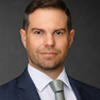
Joshua Frieser, Principal Attorney | Frieser Legal
Joshua Frieser is a sports and business lawyer and the Principal Attorney at Frieser Legal, a boutique sports law practice based in Milwaukee, Wisconsin. He represents elite athletes, sports agents and agencies, sports industry businesses, and corporate sponsors, with a practice centered on NIL negotiations, licensing, intellectual property, business structuring, and regulatory compliance.
- Education & Credentials
Josh earned his J.D. from Marquette University Law School in 2021 and holds a B.S. in Kinesiology, with Distinction, from Indiana University Bloomington (2018). He is admitted to practice in Wisconsin.
- Recognition & Leadership
Josh is recognized as a leading voice on the legal and regulatory landscape of college athletics. He has been quoted by the Associated Press, Front Office Sports, and the Wisconsin State Journal, and he frequently speaks at CLE programs and industry panels on NIL and the business of college sports.
- Professional Involvement
He serves on the American Arbitration Association’s Sports Advisory Committee and is a member of the Sports Lawyers Association and the State Bar of Wisconsin’s Sports & Entertainment Law Section. His recent presentations include programs for the Federal Bar Association, the American Arbitration Association, Strafford Publications (Barbri), and the State Bar of Wisconsin.
- Experience
Josh advocates for sports clients in high-stakes settings, from athletics association regulatory proceedings to complex NIL negotiations, helping athletes capitalize on opportunities, maintain eligibility, and protect their brands. Before founding Frieser Legal, he gained experience at the NCAA’s Office of the Committees on Infractions and the National Sports Law Institute, and through judicial internships with judges of the U.S. Court of Appeals for the Seventh Circuit and the U.S. District Court for the Eastern District of Wisconsin.
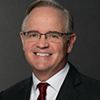
John Long, Transition Partner | Kutak Rock LLP
John Long has more than a decade of experience representing universities, coaches, and sports organizations in high-profile collegiate and professional sports matters. A member of Kutak Rock’s College Athletics Industry group, he focuses his practice on NCAA infractions and compliance, Title IX gender equity, sports wagering investigations, and name, image, and likeness (NIL) issues.
- Education & Credentials
John earned his J.D. from Marquette University Law School, where he studied through the National Sports Law Institute, and his B.S. from the University of Texas. He is admitted to practice in Texas.
- Recognition & Leadership
While practicing at a large labor and employment law firm, John obtained one of the largest appellate victories in the history of NCAA infractions appeals.
- Professional Involvement
John serves as Chair of the American Bar Association’s Sports and Entertainment Planning Committee and is a member of the American Football Coaches Association.
- Experience
John has served as lead counsel for numerous Division I institutions in NCAA major infractions matters and has advised conferences and universities on complex compliance and eligibility issues, including landmark waiver cases involving student-athletes at the University of North Carolina and West Virginia University. Before joining Kutak Rock, he was a member of the Collegiate Sports Practice Group at a large full-service law firm, where he represented Division I institutions and conferences on high-profile matters, including the NCAA House Settlement. Earlier in his career, he served as Executive of Athletics Compliance at Southeastern Louisiana University.
Ken Witt, Partner | Kutak Rock LLP
Ken Witt is an experienced corporate and securities attorney in Kutak Rock’s Scottsdale office. He represents commercial banks and other institutional clients, private investment funds, and companies across industry verticals including AI, quantum computing, and energy, with work spanning institutional investments, mergers and acquisitions, venture-backed companies, and securities regulation.
- Education & Credentials
Ken is a graduate of Harvard University (A.B., 1980), where he was elected to Phi Beta Kappa, and Harvard Law School (J.D., 1983). He is admitted to practice in Arizona.
- Recognition & Leadership
Ken serves as Co-Chair of Kutak Rock’s Institutional Investment Group and is rated AV (Preeminent) by Martindale-Hubbell. Called “business friendly” by his clients, he emphasizes quality, value, and results.
- Professional Involvement
Ken is a member of the Arizona Bar Association and a frequent CLE presenter, panelist, and author, with speaking engagements for the Arizona Bar Association, Strafford, and Kutak Rock CLE programs, and publications in Law360, Bloomberg Law, and the Denver Law Review.
- Experience
Ken’s work runs from assisting major commercial banks with SBIC fund investments to M&A transactions and the representation of venture-backed clients developing AI and quantum computing technology. Representative matters include private fund investments for major commercial banks, venture financings for technology and ag-tech companies, public offerings and shelf registrations for energy companies, and private placements for real estate developers.
Agenda
SESSION 1 – Representing College Athletes in Revenue Sharing and Third-Party NIL Deals Against PE-Funded and Well-Resourced Counterparties | 1:00pm – 2:00pm
This session examines the legal landscape an attorney must understand to effectively represent college athletes in NIL negotiations against sophisticated counterparties—PE-backed collectives, public, private, and now commercial university entities, and multimedia rights companies—under the post-House v. NCAA settlement framework. Attendees will learn how to structure contracts that survive Deloitte’s FMV review, identify and neutralize red-flag provisions including overbroad exclusivity, transfer clawbacks, perpetual IP rights, and exploitative agent fee structures, and advise clients on risks arising from an ever-changing regulatory landscape, two Executive Orders, and pending federal legislation. Attorneys will leave with a practical framework for drafting, negotiating, and auditing NIL agreements on behalf of individual athlete clients.
BREAK | 2:00pm – 2:10pm
SESSION 2 – Drafting Athlete Revenue-Share Agreements with Schools Funded by Private Capital | 2:10pm – 3:10pm
This session addresses key compliance elements related to athlete revenue-share and NIL agreements in the post House v. NCAA settlement era. The settlement permits participating Division I institutions to compensate student-athletes directly, beginning with an approximately $20.5 million institutional cap for the 2025–26 academic year, with the cap increasing over the settlement term. Attendees will learn to identify the key drafting and counseling risks in this emerging market: cap allocation and adjustment, NIL rights grants and activation obligations, interaction with third-party NIL and associated-entity deals, Title IX uncertainty, employment-status and wage-and-hour exposure, tax characterization and reporting, transfer-related restrictions, termination rights, liquidated damages and buyout enforceability, state-law variation, and payment-source risk where schools or conferences use private-capital or commercial-rights structures to fund athletics operations. By the end of the session, attendees will be able to evaluate a revenue-share agreement against the House settlement framework and the CSC compliance regime, spot provisions that may create Title IX, antitrust, employment, tax, state-law, transfer, or enforceability risk, and draft contractual protections that preserve institutional and athlete flexibility while the regulatory framework continues to evolve.
Additionally, this session addresses the college athletics’ potential transition from a donor-based model to an investment model which has been fueled by private capital offerings and the possibility of major college football and basketball transitioning to a private-owned collective bargaining model. The session will address those transition possibilities, including public=private partnership, booster-led private ownership, PE-backed spin-offs, conference credit facilities, and equity proposals— which are reshaping the industry.
Credits
Alaska
Approved for CLE Credits
2 General
Alabama
Approved for Self-Study Credits
2 General
Arkansas
Approved for CLE Credits
2 General
Arizona
Approved for CLE Credits
2 General
California
Approved for CLE Credits
2 General
Colorado
Pending CLE Approval
2 General
Connecticut
Approved for CLE Credits
2 General
District of Columbia
No MCLE Required
No MCLE Required
Delaware
Pending CLE Approval
2 General
Florida
Approved for CLE Credits
2.5 General
Georgia
Approved for Self-Study Credits
2 General
Hawaii
Approved for CLE Credits
2 General
Iowa
Pending CLE Approval
2 General
Idaho
Approved for Self-Study Credits
2 General
Illinois
Approved for Self-Study Credits
2 General
Indiana
Approved For On-Demand Credits
2 General
Kansas
Pending CLE Approval
2 Substantive
Kentucky
Pending CLE Approval
2 General
Louisiana
Pending CLE Approval
2 General
Massachusetts
No MCLE Required
2 CLE Hour(s)
Maryland
No MCLE Required
2 CLE Hour(s)
Maine
Pending CLE Approval
2 General
Michigan
No MCLE Required
2 CLE Hour(s)
Minnesota
Pending CLE Approval
2 General
Missouri
Approved for Self-Study Credits
2.4 General
Mississippi
Pending CLE Approval
2 General
Montana
Pending CLE Approval
2 General
North Carolina
Pending CLE Approval
2 General
North Dakota
Approved for CLE Credits
2 General
Nebraska
Pending CLE Approval
2 General
New Hampshire
Approved for CLE Credits
120 General minutes
New Jersey
Approved for CLE Credits
2 General
New Mexico
Approved for Self-Study Credits
2 General
Nevada
Approved for Self-Study Credits
2 General
New York
Approved for CLE Credits
2 General
Ohio
Approved for Self-Study Credits
2 General
Oklahoma
Pending CLE Approval
2.5 General
Oregon
Pending CLE Approval
2 General
Pennsylvania
Approved for Self-Study Credits
2 General
Rhode Island
Pending CLE Approval
2.5 General
South Carolina
Approved for Self-Study Credits
2 General
South Dakota
No MCLE Required
2 CLE Hour(s)
Tennessee
Approved for Self-Study Credits
2 General
Texas
Approved for CLE Credits
2 General
Utah
Pending CLE Approval
2 General
Virginia
Not Eligible
2 General Hours
Vermont
Approved for CLE Credits
2 General
Washington
Approved via Attorney Submission
2 Law & Legal Hours
Wisconsin
Approved for Self-Study Credits
2 General
West Virginia
Pending CLE Approval
2.4 General
Wyoming
Pending CLE Approval
2 General
Preview
More CLE Webinars
Trending CLE Webinars










Upcoming CLE Webinars



















































© 2026 Federal Bar Association