
Litigating Police Failure-to-Train and Other Claims Against Local-Governmental Entities Under Monell
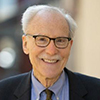
David Rudovsky has practiced civil-rights and criminal-defense law for more than forty years. His caseload has centered on police and governmental misconduct, prisoners’ rights, First Amendment freedoms, and racial discrimination — including two civil-rights arguments before the United States Supreme Court, among them City of Canton v. Harris, the decision that defines municipal liability for police training failures.

Subodh Chandra is a former federal prosecutor and former Director of Law for the City of Cleveland, he concentrates on high-profile civil-rights litigation, white-collar criminal defense, and internal investigations, and is regularly engaged for high-stakes matters with public-policy and crisis-communications dimensions.
Live Video-Broadcast: October 30, 2026
2 hour CLE
Tuition: $195.00
Co-Sponsored by myLawCLE
Get this course, plus over 1,000+ of live webinars.
Learn More
Training 5 or more people?
Sign-up for a law firm subscription plan and each attorney in the firm receives free access to all CLE Programs
Program Summary
Your Monell Claim Can Survive Even When the Officer’s Case Does Not
Failure-to-train claims are among the most frequently dismissed theories in civil-rights litigation. Courts demand more than a bad outcome and a thin training file. This program treats the Monell claim as a standalone case — pleaded, discovered, and tried on its own proof.
The stakes compound at every stage. Plead the four elements generically and the complaint dies at Rule 12(b)(6). Fall short on deliberate indifference and summary judgment follows. Concede bifurcation and the jury never hears the training evidence. Lose the moving-force fight and causation collapses at verdict.
Attendees leave with working frameworks: a pleading approach for each Monell element, discovery targets for training deficiencies, pattern and single-incident proof strategies, causation evidence and expert testimony plans, and jury-instruction and verdict-form language that preserves the standalone municipal claim.
Key topics to be discussed:
- The Four Elements
How to plead each required Monell failure-to-train element with facts that survive a Rule 12(b)(6) motion. - Proving Deliberate Indifference
When pattern evidence is required and when a single-incident theory can carry the deliberate indifference standard. - Causation and Discovery
How circuit splits shape the moving-force causation showing and which discovery strategies expose training deficiencies. - Standalone Municipal Liability
How to defeat bifurcation motions and keep the Monell claim before the jury on its own proof. - Expert Testimony Strategy
How to marshal causation evidence and expert testimony connecting the training failure to the constitutional violation. - Damages and Verdict Preservation
How to structure a damages case against the municipality and protect the claim through jury instructions and the verdict form.
This course is co-sponsored with myLawCLE.
Date / Time: October 30, 2026
- 2:30 pm – 4:40 pm Eastern
- 1:30 pm – 3:40 pm Central
- 12:30 pm – 2:40 pm Mountain
- 11:30 am – 1:40 pm Pacific
 Closed-captioning available
Speakers
David Rudovsky, Founding Partner | Kairys, Rudovsky, Messing, Feinberg & Lin LLP
David Rudovsky is a founding partner of Kairys, Rudovsky, Messing, Feinberg & Lin LLP in Philadelphia, where he has practiced civil-rights and criminal-defense law for more than forty years. His caseload has centered on police and governmental misconduct, prisoners’ rights, First Amendment freedoms, and racial discrimination — including two civil-rights arguments before the United States Supreme Court, among them City of Canton v. Harris, the decision that defines municipal liability for police training failures.
- Education & Credentials
Mr. Rudovsky earned his LL.B. from New York University School of Law in 1967, where he was a Fellow in the Arthur Garfield Hays Civil Liberties Program, and his B.A. from Queens College, City University of New York, in 1964.
- Recognition & Leadership
In 1986 he received a MacArthur Foundation Fellowship for his work in criminal justice. The Philadelphia Bar Foundation has honored him with the Judge Gerald F. Flood Award for public-interest accomplishments, and he has received the ACLU Civil Liberties Award and the Philadelphia Bar Association’s Cesare Beccaria Award for criminal justice.
- Professional Involvement
Since 1987, Mr. Rudovsky has been a Senior Fellow at the University of Pennsylvania Carey Law School, teaching Constitutional Criminal Procedure, Criminal Law, and Evidence. He serves as President of the Board of Directors of the Defender Association of Philadelphia and Vice President of the Board of the Pennsylvania Innocence Project. He is the author of the practice treatises Police Misconduct: Law & Litigation and The Law of Arrest, Search and Seizure in Pennsylvania, along with numerous scholarly articles on civil rights and the criminal justice system.
- Experience
Mr. Rudovsky argued two significant civil-rights cases in the United States Supreme Court: Mitchell v. Forsyth (1985), on the immunity of the Attorney General for illegal electronic surveillance, and City of Canton v. Harris (1989), on municipal liability for civil-rights violations by police. He has prepared numerous amicus briefs in Supreme Court civil-rights cases and argued scores of civil-rights and criminal-law matters in the federal and state courts.
Subodh Chandra, Founder and Managing Partner | The Chandra Law Firm LLC Subodh Chandra is the founding and managing partner of The Chandra Law Firm LLC
in Cleveland, Ohio. A former federal prosecutor and former Director of Law for the City of Cleveland, he concentrates on high-profile civil-rights litigation, white-collar criminal defense, and internal investigations, and is regularly engaged for high-stakes matters with public-policy and crisis-communications dimensions.
- Education & Credentials
Mr. Chandra earned his J.D. from Yale Law School in 1994, where he served as executive editor of the Yale Law & Policy Review, and graduated from Stanford University in 1989 with honors and distinction in two departments, receiving the John Gardner Fellowship. He is admitted to practice in Ohio, California, and New Mexico (inactive), and in federal courts around the country.
- Recognition & Leadership
Mr. Chandra was named the 2022 Lawyer of the Year in Civil Rights by Best Lawyers® in America and has been peer-review included in Best Lawyers® in America for civil rights and in Ohio Super Lawyers®. As a federal prosecutor he received a commendation from FBI Director Robert Mueller for demonstrated excellence, along with a special commendation from the Special Agent in Charge of the FBI’s Cleveland office. Under his leadership, Chandra Law has been included in U.S. News & World Report’s Best Law Firms in America for civil rights.
- Professional Involvement
Mr. Chandra serves as co-vice chair of the Special Ohio Advisory Committee to the United States Commission on Civil Rights and as a member of the Cleveland Metropolitan Bar Association’s Judicial Selection Committee. He has served as Distinguished Practitioner in Residence at Case Western Reserve University School of Law, teaching appellate practice and legal ethics, and has served as a legal-ethics and attorneys’-fees expert in litigation.
- Experience
Mr. Chandra’s civil-rights matters include representing the family of 12-year-old Tamir Rice in the police-shooting case that resulted in a $6,000,000 settlement, obtaining nearly $1,000,000 in settlements for 2016 Republican National Convention protestors, and litigating voting-rights challenges to voter-suppression schemes in Ohio. As Cleveland’s Director of Law and Prosecuting Attorney (2002–05), he led an 82-lawyer department with criminal and civil divisions and at times served as acting mayor. He previously served as an Assistant U.S. Attorney (1999–2002), prosecuting healthcare fraud, corruption, and economic crimes, and in 2021 was the principal author, on behalf of police-misconduct victims’ families, of the Cleveland charter amendment establishing greater civilian disciplinary and policy oversight of police.
Agenda
SESSION 1 – Pleading and Proving the Monell Failure-to-Train Claim | 2:30pm – 3:30pm
This session examines how plaintiffs plead and prove failure-to-train claims against municipalities under Monell v. Department of Social Services, with particular focus on the Supreme Court’s unanimous 2025 decision in Barnes v. Felix and its impact on the totality-of-circumstances framework. Attendees will learn the four required elements, the deliberate indifference standard, pattern versus single-incident proof strategies, and the most common pleading failures that doom these claims at the Rule 12(b)(6) stage. Attorneys will leave with a working framework for drafting constitutionally adequate complaints, identifying discoverable training deficiencies, and anticipating defense arguments on causation and the moving-force element.
BREAK | 3:30pm – 3:40pm
SESSION 2 – Trial Strategy and Damages in Failure-to-Train Cases | 3:40pm – 4:40pm
This session equips plaintiff’s attorneys with the trial-level strategy to litigate a Monell failure-to-train case from pretrial motions through verdict and damages. Attendees will learn how Barnes v. Felix reshapes the trial narrative, how to defeat bifurcation motions, how to marshal causation evidence and expert testimony, and how to structure a damages case against a municipality. Attorneys leave with a working framework for jury instructions, verdict form strategy, and preserving the standalone municipal claim.
Credits
Alaska
Approved for CLE Credits
2 General
Alabama
Approved for CLE Credits
2 General
Arkansas
Approved for CLE Credits
2 General
Arizona
Approved for CLE Credits
2 General
California
Approved for CLE Credits
2 General
Colorado
Pending CLE Approval
2 General
Connecticut
Approved for CLE Credits
2 General
District of Columbia
No MCLE Required
No MCLE Required
Delaware
Pending CLE Approval
2 General
Florida
Approved via Attorney Submission
2 General Hours
Georgia
Approved for CLE Credits
2 General
Hawaii
Approved for CLE Credits
2 General
Iowa
Pending CLE Approval
2 General
Idaho
Pending CLE Approval
2 General
Illinois
Pending CLE Approval
2 General
Indiana
Pending CLE Approval
2 General
Kansas
Pending CLE Approval
2 Substantive
Kentucky
Pending CLE Approval
2 General
Louisiana
Pending CLE Approval
2 General
Massachusetts
No MCLE Required
2 CLE Hour(s)
Maryland
No MCLE Required
2 CLE Hour(s)
Maine
Pending CLE Approval
2 General
Michigan
No MCLE Required
2 CLE Hour(s)
Minnesota
Pending CLE Approval
2 General
Missouri
Approved for CLE Credits
2.4 General
Mississippi
Pending CLE Approval
2 General
Montana
Pending CLE Approval
2 General
North Carolina
Pending CLE Approval
2 General
North Dakota
Approved for CLE Credits
2 General
Nebraska
Pending CLE Approval
2 General
New Hampshire
Approved for CLE Credits
120 General minutes
New Jersey
Approved for CLE Credits
2 General
New Mexico
2 General
Nevada
Pending CLE Approval
2 General
New York
Approved for CLE Credits
2 General
Ohio
Approved for CLE Credits
2 General
Oklahoma
Pending CLE Approval
2.5 General
Oregon
Pending CLE Approval
2 General
Pennsylvania
Approved for CLE Credits
2 General
Rhode Island
Pending CLE Approval
2.5 General
South Carolina
Pending CLE Approval
2 General
South Dakota
No MCLE Required
2 CLE Hour(s)
Tennessee
Approved for CLE Credits
2 General
Texas
Approved for CLE Credits
2 General
Utah
Pending CLE Approval
2 General
Virginia
Not Eligible
2 General Hours
Vermont
Approved for CLE Credits
2 General
Washington
Approved via Attorney Submission
2 Law & Legal Hours
Wisconsin
Pending CLE Approval
2 General
West Virginia
Pending CLE Approval
2.4 General
Wyoming
Pending CLE Approval
2 General
More CLE Webinars
Trending CLE Webinars










Upcoming CLE Webinars



























































© 2026 Federal Bar Association