When the Trustee Goes Quiet: Forcing Fiduciary Transparency in the Age of Silent Trusts
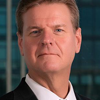
David Fowler Johnson is widely regarded as a go-to fiduciary litigator in Texas, practicing from Winstead PC’s Fort Worth office. His practice concentrates on trust, estate, and closely held business disputes, and he writes and speaks frequently across the state on fiduciary law. He authors The Fiduciary Litigator, an award-winning blog tracking case law, legislative changes, and other developments affecting Texas fiduciaries.

John Scheerer is a partner at Sacks, Glazier, Franklin, Lodise, McMurtrey & Scheerer, LLP in Los Angeles, where he focuses his practice exclusively on trusts, estates, and conservatorship litigation. He has handled a broad range of matters before the Probate Department of the Superior Court and has argued appeals in the California Court of Appeal, producing multiple successful appellate decisions. He represents beneficiaries, trustees, professional fiduciaries, and non-profit institutions, including national universities.
On-Demand: August 27, 2026
2 hour CLE
Tuition: $195.00
Co-Sponsored by myLawCLE
Get this course, plus over 1,000+ of live webinars.
Learn More
Training 5 or more people?
Sign-up for a law firm subscription plan and each attorney in the firm receives free access to all CLE Programs
Program Summary
Silence Is Now a Statute
Trustee silence used to signal breach. Today it may be the law. South Dakota, Delaware, Nevada, and Michigan’s 2024 statute authorize silent trusts that suspend the disclosure duties beneficiaries once took for granted, while UTC § 813 still governs elsewhere. The result is a state-by-state patchwork where the same conduct is protected in one forum and actionable in the next.
The stakes compound fast on both sides. Refuse to account, and a trustee invites surcharge, removal, and fee-shifting. Assert privilege too broadly, and the fiduciary exception hands the file to the beneficiary. Manage the trustee file carelessly, and the file itself becomes evidence of unfitness. Draft a release loosely, and it collapses under virtual-representation and tax challenges.
This two-session program arms both sides of the caption. Attorneys leave with a step-by-step roadmap for compelling accountings and escalating remedies, a framework for segregating privileged communications from day one, an exculpation-clause audit for the engagement stage, and settlement structures, including nonjudicial settlement agreements and in terrorem leverage, built to survive challenge.
Key topics to be discussed:
- The Statutory Patchwork
Map UTC § 813 disclosure duties against South Dakota, Delaware, Nevada, and Michigan statutes. - Silence Versus Stonewalling
Distinguish a legally authorized silent trust from a trustee in breach of duty. - Compelling Accountings
Clear standing and timing thresholds, then escalate to surcharge, removal, and fee-shifting. - Privilege Battlegrounds
Defeat or defend fiduciary-exception challenges attorney-client privilege in trust litigation. - The Defensible File
Structure files, fee rights, indemnification, and exculpation clauses to survive removal proceedings. - Settlement That Holds
Draft NJSAs and releases that survive virtual-representation, tax, and in terrorem challenges.
This course is co-sponsored with myLawCLE.
 Closed-captioning available
Speakers
David Fowler Johnson, Shareholder | Winstead PC
David Fowler Johnson is widely regarded as a go-to fiduciary litigator in Texas, practicing from Winstead PC’s Fort Worth office. His practice concentrates on trust, estate, and closely held business disputes, and he writes and speaks frequently across the state on fiduciary law. He authors The Fiduciary Litigator, an award-winning blog tracking case law, legislative changes, and other developments affecting Texas fiduciaries.
- Education & Credentials
Mr. Johnson earned his J.D., magna cum laude, from Baylor Law School in 1997, where he received the Mid-Year Law Award from the Baylor Law Review, earned Academic Dean’s List honors, and held multiple scholarships. He received his B.B.A. in Accounting from Baylor University in 1994 and was admitted to the Texas bar in 1997. He is licensed to practice before the U.S. Supreme Court; the Fifth, Seventh, and Eleventh Federal Circuits; the Federal District Courts for the Northern, Eastern, and Western Districts of Texas; and the Texas Supreme Court and various Texas intermediate appellate courts.
- Recognition & Leadership
Mr. Johnson is one of twenty attorneys in Texas, of the 84,000 licensed, holding triple Board Certification in Civil Trial Law, Civil Appellate Law, and Personal Injury Trial Law from the Texas Board of Legal Specialization. He received the JD Supra 2020 Readers’ Choice Award for Wealth Management, his third consecutive year receiving the award, and was named a Go-To Thought Leader in Fiduciary Litigation by the National Law Review in 2020.
- Professional Involvement
Mr. Johnson currently serves on the board of the Texas Board of Legal Specialization, the Texas State Bar’s certifying body for attorney specialties, and previously served on the commission that wrote and graded the civil trial law examination. He has served as an adjunct professor at Baylor University Law School and Texas Wesleyan Law School, has delivered over 300 legal education presentations, and has published twenty law review articles cited repeatedly by the Texas Supreme Court, numerous Texas courts of appeals, and courts and commentators in other jurisdictions.
- Experience
Mr. Johnson’s trust and estate work spans will contests, elder abuse, mental competency, undue influence, trust modification, reformation, and clarification, breach of fiduciary duty claims, decanting, severance and joinder, accountings, and suits to remove a fiduciary. His trial experience includes representing banks in disputes over distributions, trusteeship of more than 220 trusts, and management of oil and gas assets, and representing individual executors and trustees against beneficiary claims. He also maintains a transactional practice for trust departments and has been retained as an expert on fiduciary compliance, fiduciary compensation, and elder abuse.
John Scheerer, Partner | Sacks, Glazier, Franklin, Lodise, McMurtrey & Scheerer, LLP
John Scheerer is a partner at Sacks, Glazier, Franklin, Lodise, McMurtrey & Scheerer, LLP in Los Angeles, where he focuses his practice exclusively on trusts, estates, and conservatorship litigation. He has handled a broad range of matters before the Probate Department of the Superior Court and has argued appeals in the California Court of Appeal, producing multiple successful appellate decisions. He represents beneficiaries, trustees, professional fiduciaries, and non-profit institutions, including national universities.
- Education & Credentials
Mr. Scheerer earned his J.D. in 2014 from the University of California, Los Angeles School of Law, which he attended on a full merit scholarship. He was elected to the Order of the Coif, served as Associate Editor of the UCLA Law Review, and received the Dean’s Award for the highest grade in Wills and Trusts. He received his B.A. in Political Science, summa cum laude, from UCLA in 2010, and is admitted to the California bar.
- Recognition & Leadership
Mr. Scheerer’s trusts and estates litigation work has earned placement on the Lawdragon 500 Leading Trusts & Estates Lawyers list, recognition as a Benchmark Litigation Future Star, selection to Best Lawyers and Super Lawyers Rising Stars, and designation as a Chambers and Partners Up-and-Coming Notable Practitioner for High-Net-Worth Private Wealth Disputes in California. He has also been recognized among the Los Angeles Times Legal Visionaries and in Los Angeles Magazine’s Best of L.A. Legal.
- Professional Involvement
Mr. Scheerer serves as a Board Member of the Beverly Hills Estate Planning Council, as Vice-Chair of Professional Responsibility for the American Bar Association Real Property, Trust and Estate Law Section, and as a member of the Los Angeles Estate Planning Council. He has presented to the California Lawyers Association, the ABA RPTE Annual National CLE Conference, and myLawCLE, and he authors articles on trusts and estates issues for Thomson Reuters Practical Law Trusts & Estates, the Daily Journal, and The Recorder.
- Experience
Mr. Scheerer’s practice includes prosecuting and defending will and trust contests, defending creditor claims in decedents’ trusts or estates, defending conservatorship proceedings, and prosecuting and defending breach of fiduciary duty and surcharge claims against trustees. His recent results include successfully defending a multibillion-dollar claim against the Barron Hilton Trust, obtaining terminating sanctions and demurrers sustained without leave to amend for a trustee client, and securing an appellate affirmance after oral argument in the California Court of Appeal. At his previous firm, he was part of the trial team for Sumner Redstone, controlling shareholder of Viacom Inc. and CBS Corp., which secured complete dismissal of the lawsuit after the first day of trial. He previously practiced as a litigation associate at Hueston Hennigan LLP and Irell & Manella LLP.
Agenda
SESSION 1 – Compelling Disclosure and Accountings from a Silent or Stonewalling Trustee | 1:00pm – 2:00pm
This session equips beneficiary-side and trust litigation attorneys with the statutory framework, procedural toolkit, and remedies available when a trustee refuses to disclose, account, or communicate. Attendees will examine UTC § 813 and state-by-state variations—including the silent trust regimes of South Dakota, Delaware, Nevada, and Michigan’s 2024 statute—and learn how to distinguish a legally authorized silent trust from a stonewalling trustee in breach. Attorneys leave with a step-by-step roadmap for compelling accountings, navigating standing thresholds, defeating privilege assertions, and pursuing escalating remedies through surcharge, removal, and fee-shifting.
BREAK | 2:00pm – 2:10pm
SESSION 2 – Defending the Trustee: Privilege Traps, Defensible Files, and Settlement | 2:10pm – 3:10pm
This session equips trustee-defense counsel with the practical tools to navigate the three most consequential risks in trust litigation: attorney-client privilege erosion under the fiduciary exception, file-management failures that become evidence of unfitness, and the strategic use of nonjudicial settlement agreements and in terrorem clauses to resolve disputes. Attorneys will leave with a framework for segregating privileged communications from the outset, auditing exculpation clauses at engagement, and structuring releases that survive virtual-representation and tax challenges. The session pays particular attention to the silent trust overlay — where the same statutory provisions that limit beneficiary access also limit trustee defenses.
Credits
Alaska
Approved for CLE Credits
2 General
Alabama
Approved for Self-Study Credits
2 General
Arkansas
Approved for CLE Credits
2 General
Arizona
Approved for CLE Credits
2 General
California
Approved for CLE Credits
2 General
Colorado
Pending CLE Approval
2 General
Connecticut
Approved for CLE Credits
2 General
District of Columbia
No MCLE Required
No MCLE Required
Delaware
Pending CLE Approval
2 General
Florida
Approved via Attorney Submission
2 General Hours
Georgia
Approved for CLE Credits
2 General
Hawaii
Approved for CLE Credits
2 General
Iowa
Pending CLE Approval
2 General
Idaho
Pending CLE Approval
2 General
Illinois
Approved for Self-Study Credits
2 General
Indiana
Approved For On-Demand Credits
2 General
Kansas
Approved for Self-Study Credits
2 Substantive
Kentucky
Pending CLE Approval
2 General
Louisiana
Pending CLE Approval
2 General
Massachusetts
No MCLE Required
2 CLE Hour(s)
Maryland
No MCLE Required
2 CLE Hour(s)
Maine
Pending CLE Approval
2 General
Michigan
No MCLE Required
2 CLE Hour(s)
Minnesota
Pending CLE Approval
2 General
Missouri
Approved for Self-Study Credits
2.4 General
Mississippi
Pending CLE Approval
2 General
Montana
Pending CLE Approval
2 General
North Carolina
Pending CLE Approval
2 General
North Dakota
Approved for CLE Credits
2 General
Nebraska
Pending CLE Approval
2 General
New Hampshire
Approved for CLE Credits
120 General minutes
New Jersey
Approved for CLE Credits
2 General
New Mexico
Approved for Self-Study Credits
2 General
Nevada
Approved for CLE Credits
2 General
New York
Approved for CLE Credits
2 General
Ohio
Approved for Self-Study Credits
2 General
Oklahoma
Pending CLE Approval
2.5 General
Oregon
Pending CLE Approval
2 General
Pennsylvania
Approved for Self-Study Credits
2 General
Rhode Island
Pending CLE Approval
2.5 General
South Carolina
Pending CLE Approval
2 General
South Dakota
No MCLE Required
2 CLE Hour(s)
Tennessee
Approved for Self-Study Credits
2 General
Texas
Approved for CLE Credits
2 General
Utah
Pending CLE Approval
2 General
Virginia
Not Eligible
2 General Hours
Vermont
Approved for CLE Credits
2 General
Washington
Approved via Attorney Submission
2 Law & Legal Hours
Wisconsin
Approved for Self-Study Credits
2 General
West Virginia
Pending CLE Approval
2.4 General
Wyoming
Pending CLE Approval
2 General
Preview
More CLE Webinars
Trending CLE Webinars










Upcoming CLE Webinars





























© 2026 Federal Bar Association