The Litigator’s Guide to Evidentiary Objections: When to hold them and how to avoid mistakes [Including 1hr of Ethics] [2026 Edition]
On-Demand: June 23, 2026
3 hour CLE
Tuition: $245.00
Co-Sponsored by myLawCLE
Get this course, plus over 1,000+ of live webinars.
Learn More
Training 5 or more people?
Sign-up for a law firm subscription plan and each attorney in the firm receives free access to all CLE Programs
Program Summary
The mechanics of evidentiary practice have outpaced the templates most litigators learned in their first years at trial. Authentication of digital exhibits and ESI now turns on technical questions earlier generations never had to answer, the Confrontation Clause has been reshaped by Crawford and its progeny — most recently the Supreme Court's 2024 decision in Smith v. Arizona, hearsay rulings cut harder against unprepared counsel, and the ethics rules covering spoliation, witness preparation, false testimony, speaking objections, and generative AI have expanded where a litigator can step wrong. Trial lawyers operating on aging outlines are exposing clients and themselves at deposition, in limine, and at the bench. This class rebuilds the core: foundation for real and demonstrative evidence, authentication of digital and ESI exhibits, proper form for objections and offers of proof, the hearsay and Confrontation Clause framework, and the ethical hazards surrounding discovery and trial. Attendees leave able to raise, preserve, and defend objections that hold on appeal.
What Will You Learn
Attorneys will learn foundation and authentication for real, demonstrative, and digital evidence, hearsay and Confrontation Clause doctrine, and ethical hazards in discovery and trial advocacy.
What Will You Gain
Attorneys will gain proper objection technique, offers of proof, deposition and in limine practice, and the framework to handle forensic and expert testimony at trial.
Key topics to be discussed:
- Evidence foundation
Laying the foundation for real and demonstrative evidence at trial. - Digital authentication
Resolving difficult authentication issues, including digital and electronically stored information. - Objection form
Proper form for objections, offers of proof, and continuing objections. - Hearsay rules
Recognizing and dealing with hearsay and opinion testimony at trial. - Confrontation clause
The testimonial approach and the Confrontation Clause after Crawford v. Washington. - Witness ethics
Ethical considerations in witness preparation and inadvertent disclosure of privileged material.
This course is co-sponsored with myLawCLE.
 Closed-captioning available
Speakers
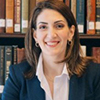
Prof. Marian G. Braccia, Director of the LL.M. | Temple University Beasley School of Law
Marian Grace Braccia is Director of the LL.M. in Trial Advocacy and a Practice Professor of Law at Temple University Beasley School of Law, where she brings particular expertise in courtroom technology, e-discovery issues, and trial skills. Prior to joining the full-time faculty, Professor Braccia taught Introduction to Trial Advocacy and an experiential course in criminal prosecution for several years as an adjunct in Temple’s trial advocacy program, and she has also served as a coach for Temple’s National Trial Team. Before entering academia full-time, she built an accomplished career as a trial attorney with the Philadelphia District Attorney’s Office.
- Education & Credentials
Professor Braccia earned her Juris Doctor from Temple University Beasley School of Law in 2006, returning years later to join the institution she had trained in. She holds a Bachelor of Arts in Urban Studies from the University of Pennsylvania, conferred in 2003.
- Recognition & Leadership
Professor Braccia serves as Director of the LL.M. in Trial Advocacy Program at Temple University Beasley School of Law and holds the title of Practice Professor of Law. During her tenure at the Philadelphia District Attorney’s Office, she was appointed to a supervisory position in the Charging Unit in 2012, and in August 2017 took on added responsibilities as Director of Information Technology for the office, reflecting the trust placed in her leadership across both legal practice and operations.
- Professional Involvement
Professor Braccia presents frequently on gender bias in the courtroom, particularly as it impacts transgender and gender-diverse people and cisgender women. Her teaching reaches well beyond Temple’s Philadelphia campus: she teaches lawyers in Chile, Argentina, Ecuador, and Peru the fundamentals of American trial advocacy through Temple’s Chilean pre-LL.M. program, and she teaches Evidence Law to Chinese legal professionals as part of the Temple-Tsinghua LL.M. degree program.
- Experience
Professor Braccia served as an Assistant District Attorney in the Philadelphia District Attorney’s Office from 2006 to 2018 under District Attorneys Abraham, Williams, Hodge, and Krasner, working as a trial attorney in Major Trials and the Family Violence and Sexual Assault Unit before assuming a supervisory position in the Charging Unit in 2012. In 2014, she launched Philadelphia’s Domestic Violence Diversion Program, taking on a caseload in excess of 200 dockets, monitoring participants’ treatment progress, and reporting program statistics to the DOJ’s Office of Violence Against Women, and in August 2017 she added the role of Director of Information Technology for the office. At Temple, her research and teaching focus on Trial Advocacy and Evidence.
Prof. Richard D. Friedman, Professor of Law | University of Michigan Law School
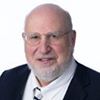
Richard D. Friedman is the Alene and Allan F. Smith Professor of Law at the University of Michigan Law School, where he is recognized as an expert on evidence and Supreme Court history. He joined the Michigan Law faculty in 1988 from Cardozo Law School and has remained a central figure in the evidence community ever since. He is the general editor of The New Wigmore, a multi-volume treatise on evidence, and his scholarly work spans evidence, civil procedure, constitutional law and history, and the rules of games.
- Education & Credentials
Professor Friedman earned both a Bachelor of Arts and a Juris Doctor from Harvard University, where he served as an editor of the Harvard Law Review, and he later completed a D.Phil. in modern history at the University of Oxford. He is admitted to practice in Michigan, where he holds State Bar of Michigan ID No. P42575, and in New York.
- Recognition & Leadership
Professor Friedman holds the chaired position of Alene and Allan F. Smith Professor of Law at the University of Michigan Law School. In 2023, he received the John Henry Wigmore Award for Lifetime Achievement from the Section on Evidence of the Association of American Law Schools, an honor bestowed annually in recognition of leading contributions to the understanding of the proof process and to the administration and reform of the rules of evidence. In 2010, he received the Patriot Award from the Washtenaw County Bar Association.
- Professional Involvement
Professor Friedman serves as the general editor of The New Wigmore, the multi-volume treatise on evidence named for the same scholar whose lifetime achievement award he received in 2023. His scholarly areas include evidence, civil procedure, constitutional law and history, and rules of games, and he has maintained active bar memberships in both Michigan and New York throughout his academic career.
- Experience
Following law school, Professor Friedman clerked for Chief Judge Irving R. Kaufman of the United States Court of Appeals for the Second Circuit, after which he practiced law in New York City. He joined the University of Michigan Law School faculty in 1988 from Cardozo Law School and has since been appointed the Alene and Allan F. Smith Professor of Law. His teaching at Michigan spans Civil Procedure, Evidence, Introduction to Constitutional Law, and Jurisdiction and Choice of Law.
Arthur D. Burger, Of Counsel | Jackson & Campbell, P.C.
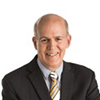
Arthur D. Burger is Of Counsel at Jackson & Campbell, P.C. and chair of the firm’s Professional Responsibility Practice Group, representing law firms and lawyers in matters related to legal ethics and legal malpractice. A national leader in legal ethics, legal malpractice, and the law governing lawyers, Mr. Burger has been representing prominent law firms and lawyers for over two decades. He was selected as “Lawyer of the Year” in Washington, D.C. for Ethics and Professional Responsibility Law by Best Lawyers of America® for 2023, and the practice group he chairs holds a Tier 1 Regional Ranking.
- Education & Credentials
Mr. Burger earned his Juris Doctor from The George Washington University Law School. He is admitted to practice in the District of Columbia and Maryland, and before the U.S. District Court for the District of Columbia, the U.S. Court of Appeals for the District of Columbia Circuit, the U.S. Court of Federal Claims, and the U.S. Supreme Court.
- Recognition & Leadership
Mr. Burger has been selected repeatedly as a Best Lawyer® in Ethics and Professional Responsibility by Best Lawyers of America© and as a Super Lawyer® in Professional Liability Defense, and he holds an AV Preeminent® rating from Martindale-Hubbell®. He serves as chair of Jackson & Campbell’s Professional Responsibility Practice Group, which carries a Tier 1 Regional Ranking. In Diamond Resorts v. Newton Group Transfers, LLC, 2022 WL 1642865 (S.D. Fla. 2022), the court found him “more than qualified to give his expert opinion in matters of legal ethics.”
- Professional Involvement
Mr. Burger is a member of the Editorial Board of the ABA/Bloomberg Law–Lawyers’ Manual on Professional Conduct and serves as an Adjunct Professor at the Antonin Scalia Law School of George Mason University, teaching a night class in Professional Responsibility. He was a member of the ten-person American Bar Association Committee on Ethics and Professional Responsibility from 2014 to 2017; an elected District of Columbia Bar Delegate to the ABA House of Delegates from 2011 to 2012, where he worked with the ABA Ethics 20/20 Commission; a member of the District of Columbia Bar Legal Ethics Committee from 2003 to 2009; and a member of the District of Columbia Bar Rules of Professional Conduct Review Committee from 1998 to 2004. He has taught numerous District of Columbia Bar continuing legal education courses on legal ethics and has lectured around the country.
- Experience
Mr. Burger litigates in the areas of legal malpractice, fiduciary duties, motions to disqualify, internal law firm disputes, Bar disciplinary proceedings, and matters before the Office of Enrollment and Discipline of the U.S. Patent and Trademark Office. He also serves as outside counsel to law firms and provides guidance regarding potential conflicts of interest and other ethical dilemmas. Beyond his work as a practitioner, Mr. Burger serves as an expert witness on legal ethics and the standard of care for lawyers, a role recognized by the federal court in Diamond Resorts v. Newton Group Transfers, LLC. His CLE and conference work has spanned topics including conflicts of interest, advance waivers, ethics in fee-shifting cases, risk management for law firms, ethical issues in intellectual property practice, remote work ethics, and the ethical implications of generative AI for lawyers and law firms.
Agenda
SESSION 1 – Foundations, Authentication, and Objection Mechanics | 1:00pm – 2:00pm
This opening grounds litigators in floor-level mechanics: laying foundation for real and demonstrative evidence, authenticating digital exhibits and ESI, raising objections in proper form, handling deposition objections, in limine motions, continuing objections, offers of proof, and discovery missteps creating problems.
BREAK | 2:00pm – 2:10pm
SESSION 2 – Hearsay and the Confrontation Clause After Smith v. Arizona | 2:10pm – 3:10pm
This segment covers recognizing and responding to hearsay, applying the Confrontation Clause framework that emerged from Crawford and its post-Crawford progeny, and addresses recent forensic and expert testimony developments shaping pretrial strategy and trial presentation in cases tried today.
BREAK | 3:10pm – 3:20pm
SESSION 3 – Ethical Boundaries in Discovery, Depositions, and Trial Advocacy | 3:20pm – 4:20pm
This closing identifies principal ethical hazards in evidentiary practice, including spoliation and ESI preservation, inadvertent privilege disclosure, witness preparation, false testimony, fraudulent documents, speaking objections at deposition and trial, the prohibition on asserting personal views, and emerging generative AI use.
Credits
Alaska
Approved for CLE Credits
2 General, 1 Ethics
Alabama
Approved for Self-Study Credits
2 General, 1 Ethics
Arkansas
Approved for CLE Credits
2 General, 1 Ethics
Arizona
Approved for CLE Credits
2 General, 1 Professional Responsibility/Ethics
California
Approved for CLE Credits
2 General, 1 Ethics
Colorado
Pending CLE Approval
2 General, 1 Ethics / Professionalism
Connecticut
Approved for CLE Credits
2 General, 1 Ethics / Professionalism
District of Columbia
No MCLE Required
No MCLE Required
Delaware
Pending CLE Approval
2 General, 1 Enhanced Ethics
Florida
Pending CLE Approval
2 General, 1 Ethics
Georgia
Approved for CLE Credits
2 General, 1 Ethics
Hawaii
Approved for CLE Credits
2 General, 1 Ethics or Professional Responsibility Education
Iowa
Pending CLE Approval
2 General, 1 Ethics
Idaho
Pending CLE Approval
2 General, 1 Ethics / Professionalism
Illinois
Approved for Self-Study Credits
2 General, 1 Ethics
Indiana
Approved For On-Demand Credits
2 General, 1 Ethics
Kansas
Pending CLE Approval
2 Substantive, 1 Ethics / Professionalism
Kentucky
Pending CLE Approval
2 General, 1 Ethics
Louisiana
Pending CLE Approval
2 General, 1 Ethics
Massachusetts
No MCLE Required
3 CLE Hour(s)
Maryland
No MCLE Required
3 CLE Hour(s)
Maine
Pending CLE Approval
2 General, 1 Ethics / Professionalism
Michigan
No MCLE Required
3 CLE Hour(s)
Minnesota
Pending CLE Approval
2 General, 1 Ethics
Missouri
Approved for Self-Study Credits
2.4 General, 1.2 Ethics
Mississippi
Pending CLE Approval
2 General, 1 Ethics
Montana
Pending CLE Approval
2 General, 1 Professional Fitness and Integrity
North Carolina
Approved for Self-Study Credits
2 General, 1 Ethics
North Dakota
Approved for CLE Credits
2 General, 1 Ethics
Nebraska
Pending CLE Approval
2 General, 1 Professional Responsibility
New Hampshire
Approved for CLE Credits
120 General minutes, 60 Ethics / Professionalism minutes
New Jersey
Approved for CLE Credits
2 General, 1 Ethics / Professionalism
New Mexico
Approved for Self-Study Credits
2 General, 1 Ethics / Professionalism
Nevada
Approved for Self-Study Credits
2 General, 1 Ethics / Professionalism
New York
Approved for CLE Credits
2 General, 1 Ethics / Professionalism
Ohio
Approved for Self-Study Credits
2 General, 1 Professional Conduct
Oklahoma
Approved for Self-Study Credits
2 General, 1 Ethics / Professionalism
Oregon
Approved for Self-Study Credits
2 General, 1 Ethics
Pennsylvania
Approved for Self-Study Credits
2 General, 1 Ethics / Professionalism
Rhode Island
Pending CLE Approval
2 General, 1 Ethics / Professionalism
South Carolina
Pending CLE Approval
2 General, 1 Ethics / Professionalism
South Dakota
No MCLE Required
3 CLE Hour(s)
Tennessee
Approved for Self-Study Credits
2 General, 1 Dual
Texas
Approved for CLE Credits
2 General, 1 Ethics / Professionalism
Utah
Pending CLE Approval
2 General, 1 Ethics / Professionalism
Virginia
Not Eligible
2 General Hours, 1 Ethics / Professionalism Hours
Vermont
Approved for CLE Credits
2 General, 1 Ethics
Washington
Approved via Attorney Submission
2 Law & Legal Hours, 1 Ethics Hours
Wisconsin
Approved for Self-Study Credits
3.5 General
West Virginia
Pending CLE Approval
2.4 General, 1.2 Ethics / Professionalism
Wyoming
Pending CLE Approval
2 General, 1 Ethics / Professionalism
Preview
More CLE Webinars
Trending CLE Webinars









Upcoming CLE Webinars




































© 2026 Federal Bar Association