Responsible AI for Lawyers: Ethical Limits, Judicial Scrutiny, and the Risks Attorneys Can’t Ignore (2026 Edition)
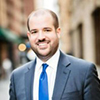
Jeff actively defends lawyers and acts as outside General Counsel to small and mid-sized law firms across the United States, while also serving as this firm’s General Counsel. Jeff defends industry professionals in a wide range of professional liability, ethics and professional disciplinary matters. With an emphasis on simple systems of risk management, Jeff brings a holistic approach of protecting our clients before problems occur.

Matthew Grady brings significant industry experience in computer sciences to his practice. Clients both large and small turn to Matthew for tailored, strategic solutions that focus on valuable business goals and assets. He guides clients through the development of effective intellectual property-building strategies incorporating utility patents, design patents, trademarks, copyrights, and trade secrets.
On-Demand: February 26, 2026
2 hour CLE
Tuition: $195.00
Co-Sponsored by myLawCLE
Get this course, plus over 1,000+ of live webinars.
Learn More
Training 5 or more people?
Sign-up for a law firm subscription plan and each attorney in the firm receives free access to all CLE Programs
Program Summary
Session I – How Attorneys Are Using AI: Practical Tools, Ethical Guardrails, & Judicial Expectations – Jeffrey Cunningham
This session examines how lawyers are actually using AI in their day-to-day practice and where the ethical and professional risks commonly arise. From the perspective of the ABA Model Rules of Professional Conduct, we will explore practical use cases for AI in legal research, drafting, intake, and practice management, while distinguishing permissible assistance from impermissible delegation of professional judgment. The session will also address when AI use may require disclosure to clients, courts, or opposing counsel, how judges are responding to AI-assisted filings, and the emerging body of sanctions and standing orders governing AI use. Throughout, the focus will be on concrete risk-management strategies lawyers and law firms can implement now to use AI responsibly, competently, and in compliance with the rules of professional conduct and professional obligations.
Key topics to be discussed:
- Practical use by lawyers now
- Ethics rules and risk management
- Disclosure duties and transparency
- Judicial treatment and danger
Session II – Generative AI and the Practice of Law: Practical Uses, Limits, and Strategic Adoption – Matthew H. Grady
This session provides a practical, experience-driven review of how generative artificial intelligence is being used by lawyers today and what attorneys should realistically expect from these tools in day-to-day practice. Rather than focusing on abstract theory, the program examines concrete legal workflows where GenAI can add value, as well as areas where its limitations create meaningful risk. Participants will gain a clear understanding of the current landscape of AI tools available to lawyers, how firms are piloting and implementing these technologies, and why human judgment remains essential. The session also addresses the competitive and client-expectation pressures driving AI adoption across the legal industry. By the end of the program, attorneys will be better equipped to evaluate GenAI tools, integrate them thoughtfully into their practice, and avoid common adoption mistakes that undermine accuracy and efficiency.
Key topics to be discussed:
- Review of generative AI and how lawyers are currently using it in legal research, drafting, summarization, and document review
- Strengths and limitations of GenAI for law practice, including reliability concerns, hallucinations, and the need for human oversight
- Categories of AI tools available to attorneys, including public vs. enterprise platforms and practice-focused legal AI solutions
- Practical considerations for integrating GenAI into law firm workflows, training, and internal knowledge management
- Common pitfalls and adoption challenges law firms encounter when deploying GenAI tools
- Client expectations, competitive pressures, and the evolving role of lawyers in an AI-enabled legal marketplace
This course is co-sponsored with myLawCLE.
 Closed-captioning available
Speakers
Jeffrey Cunningham | Cohen Vaughan
Jeff actively defends lawyers and acts as outside General Counsel to small and mid-sized law firms across the United States, while also serving as this firm’s General Counsel. Jeff defends industry professionals in a wide range of professional liability, ethics and professional disciplinary matters. With an emphasis on simple systems of risk management, Jeff brings a holistic approach of protecting our clients before problems occur.
Jeff has an audience of over 30,000 followers on LinkedIn and other social media platforms. He produces a weekly newsletter on ethics and malpractice, a monthly law firm risk management newsletter and daily blog, Point One: A Bite of Ethics a Day Keeps Legal Malpractice Claims Away, as well as the world’s only ABA Model Rules of Professional Conduct-based meme page, The Model-Rule-Meme-A-Day. A life-long learner and teacher, Jeff presents dozens of Continuing Legal Education courses per year on varying topics of law firm risk management and ethics.
A graduate of The Citadel, The Military College of South Carolina, Jeff prepared for his legal practice serving as a Cadet Second Lieutenant/Platoon Leader, the First Battalion Honor Court Representative, and the Editor-in-Chief of The Brigadier newspaper.
Jeff is a Fulbright Scholar, and nurtured his love of travel and languages during his Fulbright fellowship in Germany. He also traveled extensively before and after school, relying on his fluency in German, Yiddish, and Hebrew and studying the law across Europe and in Israel.
At Fordham Law, Jeff was an Associate Editor of the Fordham Journal of Corporate & Financial Law and earned the Archibald R. Murray Public Service Award magna cum laude for pro bono work. He also gained valuable early litigation experience as a legal intern with the Queens District Attorney’s Office and the US Attorney’s Office Southern District of New York Criminal Division.
Jeff has 15 years of large firm experience and defends professional liability cases on behalf of lawyers, law firms, and a myriad of other professionals. He also serves as outside General Counsel to numerous small and mid-sized law firms.
Matthew H. Grady | Wolf Greenfield & Sacks
Matthew Grady brings significant industry experience in computer sciences to his practice. Clients both large and small turn to Matthew for tailored, strategic solutions that focus on valuable business goals and assets. He guides clients through the development of effective intellectual property-building strategies incorporating utility patents, design patents, trademarks, copyrights, and trade secrets.
Matthew works extensively in the US and foreign jurisdictions protecting innovation in the fields of artificial intelligence, encryption, authentication, database design, implementation, and optimization, as well as web-based services and augmentation (Web3.0). He has also developed IP strategies in cryptocurrency, blockchain technologies, medical imaging and devices, bioinformatics, communication systems, cloud computing, and application development and advises clients in quantum computing.
Matthew serves as the firm’s AI Task Force Lead, helping shape guidance and best practices around emerging AI technologies.
Matthew is a founding member of The Ordinary Observer® (for which he registered the trademark), a weekly blog dedicated to the interesting and evolving world of design patents.
Agenda
Session I – How Attorneys Are Using AI: Practical Tools, Ethical Guardrails, & Judicial Expectations | 2:00pm – 3:00pm
- Practical use by lawyers now
- Ethics rules and risk management
- Disclosure duties and transparency
- Judicial treatment and danger
Break | 3:00pm – 3:10pm
Session II – Generative AI and the Practice of Law: Practical Uses, Limits, and Strategic Adoption | 3:10pm – 4:10pm
- Review of generative AI and how lawyers are currently using it in legal research, drafting, summarization, and document review
- Strengths and limitations of GenAI for law practice, including reliability concerns, hallucinations, and the need for human oversight
- Categories of AI tools available to attorneys, including public vs. enterprise platforms and practice-focused legal AI solutions
- Practical considerations for integrating GenAI into law firm workflows, training, and internal knowledge management
- Common pitfalls and adoption challenges law firms encounter when deploying GenAI tools
- Client expectations, competitive pressures, and the evolving role of lawyers in an AI-enabled legal marketplace
Credits
Alaska
Approved for CLE Credits
1 General, 1 Ethics
Alabama
Approved for Self-Study Credits
1 General, 1 Ethics
Arkansas
Approved for CLE Credits
1 General, 1 Ethics
Arizona
Approved for CLE Credits
1 General, 1 Professional Responsibility/Ethics
California
Approved for CLE Credits
1 General, 1 Ethics
Colorado
Pending CLE Approval
1 General, 1 Ethics / Professionalism
Connecticut
Approved for CLE Credits
1 General, 1 Ethics / Professionalism
District of Columbia
No MCLE Required
2 CLE Hour(s)
Delaware
Pending CLE Approval
1 General, 1 Enhanced Ethics
Florida
Approved via Attorney Submission
1 General Hour, 1 Ethics Hour
Georgia
Approved for CLE Credits
1 General, 1 Ethics
Hawaii
Approved for CLE Credits
1 General, 1.2 Ethics or Professional Responsibility Education
Iowa
Approved for Self-Study Credits
1 General, 1 Ethics
Idaho
Pending CLE Approval
1 General, 1 Ethics / Professionalism
Illinois
Pending CLE Approval
1 General, 1 Ethics, Civility, Professionalism
Indiana
Approved For On-Demand Credits
1 General, 1 Ethics
Kansas
Pending CLE Approval
1 Substantive, 1 Ethics / Professionalism
Kentucky
Pending CLE Approval
1 General, 1 Ethics
Louisiana
Pending CLE Approval
1 General, 1 Ethics
Massachusetts
No MCLE Required
2 CLE Hour(s)
Maryland
No MCLE Required
2 CLE Hour(s)
Maine
Pending CLE Approval
1 General, 1 Ethics / Professionalism
Michigan
No MCLE Required
2 CLE Hour(s)
Minnesota
Approved for Self-Study Credits
1 General, 1 Ethics
Missouri
Approved for Self-Study Credits
1.2 General, 1.2 Ethics
Mississippi
Pending CLE Approval
1 General, 1 Ethics
Montana
Approved for Self-Study Credits
1 General, 1 Professional Fitness and Integrity
North Carolina
Pending CLE Approval
1 General, 1 Ethics
North Dakota
Approved for CLE Credits
1 General, 1 Ethics
Nebraska
Pending CLE Approval
1 General, 1 Professional Responsibility
New Hampshire
Approved for CLE Credits
60 General minutes, 60 Ethics / Professionalism minutes
New Jersey
Approved for CLE Credits
1.2 General, 1.2 Ethics / Professionalism
New Mexico
Approved for Self-Study Credits
1 General, 1 Ethics / Professionalism
Nevada
Pending CLE Approval
1 General, 1 Ethics / Professionalism
New York
Approved for CLE Credits
1.2 General, 1.2 Ethics / Professionalism
Ohio
Approved for Self-Study Credits
1 General, 1 Professional Conduct
Oklahoma
Pending CLE Approval
1 General, 1 Ethics / Professionalism
Oregon
Pending CLE Approval
1 General, 1 Ethics
Pennsylvania
Approved for Self-Study Credits
1 General, 1 Ethics / Professionalism
Rhode Island
Approved for CLE Credits
1 General, 1 Ethics
South Carolina
Pending CLE Approval
1 General, 1 Ethics / Professionalism
South Dakota
No MCLE Required
2 CLE Hour(s)
Tennessee
Approved for Self-Study Credits
1 General, 1 Dual
Texas
Approved for CLE Credits
1 General, 1 Ethics / Professionalism
Utah
Pending CLE Approval
1 General, 1 Ethics / Professionalism
Virginia
Not Eligible
1 General Hours, 1 Ethics / Professionalism Hours
Vermont
Approved for CLE Credits
1 General, 1 Ethics
Washington
Approved via Attorney Submission
1 Law & Legal Hours, 1 Ethics Hours
Wisconsin
Approved for Self-Study Credits
2 Law Practice Management
West Virginia
Pending CLE Approval
1.2 General, 1.2 Ethics / Professionalism
Wyoming
Pending CLE Approval
1 General, 1 Ethics / Professionalism
Preview
More CLE Webinars
Trending CLE Webinars










Upcoming CLE Webinars




























© 2026 Federal Bar Association