Who Pays When Markets Are Distorted? Manipulation Claims, Peer-Firm Losses, and Damages in Securities Litigation
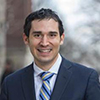
Joshua Mitts is the David J. Greenwald Professor of Law at Columbia Law School, where he uses advanced data science to conduct research on corporate and securities law. His primary focus is informed trading in capital markets and related topics in law and finance.
Live Video-Broadcast: December 11, 2026
2 hour CLE
Tuition: $195.00
Co-Sponsored by myLawCLE
Get this course, plus over 1,000+ of live webinars.
Learn More
Training 5 or more people?
Sign-up for a law firm subscription plan and each attorney in the firm receives free access to all CLE Programs
Program Summary
The Fraud Happened at One Company. The Losses Hit the Whole Industry
Market manipulation claims are among the hardest securities cases to plead and prove. They are also among the most valuable. After Lorenzo, scheme liability under Rule 10b-5(a) and (c) sits alongside the express remedy in Section 9. Manipulation now surfaces in convertible financings, deal pricing, tender offers, pre-IPO secondaries, and de-SPAC transactions. And when fraud is revealed at one company, competitors, suppliers, and lenders often see their stock prices fall too.
Lose the reliance presumption, and the class may never be certified. Lose the price-impact fight after Goldman, and case value shrinks. Misread Blue Chip Stamps, Menora Mivtachim v. Frutarom, or Slack v. Pirani, and peer-company investors lose standing. Misjudge PSLRA proportionate liability, and the wrong defendant pays. Ignore tower erosion, and D&O coverage disputes follow.
You walk out with practical frameworks for evaluating, pleading, and defending manipulation claims. You also gain a clear approach to assessing, litigating, and resolving securities cases that reach beyond a single issuer. These are judgment calls on price impact, loss causation, and damages allocation that no form answers for you.
Key topics to be discussed:
- E
This course is co-sponsored with myLawCLE.
Date / Time: December 11, 2026
- 12:00 pm – 2:10 pm Eastern
- 11:00 am – 1:10 pm Central
- 10:00 am – 12:10 pm Mountain
- 9:00 am – 11:10 am Pacific
 Closed-captioning available
Speakers
Joshua Mitts, David J. Greenwald Professor of Law | Columbia Law School
Joshua Mitts is the David J. Greenwald Professor of Law at Columbia Law School, where he uses advanced data science to conduct research on corporate and securities law. His primary focus is informed trading in capital markets and related topics in law and finance. Employing empirical methods including statistical analysis and machine learning, Professor Mitts studies short selling, securities lending, informed trading on cybersecurity breaches, information leakage and hedge fund activism, insider trading on corporate disclosures, and information transmission in financial markets—work that has made him a leading and frequently cited authority on the intersection of technology, trading, and market regulation.
- Education & Credentials
Professor Mitts holds a Ph.D. in Finance and Economics from Columbia Business School (2018), a J.D. from Yale Law School (2013), and a B.A. in Liberal Studies from Georgetown University (2010). His interest in data science dates back to high school, when he won the Microsoft Windows Forms Coding Hero Award for developing software for the Microsoft .NET platform.
- Recognition & Leadership
Professor Mitts joined the Columbia Law faculty in 2017 as associate professor of law and was named professor of law in 2022 before being appointed to the endowed David J. Greenwald professorship. He is a fellow of the Columbia Law School Program in the Law and Economics of Capital Markets and a member of the Center for Financial and Business Analytics at Columbia University’s Data Science Institute. A widely sought voice on market structure and regulation, he is regularly quoted in national outlets including the Associated Press, CNBC, and Bloomberg News on topics such as prediction markets, short selling, and informed trading.
- Professional Involvement
Professor Mitts frequently speaks at conferences, symposiums, and workshops, recently presenting his paper “A Legal Perspective on Technology and the Capital Markets: Social Media, Short Activism and the Algorithmic Revolution” at the New Special Study of the Securities Markets/FINRA Technology Conference. To help practitioners and scholars communicate more effectively with software engineers, he introduced the course Data and Predictive Coding for Lawyers to the Law School curriculum, and he taught at the Columbia Law Summer Program in American Law in Amsterdam in 2019. His research and commentary regularly inform public debate on emerging issues such as prediction markets and their implications for elections and securities regulation.
- Experience
Professor Mitts’s scholarship sits at the forefront of empirical corporate and securities law, applying quantitative methods to questions of market manipulation, disclosure, and the flow of information among sophisticated traders. His specialties span securities law, corporate law, financial contracts, law and finance, and empirical methods in law, and his teaching bridges the worlds of law, finance, and data science. Through his research, teaching, and public commentary—including analysis featured in litigation and policy debates over prediction markets—he has established himself as an influential scholar shaping how regulators, courts, and market participants understand technology’s growing role in the capital markets.
Agenda
SESSION 1 – Proving Market Manipulation in Private Litigation: Claims, Class Certification, and Damages | Joshua Mitts | 12:00pm – 1:00pm
Market manipulation claims are among the hardest securities cases to plead and prove, and among the most valuable when they succeed. This session examines the private causes of action available to investors and companies, including scheme liability under Rule 10b-5(a) and (c) after Lorenzo and the express remedy under Section 9 of the Exchange Act. It explains how courts separate manipulative conduct from ordinary open-market trading, and how manipulation claims arise around convertible financings, deal pricing, tender offers, and private and illiquid markets such as pre-IPO secondaries, private fund valuations, and de-SPAC transactions. The session then turns to the issues that decide what a case is worth: whether a presumption of reliance is available, how price-impact disputes play out at class certification after Goldman, and how damages are measured when prices are artificially inflated or depressed. Attendees will leave with a practical framework for evaluating, pleading, and defending manipulation claims.
BREAK | 1:00pm – 1:10pm
SESSION 2 – When Fraud Spreads: Peer-Firm Losses, Standing, and Multi-Defendant Damages | Joshua Mitts | 1:10pm – 2:10pm
When fraud is revealed at one company, the damage rarely stops there. Competitors, suppliers, lenders, and others in the same industry often see their stock prices fall as well, leaving investors with losses in companies that did nothing wrong. This session examines what the evidence shows about how far fraud-related losses reach and the legal questions that follow. It covers who has standing to sue under the Blue Chip Stamps purchaser-seller rule and recent decisions such as Menora Mivtachim v. Frutarom and Slack v. Pirani, how loss causation is proved when a corrective disclosure moves an entire sector, and how damages and settlements are divided among multiple defendants under the PSLRA. It also addresses industry-wide disclosure failures that set off follow-on suits, and what all of this means for D&O insurance and indemnification. Attendees will leave with a clear framework for assessing, litigating, and resolving securities cases that reach beyond a single issuer.
Credits
Alaska
Approved for CLE Credits
2 General
Alabama
Pending CLE Approval
2 General
Arkansas
Approved for CLE Credits
2 General
Arizona
Approved for CLE Credits
2 General
California
Approved for CLE Credits
2 General
Colorado
Pending CLE Approval
2 General
Connecticut
Approved for CLE Credits
2 General
District of Columbia
No MCLE Required
2 CLE Hour(s)
Delaware
Pending CLE Approval
2 General
Florida
Approved via Attorney Submission
2 General Hours
Georgia
Pending CLE Approval
2 General
Hawaii
Approved for CLE Credits
2 General
Iowa
Pending CLE Approval
2 General
Idaho
Pending CLE Approval
2 General
Illinois
Pending CLE Approval
2 General
Indiana
Pending CLE Approval
2 General
Kansas
Pending CLE Approval
2 Substantive
Kentucky
Pending CLE Approval
2 General
Louisiana
Pending CLE Approval
2 General
Massachusetts
No MCLE Required
2 CLE Hour(s)
Maryland
No MCLE Required
2 CLE Hour(s)
Maine
Pending CLE Approval
2 General
Michigan
No MCLE Required
2 CLE Hour(s)
Minnesota
Pending CLE Approval
2 General
Missouri
Approved for CLE Credits
2.4 General
Mississippi
Pending CLE Approval
2 General
Montana
Pending CLE Approval
2 General
North Carolina
Pending CLE Approval
2 General
North Dakota
Approved for CLE Credits
2 General
Nebraska
Pending CLE Approval
2 General
New Hampshire
Approved for CLE Credits
120 General minutes
New Jersey
Approved for CLE Credits
2 General
New Mexico
Approved for CLE Credits
2 General
Nevada
Pending CLE Approval
2 General
New York
Approved for CLE Credits
2 General
Ohio
Pending CLE Approval
2 General
Oklahoma
Pending CLE Approval
2.5 General
Oregon
Pending CLE Approval
2 General
Pennsylvania
Approved for CLE Credits
2 General
Rhode Island
Pending CLE Approval
2.5 General
South Carolina
Pending CLE Approval
2 General
South Dakota
No MCLE Required
2 CLE Hour(s)
Tennessee
Pending CLE Approval
2 General
Texas
Approved for CLE Credits
2 General
Utah
Pending CLE Approval
2 General
Virginia
Not Eligible
2 General Hours
Vermont
Approved for CLE Credits
2 General
Washington
Approved via Attorney Submission
2 Law & Legal Hours
Wisconsin
Pending CLE Approval
2 General
West Virginia
Pending CLE Approval
2.4 General
Wyoming
Pending CLE Approval
2 General
More CLE Webinars
Trending CLE Webinars








Upcoming CLE Webinars





















© 2026 Federal Bar Association