California SB 574 and the Responsible Use of Generative AI in Legal Practice
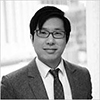
Ryan Wu is a partner at Capstone Law APC, where he leads the firm’s appeals and complex motions team. A State Bar of California Certified Specialist in Appellate Law and an expert in class and PAGA procedure, he has won several important victories for consumers and workers before the California Supreme Court.
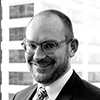
John Stobart is senior counsel at Capstone Law APC and a State Bar of California Certified Specialist in Appellate Law. He has drafted more than two dozen writs, petitions, and appeals, and has drafted and argued scores of dispositive motions at the trial court level. His practice focuses on representing employees and consumers in complex litigation, primarily wage-and-hour class actions and PAGA representative actions.
Live Video-Broadcast: December 10, 2026
2 hour CLE
Tuition: $195.00
Co-Sponsored by myLawCLE
Get this course, plus over 1,000+ of live webinars.
Learn More
Training 5 or more people?
Sign-up for a law firm subscription plan and each attorney in the firm receives free access to all CLE Programs
Program Summary
SB 574 Turns Your AI Habits Into Statutory Duties
SB 574 (Chapter 858, Statutes of 2026) takes effect January 1, 2027. New Business and Professions Code section 6068.1 adds express duties for lawyers who use generative AI. Amended Code of Civil Procedure section 128.7 adds a separate personal citation verification requirement for covered court filings.
Enter client records into a system you have not vetted, and you risk breaching the statute’s access restriction on confidential and personal identifying information. Reuse a prior brief, and its citations still need personal verification regardless of source. Let co-counsel add authority shortly before filing, and you need a clear answer on who reviews it. Discover an omitted disclosure after submission, and correction duties and sanctions procedures run on separate tracks. The statute sets no prescribed disclosure form, so wording and placement become judgment calls.
You leave with a working review process: an annotated statutory overview, a tool and information review checklist, an output and citation review checklist, and illustrative disclosure language for discussion. Two scenarios, an AI-assisted client advice letter and a co-counsel brief, walk through the key decision points. The program separates what the statute requires from existing ethics duties and recommended practice, so your controls rest on judgment, not a form.
Key topics to be discussed:
- What SB 574 Covers
How the statutory definition of generative AI reaches functions inside mixed-purpose research and office tools, and where the separate provisions for arbitrators, the Judicial Council, and certified ADR providers fit. - Judgment Stays With You
How competence, diligence, and the bar on delegating the practice of law to generative AI interact with your existing duties on client communication, informed consent, fees, supervision, and training. - Protecting Client Information
How the statutory access restriction on confidential, personal identifying, and other nonpublic information changes the questions you ask about a system before entering client data. - Verifying Output and Citations
How AI output verification differs from personal citation verification under amended CCP section 128.7, including recycled briefs, late edits, AI summaries, and the discovery exclusion. - Court Disclosure Decisions
How to read the statutory disclosure language, check applicable court requirements, weigh wording and placement without assuming a prescribed statutory form, and separate required court disclosure from disclosure you may consider for public content. - Allocating Review and Correction
How to divide review among drafting lawyers, signers, co-counsel, and staff, respond to errors found after submission, and build proportionate firm policies, access controls, and training.
This course is co-sponsored with myLawCLE.
Date / Time: December 10, 2026
- 2:30 pm – 4:40 pm Eastern
- 1:30 pm – 3:40 pm Central
- 12:30 pm – 2:40 pm Mountain
- 11:30 am – 1:40 pm Pacific
 Closed-captioning available
Speakers
Ryan Wu, Partner | Capstone Law APC
Ryan Wu is a partner at Capstone Law APC, where he leads the firm’s appeals and complex motions team. A State Bar of California Certified Specialist in Appellate Law and an expert in class and PAGA procedure, he has won several important victories for consumers and workers before the California Supreme Court. He also oversees the firm’s high-stakes fee disputes and settlement approval work.
- Education & Credentials
Ryan earned his law degree from the University of Michigan Law School in 2001, where he served as an associate editor of the Michigan Journal of Law Reform and contributed to the law school newspaper. He received his undergraduate degree in political science, with honors, from the University of California, Berkeley. Licensed in California since 2002, he is admitted before the United States Supreme Court, the United States Courts of Appeals for the Third and Ninth Circuits, and the United States District Courts for the Northern, Eastern, Central, and Southern Districts of California. He is fluent in Mandarin Chinese.
- Recognition & Leadership
Ryan received the California Lawyer Attorney of the Year (CLAY) award for Iskanian v. CLS Transportation Los Angeles, 59 Cal.4th 348 (2014). The Daily Journal has twice named one of his cases a Top Appellate Reversal of the year, including the seminal McGill v. Citibank N.A., 2 Cal.5th 945 (2017). He was named a Southern California Super Lawyer in 2023 and 2024, and Worksafe recognized him as its 2024 Worker Health & Safety Hero for his work advancing workplace safety and justice.
- Professional Involvement
Ryan serves on the Committee for Appellate Courts of the California Lawyers Association (CLA) and is an editor of CLA’s monthly Litigation Update. His writing has appeared in the California Litigation Review, the California Labor & Employment Review, the Daily Journal, and Los Angeles Lawyer. He contributes to Continuing Education of the Bar (CEB) and is a frequent invited speaker at professional conferences.
- Experience
Ryan’s practice centers on appellate briefing and complex motion practice in class and PAGA litigation, from the trial court through the California Supreme Court. Alongside his appellate work, he played a central role in achieving the widely publicized Ford transmission settlement, valued at over $100 million.
John Stobart, Senior Counsel | Capstone Law APC
John Stobart is senior counsel at Capstone Law APC and a State Bar of California Certified Specialist in Appellate Law. He has drafted more than two dozen writs, petitions, and appeals, and has drafted and argued scores of dispositive motions at the trial court level. His practice focuses on representing employees and consumers in complex litigation, primarily wage-and-hour class actions and PAGA representative actions.
- Education & Credentials
John graduated cum laude from Thomas Jefferson School of Law, where he was a member of the mock trial competition team, and earned his undergraduate degree from The Ohio State University. Licensed in California since 2007, he is admitted before the United States Courts of Appeals for the Third and Ninth Circuits and the United States District Courts for the Eastern, Central, and Southern Districts of California.
- Recognition & Leadership
John received the 2019 Daily Journal Reversal of the Year Award for his work before the Ninth Circuit in Nguyen v. Nissan N.A., No. 18-16344 (9th Cir. 2019). He is also a member of the California Academy of Appellate Lawyers (CAAL), an election-only organization devoted to excellence in appellate practice.
- Professional Involvement
John’s appellate work extends to the California Supreme Court, where he handled amicus work on behalf of Bet Tzedek in Kim v. Reins, 9 Cal.5th 73.
- Experience
John has built his entire career in litigation, combining appellate briefing with significant complex and long-cause trial experience, and has successfully upheld judgments and verdicts on appeal. Before joining Capstone in 2018, he defended clients against civil liability in catastrophic injury and wrongful death cases, including as an associate at Veatch, Carlson, Grogan & Nelson. His clients included a railroad, public schools, small businesses, and commercial and residential landowners.
Agenda
SESSION 1 – Understanding SB 574 and the Lawyer Duties Governing Generative AI | John Stobart & Ryan Wu | 2:30pm – 3:30pm
This session explains what SB 574 requires and how its requirements fit into everyday legal practice. Examples address AI features embedded in research platforms and office software, handling client information, reviewing generated work, and retaining professional judgment.
BREAK | 3:30pm – 3:40pm
SESSION 2 – Applying SB 574 to Litigation and Firm Workflows | John Stobart & Ryan Wu | 3:40pm – 4:40pm
This session follows a matter from research and drafting through final review, filing, and correction. It addresses citation verification and court disclosure while showing how responsibility, supervision, and tool selection fit into a workable process.
Credits
Alaska
Approved for CLE Credits
2 General
Alabama
Pending CLE Approval
2 General
Arkansas
Approved for CLE Credits
2 General
Arizona
Approved for CLE Credits
2 General
California
Approved for CLE Credits
2 General
Connecticut
Approved for CLE Credits
2 General
Georgia
Pending CLE Approval
2 General
Hawaii
Approved for CLE Credits
2 General
Illinois
Approved for CLE Credits
2 General
Indiana
Pending CLE Approval
2 General
Missouri
Approved for CLE Credits
2.4 General
Mississippi
Pending CLE Approval
2 General
North Dakota
Approved for CLE Credits
2 General
New Hampshire
Approved for CLE Credits
120 General minutes
New Jersey
Approved for CLE Credits
2 General
New Mexico
Approved for CLE Credits
2 General
Nevada
Pending CLE Approval
2 General
New York
Approved for CLE Credits
2 General
Ohio
Pending CLE Approval
2 General
Pennsylvania
Approved for CLE Credits
2 General
Tennessee
Pending CLE Approval
2 General
Texas
Approved for CLE Credits
2 General
Vermont
Approved for CLE Credits
2 General
Wisconsin
Pending CLE Approval
2 General
More CLE Webinars
Trending CLE Webinars






Upcoming CLE Webinars












© 2026 Federal Bar Association