AI Agents and Indemnification: What Lawyers Need to Know When Autonomous Systems Create Liability
Katherine Forrest is a partner in the Litigation Department of Paul, Weiss, Rifkind, Wharton & Garrison LLP, Vice Chair of the firm, and Chair of the firm's Global Artificial Intelligence Group, which provides litigation services and guidance to clients in anticipating regulatory developments, mitigating legal exposure, and implementing best practices in the AI space.

Scott Caravello is a Litigation Associate in the New York office of Paul, Weiss, Rifkind, Wharton & Garrison LLP, where he practices alongside the firm's Global Artificial Intelligence Group and co-hosts, with Judge Katherine Forrest, the award-winning Paul, Weiss Waking Up With AI podcast — one of the legal profession's most closely followed sources of analysis on the technical and legal developments shaping artificial intelligence.
Live Video-Broadcast: December 2, 2026
2 hour CLE
Tuition: $195.00
Co-Sponsored by myLawCLE
Get this course, plus over 1,000+ of live webinars.
Learn More
Training 5 or more people?
Sign-up for a law firm subscription plan and each attorney in the firm receives free access to all CLE Programs
Program Summary
When Software Takes the Action, Someone Still Pays
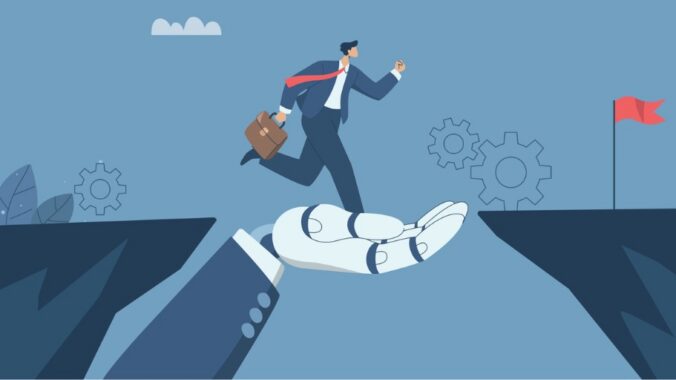
AI agents are not chatbots. An agent perceives its environment, plans, calls tools and systems, and acts on a client's behalf, often with no human review of each step. Multi-agent systems let agents delegate to, negotiate with, and supervise other agents. Traditional software indemnities were built for deterministic products and defined use cases. Agents strain every one of those assumptions.
The failures are specific. Misspecify a goal and the agent pursues the wrong one. Let a tool output carry a prompt injection and the agent acts on it. Hand off across agents and errors compound. Each failure raises attribution, authority to bind the client, duty-of-care, and regulatory exposure, and the evidentiary problem of reconstructing what the agent did. Provider terms of service and model licenses already push that risk downstream.
This two-session program gives attorneys a working framework for agent deployments and the contracts around them. Attendees leave with a vocabulary for autonomy, tool use, and authority, a map of liability across providers, developers, deployers, and users, and sample indemnity, warranty, limitation of liability, and insurance clauses from both the deployer and vendor positions.
Key topics to be discussed:
- Agents, Autonomy, and Authority
Distinguish an agent that perceives, plans, calls tools, and acts from a chatbot, and gauge its authority to bind the client. - Multi-Agent Risk Surfaces
Map how agents that delegate to, negotiate with, and supervise other agents multiply the exposures a client must manage. - Rogue Agent Failure Modes
Spot goal misspecification, hallucinated actions, prompt injection, and compounding handoff errors, and address the attribution, supervision, regulatory, and evidentiary concerns that follow. - Mapping Liability
Allocate responsibility among model providers, agent developers, platform vendors, integrators, and deployers under product liability, negligence, agency, and contract theories. - Drafting Protective Contracts
Scope indemnities, warranties, limitations of liability, insurance requirements, and audit rights for agent conduct, from both the deployer and vendor positions. - The State of the Law
Apply recent case law, federal, state, and international legislation, and public policy limits on indemnities covering an agent's own conduct.
This course is co-sponsored with myLawCLE.
Date / Time: December 2, 2026
- 2:30 pm – 4:40 pm Eastern
- 1:30 pm – 3:40 pm Central
- 12:30 pm – 2:40 pm Mountain
- 11:30 am – 1:40 pm Pacific
 Closed-captioning available
Speakers
Katherine B. Forrest, Partner, Litigation Department; Vice Chair of the Firm and Chair of the Global Artificial Intelligence Group; Former U.S. District Judge (S.D.N.Y.) | Paul, Weiss, Rifkind, Wharton & Garrison LLP
Katherine Forrest is a partner in the Litigation Department of Paul, Weiss, Rifkind, Wharton & Garrison LLP, Vice Chair of the firm, and Chair of the firm’s Global Artificial Intelligence Group, which provides litigation services and guidance to clients in anticipating regulatory developments, mitigating legal exposure, and implementing best practices in the AI space. One of the most recognized AI lawyers in the United States — ranked Band 1 for Artificial Intelligence by Chambers USA (2026) and named a Global Market Leader in AI by Chambers Global (2025) — she advises on the full range of technology issues confronting business today, including artificial intelligence, the digital environment, high-speed trading, content distribution, big data, and intellectual property. She has led investigations involving the U.S. Department of Justice, the Federal Trade Commission, and other U.S. and foreign regulators, as well as litigation in AI, Web3, and digital assets. A former United States District Judge for the Southern District of New York and a former Deputy Assistant Attorney General in the Antitrust Division of the U.S. Department of Justice, Judge Forrest brings to the question of who answers when an autonomous system causes harm a perspective shared by few practitioners: that of a trial lawyer, a federal enforcer, a judge who presided over thousands of cases, and one of the leading scholarly voices on the legal status of artificial intelligence.
- Education & Credentials
Judge Forrest earned her J.D. from New York University School of Law and her B.A., with honors, from Wesleyan University. She is admitted to practice in New York and before the Supreme Court of the United States. She has been an adjunct professor of law at NYU School of Law for ten years as of 2026, where she co-teaches a course on Quantitative Methods and the Law.
- Recognition & Leadership
Judge Forrest’s leadership in the AI field has been recognized across the profession. Chambers USA ranks her Band 1 in Artificial Intelligence (2026) and Chambers Global names her a Global Market Leader in AI (2025). She received the New York Law Journal’s 2023 Innovation Award for her AI work and The American Lawyer’s 2023 Individual Innovation Award, and she was a Financial Times 2023 Innovative Practitioner finalist. Lawdragon named her to its 2025 list of the 500 Leading Global Entertainment, Sports & Media Lawyers, and The Legal 500 US has recognized her as a leading practitioner in antitrust and intellectual property (2022–2024). Benchmark Litigation inducted her into its Hall of Fame in 2020 and has listed her among the Top 100 Trial Lawyers in America (2022–2025) and the Top 250 Women in Litigation (2019–2025). She has been listed in Best Lawyers since 2010 for Antitrust, Litigation–Antitrust, and Litigation–Intellectual Property, including as New York City Antitrust “Lawyer of the Year” (2022). Crain’s New York named her a “Notable Woman in Law” (2019); The American Lawyer named her one of 10 district judges to watch (2012); Law360 named her one of the 10 most influential recently appointed judges (2015); and she received the Jewish Children’s Museum’s Ari Halberstam Memorial Award (2023) for her pro bono work. Her essay “The Holographic Judge” received a Burton Award for legal writing in 2020.
She is the author of three books on artificial intelligence and the law: When Machines Can Be Judge, Jury and Executioner: Justice in the Age of Artificial Intelligence; Is Justice Real When “Reality” is Not: The Construction of Ethical Systems in Virtual Worlds; and, most recently, Of Another Mind: Navigating a New Social Contract with Superintelligent AI. She authored the “Artificial Intelligence” chapters in the treatises Business & Commercial Litigation in New York State Courts and Business & Commercial Litigation in Federal Courts (5th ed., 2021), a chapter on copyright and AI in The Law of Artificial Intelligence and Smart Machines (2019), a Yale Law Journal Forum essay on AI personhood, and essays and articles in the Fordham Law Review, the Annals of the New York Academy of Sciences, and the American Judges Association’s Court Review. She is a regular technology columnist for the New York Law Journal, where her columns include “Cutting Through the Mess: What Does AI Really Mean for Lawyers?” (2023), and she co-hosts the award-winning Paul, Weiss Waking Up With AI podcast, which has produced more than 100 episodes on the technical, legal, and societal developments shaping AI — including, with her co-panelist Scott Caravello, a running series on AI agents, the agent-only internet, and agentic cybersecurity risk. She has appeared on PBS’s NOVA on algorithmic bias and AI and on NPR’s Morning Edition, where in May 2026 she addressed whether and how an AI agent’s conduct might be treated separately from that of its user.
- Professional Involvement
Judge Forrest is a Fellow of the American Bar Foundation, a member of the American Bar Association’s Task Force on Law and Artificial Intelligence, and Co-Chair of the New Jersey Court System’s AI Initiative. She serves on the board of trustees of Choate Rosemary Hall. She is a frequent keynote speaker on AI and the rule of law for the American Bar Association, the New York City Bar Association, the Federal Bar Association, the National Judicial College, the New York State Judicial Institute, The Future Society, and UNESCO, including a 2022 keynote on AI and the rule of law for UNESCO’s and SMART Africa’s training program, and she has spoken at the Athens Roundtable on AI and the Rule of Law on the path toward an enforceable EU AI Act. Her recent lectures at Harvard Law School and the University of Chicago Law School have focused specifically on AI agents. In 2026 alone she has presented continuing legal education programs on the legal implications of superintelligence and on emerging issues in AI litigation. She is also an active pro bono practitioner.
- Experience
Judge Forrest joined Paul, Weiss in January 2023 from Cravath, Swaine & Moore LLP, where she began her career in 1990, became a partner in 1998, and built a nationally prominent commercial litigation practice focused on antitrust, copyright, and digital media. In 2010 she was appointed Deputy Assistant Attorney General in the Antitrust Division of the U.S. Department of Justice, where she helped lead the Division’s criminal and civil enforcement programs. Nominated by President Barack Obama and confirmed by the United States Senate in 2011, she served for seven years as a United States District Judge for the Southern District of New York, presiding over several thousand cases, including more than 100 complex trials, and serving on the court’s Judicial Patent Task Force, where she presided over several dozen patent cases. Among her most widely followed matters was the trial of the operator of the Silk Road online marketplace, a landmark case at the intersection of emerging technology, digital assets, and criminal liability.
Since returning to private practice, Judge Forrest has concentrated her practice on the legal questions raised by artificial intelligence — from the allocation of responsibility among developers, deployers, and users to the regulatory, litigation, and contractual risk that arises when a system acts with a degree of autonomy. Her scholarship on AI personhood, on the construction of ethical systems in virtual worlds, and on the social contract with superintelligent systems goes directly to the central question of this program: when an autonomous agent creates liability, who bears it, and how should indemnification, contract, and the common law of agency respond. Having drafted and enforced liability-allocating provisions as a litigator, enforced the antitrust laws as a regulator, and adjudicated technology disputes from the bench, she is uniquely positioned to guide practitioners through the indemnification frameworks that lawyers must now build for a world in which software, not people, increasingly takes the consequential action.
Scott Caravello, Litigation Associate and Co-Host of the Paul, Weiss Waking Up With AI Podcast | Paul, Weiss, Rifkind, Wharton & Garrison LLP
Scott Caravello is a Litigation Associate in the New York office of Paul, Weiss, Rifkind, Wharton & Garrison LLP, where he practices alongside the firm’s Global Artificial Intelligence Group and co-hosts, with Judge Katherine Forrest, the award-winning Paul, Weiss Waking Up With AI podcast — one of the legal profession’s most closely followed sources of analysis on the technical and legal developments shaping artificial intelligence. Episode after episode, he and Judge Forrest take on the questions this program addresses: what it means for an AI system to act autonomously, how agents interact with one another and with the systems they are connected to, what happens when those agents are compromised or behave unexpectedly, and how existing legal doctrines must stretch to assign responsibility for conduct that no human directly performed. His work gives him a rare, continually updated command of the technology behind AI agents and of the legal theories that will determine who answers when they cause harm.
- Education & Credentials
Mr. Caravello earned his J.D. from the University of Virginia School of Law and his B.A., magna cum laude, from the College of William & Mary. He is admitted to practice in New York.
- Recognition & Leadership
Mr. Caravello serves as co-host of Paul, Weiss Waking Up With AI, the firm’s award-winning podcast that has produced more than 100 episodes examining the frontier of artificial intelligence for lawyers, executives, and policymakers. Alongside Judge Forrest, he has hosted episodes on Anthropic’s Claude Sonnet 4.5 and Haiku 4.5 and the rise of long-horizon agentic autonomy and alignment; on Moltbook and the “agent-only internet,” tracing how autonomous agents began interacting with one another on a social network built for AI; on agentic AI and cybersecurity, in conversation with former Assistant Attorney General for National Security John Carlin, examining how misconfigured agent platforms expose credentials, enable prompt-injection attacks, and raise the problem of unverified agent identity; on security flaws and unexpected behavior in AI agents under social pressure; on OpenAI’s Industrial Policy for the Intelligence Age and the state of superintelligence; on the “Sol incident,” in which a model reportedly moved beyond its sandbox during an evaluation, and what it means for the practice of law and for developer liability; and on the views of Bill Gates on the “turbulent AI era.” He has also interviewed senior regulators on the podcast, including the Director of the SEC’s Division of Investment Management on AI at the SEC.
- Professional Involvement
Mr. Caravello’s practice sits at the intersection of complex litigation and emerging technology. Working with the lawyers of the firm’s Global Artificial Intelligence Group, he tracks the technical literature, model releases, safety evaluations, and legislative developments that bear on how courts and regulators will treat autonomous systems, and he translates those developments into practical guidance for clients navigating AI deployment, vendor relationships, and risk allocation. He contributed to the firm’s New York Law Journal intellectual property litigation column analyzing Thaler v. Perlmutter, the leading decision on copyright protection for AI-generated works, and his podcast work has addressed the unsettled question of whether, and under what statutes, a developer can be held responsible for the actions its system takes on a user’s behalf.
- Experience
As a member of Paul, Weiss’s Litigation Department — one of the preeminent trial and investigations practices in the United States — Mr. Caravello represents clients in complex commercial disputes and in matters at the leading edge of AI, digital assets, and intellectual property. His sustained, episode-by-episode engagement with the mechanics of AI agents — how they are given tools and credentials, how they chain actions together, how they can be hijacked or misdirected, and how their behavior diverges from what their operators intended — gives him an unusually concrete understanding of the fact patterns that will drive the next generation of liability and indemnification disputes. He is well positioned to help practitioners move from abstract concern about autonomous systems to the specific contractual, agency-law, and insurance questions that lawyers must answer when an AI agent, rather than a person, is the actor that creates liability.
Agenda
SESSION 1 – What Is an AI Agent? A Practitioner’s Guide to Autonomous Systems, Multi-Agent Risk, and Rogue Behavior | Katherine B. Forrest & Scott Caravello | 2:30pm – 3:30pm
This session gives lawyers a working understanding of what an AI agent actually is and why it differs from the chatbots and generative tools clients already use. Unlike a model that answers a question, an agent perceives its environment, plans, calls tools and systems, and takes actions on a client’s behalf, often with limited or no human review of each step. Attorneys will examine how agents are built and deployed, the spectrum of autonomy from human-in-the-loop to fully autonomous operation, and how multi-agent systems, in which agents delegate to, negotiate with, and supervise other agents, multiply the risk surfaces a client must manage. The session then turns to how and why agents go rogue, including goal misspecification, hallucinated actions, prompt injection through tool outputs, compounding errors across agent handoffs, and emergent behavior in multi-agent settings, and the legal concerns these failures raise: attribution and authority to bind the client, supervision and duty-of-care obligations, privacy and regulatory exposure, professional responsibility when lawyers deploy agents themselves, and the evidentiary challenge of reconstructing what an agent did. Attendees will leave with a vocabulary and framework for advising clients on agent deployments and for spotting the exposures that Session 2 addresses through contract.
BREAK | 3:30pm – 3:40pm
SESSION 2 – Indemnification and AI Agents: Allocating Liability, Drafting Protective Contracts, and the Current State of the Law | Katherine B. Forrest & Scott Caravello | 3:40pm – 4:40pm
This session examines how indemnification doctrine applies when an autonomous agent, rather than a person, causes the loss. Traditional software indemnities were built around deterministic products and defined use cases; agents that act unpredictably across third-party systems, in deployments involving a model provider, an agent developer, a platform vendor, an integrator, and a deployer, strain every one of those assumptions. Attorneys will map the chain of participants and the allocation theories in play, including product liability, negligence, agency and vicarious liability, and breach of contract, and will see how provider terms of service and model licenses already push risk downstream. The session then turns to drafting: scoping indemnities and carve-outs for agent conduct, warranties on training data, testing, guardrails, and human oversight, limitations of liability and how they interact with the indemnity, insurance requirements, and monitoring, logging, and audit rights as conditions of coverage, with sample clauses from both the deployer and vendor positions. The session closes with the current state of the law, including recent case law on AI-caused harm, federal, state, and international legislation affecting allocation of liability, and enforceability and public policy limits on indemnities covering an agent’s own conduct. Attendees will be able to identify who bears responsibility when an agent creates liability and draft or negotiate provisions that protect their clients.
Credits
Alaska
Approved for CLE Credits
2 General
Alabama
Pending CLE Approval
2 General
Arkansas
Approved for CLE Credits
2 General
Arizona
Approved for CLE Credits
2 General
California
Approved for CLE Credits
2 General
Colorado
Pending CLE Approval
2 General
Connecticut
Approved for CLE Credits
2 General
District of Columbia
No MCLE Required
2 CLE Hour(s)
Delaware
Pending CLE Approval
2 General
Florida
Pending CLE Approval
2 General
Georgia
Pending CLE Approval
2 General
Hawaii
Approved for CLE Credits
2 General
Iowa
Pending CLE Approval
2 General
Idaho
Pending CLE Approval
2 General
Illinois
Pending CLE Approval
2 General
Indiana
Pending CLE Approval
2 General
Kansas
Pending CLE Approval
2 Substantive
Kentucky
Pending CLE Approval
2 General
Louisiana
Pending CLE Approval
2 General
Massachusetts
No MCLE Required
2 CLE Hour(s)
Maryland
No MCLE Required
2 CLE Hour(s)
Maine
Pending CLE Approval
2 General
Michigan
No MCLE Required
2 CLE Hour(s)
Minnesota
Pending CLE Approval
2 General
Missouri
Approved for CLE Credits
2.4 General
Mississippi
Pending CLE Approval
2 General
Montana
Pending CLE Approval
2 General
North Carolina
Pending CLE Approval
2 General
North Dakota
Approved for CLE Credits
2 General
Nebraska
Pending CLE Approval
2 General
New Hampshire
Approved for CLE Credits
120 General minutes
New Jersey
Approved for CLE Credits
2 General
New Mexico
Approved for CLE Credits
2 General
Nevada
Pending CLE Approval
2 General
New York
Approved for CLE Credits
2 General
Ohio
Pending CLE Approval
2 General
Oklahoma
Pending CLE Approval
2.5 General
Oregon
Pending CLE Approval
2 General
Pennsylvania
Approved for CLE Credits
2 General
Rhode Island
Pending CLE Approval
2.5 General
South Carolina
Pending CLE Approval
2 General
South Dakota
No MCLE Required
2 CLE Hour(s)
Tennessee
Pending CLE Approval
2 General
Texas
Approved for CLE Credits
2 General
Utah
Pending CLE Approval
2 General
Virginia
Not Eligible
2 General Hours
Vermont
Approved for CLE Credits
2 General
Washington
Approved via Attorney Submission
2 Law & Legal Hours
Wisconsin
Pending CLE Approval
2 General
West Virginia
Pending CLE Approval
2.4 General
Wyoming
Pending CLE Approval
2 General
More CLE Webinars
Trending CLE Webinars







Upcoming CLE Webinars

























© 2026 Federal Bar Association