Defining the Client in Trusts and Estates: Ethical Duties, Conflicts, and Fiduciary Risk

Timothy L. Fort holds the Eveleigh Professorship in Business Ethics and is Professor of Business Law & Ethics at the Kelley School of Business at Indiana University. He is also an Affiliated Faculty at the Kroc Institute of International Peace Studies at the University of Notre Dame. Fort received the 2022 Distinguished Career Faculty Award from the Academy of Legal Studies in Business. In 2023, he was nominated for the 2024 Nobel Peace Prize.
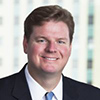
David has consistently worked on fiduciary litigation matters as both lead trial and appellate counsel throughout his career. David has specialized in estate and trust disputes including will contests, mental competency issues, undue influence, trust modification/clarification, breach of fiduciary duty and related claims, and accountings
On-Demand: February 27, 2026
2 hour CLE
Tuition: $195.00
Co-Sponsored by myLawCLE
Get this course, plus over 1,000+ of live webinars.
Learn More
Training 5 or more people?
Sign-up for a law firm subscription plan and each attorney in the firm receives free access to all CLE Programs
Program Summary
Session I – Who Is the Client and Who Does the Client Think They Are? How The Answers to Those Questions Impact the Attorney–Client Relationship in Estate Planning – Timothy Fort
This session addresses the foundational ethical question in trusts and estates practice: Identifying the client in multi-party, family-centered representations, taking a behavioral approach. How do attorneys apply professional conduct rules governing loyalty, confidentiality, and conflicts based on how a client sees themselves? Drawing on behavioral psychology, this session will consider practical steps lawyers must take to clearly define the scope of representation, communicate boundaries to non-clients, and document engagement decisions to reduce malpractice.
Key topics to be discussed:
- Identifying how the client sees themselves in estate planning matters involving families, advisors, and third parties
- Intake practices that define scope, roles, and non-clients
- Confidentiality and privilege in joint representation and family meetings
- Conflict-of-interest checks, waivers, and red flags unique to estate planning
- Ethical issues in representing married couples and blended families
Session II – Ethical Duties in Probate and Fiduciary Representation: Navigating Loyalty, Conflicts, and Post-Death Obligations – David Johnson
Building on the client-identification framework, this session explores ethical challenges that arise after incapacity or death: When attorneys represent fiduciaries, interact with beneficiaries, and manage pressure from multiple stakeholders. The session focuses on the lawyer's duties of loyalty and confidentiality, the ethical implications of fiduciary representation, and the continuing responsibilities owed to deceased clients. Real-world scenarios illustrate how ethical missteps commonly occur and how to resolve.
Key topics to be discussed:
- Representing fiduciaries: Who the client is and who it is not
- Ethical risks when communicating with beneficiaries and heirs
- Conflicts and confidentiality issues in contested probate and trust administration
- Ethical obligations arising from client mental health issues
- Duties to deceased clients and post-death confidentiality obligations
- Managing ethical exposure in high-conflict or litigation-adjacent estate matters
This course is co-sponsored with myLawCLE.
 Closed-captioning available
Speakers
Timothy L. Fort | Kelley School of Business, Indiana University
Timothy L. Fort holds the Eveleigh Professorship in Business Ethics and is Professor of Business Law & Ethics at the Kelley School of Business at Indiana University. He is also an Affiliated Faculty at the Kroc Institute of International Peace Studies at the University of Notre Dame. Fort received the 2022 Distinguished Career Faculty Award from the Academy of Legal Studies in Business. In 2023, he was nominated for the 2024 Nobel Peace Prize.
He has written one hundred articles/book reviews/book chapters along with twelve books; he has edited an additional twenty-five books. Two of his books have won the Best Book Award from the Academy of Management for Social Issues. He has won twelve research awards from three different academic associations, the Academy of Legal Studies in Business, the Society for Business Ethics, and the Academy of Management and has served on the editorial boards of the flagship journals of each of these associations. He has won five teaching awards and has served as academic director for a unique program for players from the National Football League; he also co taught a course with then Federal Reserve Chair, Ben Bernanke. He has served as director of an institute, as department chair, and as an interim associate dean. He has been a coach/consultant for Alexandra, Countess of Fredriksborg (Denmark) in her role as a member of the Board of Directors of Ferring Pharmaceuticals. Complementary to his work on business and peace, Tim’s research interest concerns how ethical business conduct can create positive organizational cultures, which in turn foster sustainable peace.
He co-chaired a task force on the topic with the U.S. Institute of Peace and helped to develop a program with the U.S. State Department where MBA students served as pro bono consultants to entrepreneurs in conflict sensitive zones. He has also partnered with NGOs, such as International Peace Through Tourism and Peace Through Commerce. He has extended that work to music, sports, and film to create a research stream of “Cultural Foundations of Peace” where cultural artifacts serve as a nudge to make ethical decisions and to provide common ground for individuals who might otherwise disagree on social issues. In that regard, he has organized multiple conferences with faculty from the Jacobs School of Music, co-edited a book, written two articles, and organized a film series with the IU Cinema. He is currently writing a book with Kristin Hahn, Executive Producer of Apple TV’s The Morning Show, author of two HarperCollins books, and who co-owns Echo Films with Jennifer Aniston.
His pre-tenure work on how businesses can be “mediating institutions” is drawn from natural law and from bioanthropology. That work integrates leading theories of business ethics and emphasizes optimal corporate culture. Fort received his BA and MA from the University of Notre Dame and his PhD and JD from Northwestern University. He taught at the University of Michigan from 1994-2005 and at George Washington University from 2005-2013.
David F. Johnson | Winstead P.C
Through his trial and appellate experience, David aggressively strives to obtain the absolute best results possible for his clients. David maintains an active trial and appellate practice. David has consistently worked on fiduciary litigation matters as both lead trial and appellate counsel throughout his career. David has specialized in estate and trust disputes including will contests, mental competency issues, undue influence, trust modification/clarification, breach of fiduciary duty and related claims, and accountings.
David is the primary author of the Texas Fiduciary Litigator blog, which reports on legal cases and issues impacting the fiduciary field in Texas.
David is a unique lawyer in that he has extensive trial and appellate experience, which has resulted in his achieving board certifications in civil trial law, civil appellate, and personal injury trial law by the Texas Board of Legal Specialization. Out of approximately 84,000 licensed attorneys in Texas, David is one of less than twenty attorneys with this particular triple certification in civil appellate, civil trial and personal injury trial law. David is also a member of the Civil Trial Law Commission of the Texas Board of Legal Specialization. This commission writes and grades the exam for new applicants for civil trial law certification.
David previously taught Appellate Advocacy at Texas Wesleyan University School of Law located in Fort Worth. David is licensed and has practiced in the U.S. Supreme Court; the Fifth, Seventh, and Eleventh Federal Circuits; the Federal District Courts for the Northern, Eastern, and Western Districts of Texas; the Texas Supreme Court and various Texas intermediate appellate courts. Although David is based in Fort Worth (Tarrant County, Texas), he has a state-wide and national appellate practice.
David also served as an adjunct professor at Baylor University Law School, where he taught products liability and portions of health law. He has authored many legal articles and spoken at numerous legal education courses on both trial and appellate issues. His articles have been cited as authority by the Texas Supreme Court (twice) and the Texas Courts of Appeals located in Waco, Texarkana, Beaumont, Tyler and Houston (Fourteenth District), and a federal district court in Pennsylvania. David’s articles also have been cited by McDonald and Carlson in their Texas Civil Practice treatise, William v. Dorsaneo in the Texas Litigation Guide, and various authors in the Baylor Law Review, St. Mary’s Law Journal, South Texas Law Review and Tennessee Law Review.
Agenda
Session I – Who Is the Client and Who Does the Client Think They Are? How The Answers to Those Questions Impact the Attorney–Client Relationship in Estate Planning | 1:00pm – 2:00pm
- Identifying how the client sees themselves in estate planning matters involving families, advisors, and third parties
- Intake practices that define scope, roles, and non-clients
- Confidentiality and privilege in joint representation and family meetings
- Conflict-of-interest checks, waivers, and red flags unique to estate planning
- Ethical issues in representing married couples and blended families
Break | 2:00pm – 2:10pm
Session II – Ethical Duties in Probate and Fiduciary Representation: Navigating Loyalty, Conflicts, and Post-Death Obligations | 2:10pm – 3:10pm
- Representing fiduciaries: Who the client is and who it is not
- Ethical risks when communicating with beneficiaries and heirs
- Conflicts and confidentiality issues in contested probate and trust administration
- Ethical obligations arising from client mental health issues
- Duties to deceased clients and post-death confidentiality obligations
- Managing ethical exposure in high-conflict or litigation-adjacent estate matters
Credits
Alaska
Approved for CLE Credits
2 Ethics
Alabama
Approved for Self-Study Credits
2 Ethics
Arkansas
Approved for CLE Credits
2 Ethics
Arizona
Approved for CLE Credits
2 Professional Responsibility/Ethics
California
Approved for CLE Credits
2 Ethics
Colorado
Pending CLE Approval
2 Ethics / Professionalism
Connecticut
Approved for CLE Credits
2 Ethics / Professionalism
District of Columbia
No MCLE Required
2 CLE Hour(s)
Delaware
Pending CLE Approval
2 Enhanced Ethics
Florida
Approved via Attorney Submission
2 Ethics Hours
Georgia
Approved for Self-Study Credits
2 Ethics
Hawaii
Approved for CLE Credits
2 Ethics or Professional Responsibility Education
Iowa
Pending CLE Approval
2 Ethics
Idaho
Pending CLE Approval
2 Ethics / Professionalism
Illinois
Approved for Self-Study Credits
2 Ethics, Civility, Professionalism
Indiana
Pending CLE Approval
2 Ethics
Kansas
Pending CLE Approval
2 Ethics / Professionalism
Kentucky
Pending CLE Approval
2 Ethics
Louisiana
Pending CLE Approval
2 Ethics
Massachusetts
No MCLE Required
2 CLE Hour(s)
Maryland
No MCLE Required
2 CLE Hour(s)
Maine
Pending CLE Approval
2 Ethics / Professionalism
Michigan
No MCLE Required
2 CLE Hour(s)
Minnesota
Approved for Self-Study Credits
2 Ethics
Missouri
Approved for Self-Study Credits
2.4 Ethics
Mississippi
Pending CLE Approval
2 Ethics
Montana
Pending CLE Approval
2 Professional Fitness and Integrity
North Carolina
Pending CLE Approval
2 Ethics
North Dakota
Approved for CLE Credits
2 Ethics
Nebraska
Pending CLE Approval
2 Professional Responsibility
New Hampshire
Approved for CLE Credits
120 Ethics / Professionalism minutes
New Jersey
Approved for CLE Credits
2.4 Ethics / Professionalism
New Mexico
Approved for Self-Study Credits
2 Ethics / Professionalism
Nevada
Pending CLE Approval
2 Ethics / Professionalism
New York
Approved for CLE Credits
2.4 Ethics / Professionalism
Ohio
Approved for Self-Study Credits
2 Professional Conduct
Oklahoma
Pending CLE Approval
2.5 Ethics / Professionalism
Oregon
Pending CLE Approval
2 Ethics
Pennsylvania
Approved for Self-Study Credits
2 Ethics / Professionalism
Rhode Island
Pending CLE Approval
2.5 Ethics / Professionalism
South Carolina
Pending CLE Approval
2 Ethics / Professionalism
South Dakota
No MCLE Required
2 CLE Hour(s)
Tennessee
Approved for Self-Study Credits
2 Dual
Texas
Approved for CLE Credits
2 Ethics / Professionalism
Utah
Pending CLE Approval
2 Ethics / Professionalism
Virginia
Not Eligible
2 Ethics / Professionalism Hours
Vermont
Approved for CLE Credits
2 Ethics
Washington
Approved via Attorney Submission
2 Ethics Hours
Wisconsin
Approved for Self-Study Credits
2 General
West Virginia
Pending CLE Approval
2.4 Ethics / Professionalism
Wyoming
Pending CLE Approval
2 Ethics / Professionalism
Preview
More CLE Webinars
Trending CLE Webinars










Upcoming CLE Webinars






































© 2026 Federal Bar Association