
Creating a Trial Notebook: From A-Z (2025 Edition)


On-Demand: September 24, 2025
2.75 hour CLE
Tuition: $245.00
Co-Sponsored by myLawCLE
Get this course, plus over 1,000+ of live webinars.
Learn More
Training 5 or more people?
Sign-up for a law firm subscription plan and each attorney in the firm receives free access to all CLE Programs
Program Summary
Most cases settle, and the side that looks genuinely ready to try the case is the side that dictates terms. That readiness isn’t a posture—it’s a system: a trial notebook built from the case’s first weeks, not thrown together days before a trial that may never come.
Walk into mediation with your impeachment file indexed and your exhibits organized, and you negotiate from leverage instead of memory. Show up to a deposition able to pull any document in seconds, and the other side recalculates what you’ll do at trial. Keep one undivided binder, and you’re hunting for the page while the moment passes.
This class builds that system end to end—what goes in counsel’s working binder versus the paralegal’s copy, how to structure exhibit and witness management, how to pre-mark exhibits and coordinate with court clerks, and when to go digital, paper, or hybrid. Two retired judges then explain the courtroom deployment the bench rewards if the case goes the distance: motions resolved early, schedules kept tight, downtime eliminated. You leave with one retrieval system that gives you leverage at settlement and command at trial.
What Will You Learn
Attorneys will learn practical tips for creating and using a trial notebook, when to begin creating it in the litigation process, and how to use it in the courtroom.
What Will You Gain
Attorneys will gain the tools and strategies to support trial teams from pretrial planning through trial day, organizing materials for courtroom readiness under pressure.
Key topics to be discussed:
- Notebook format
Whether you are creating a physical or digital trial notebook. - Working binder
Materials to include in counsel's working binder, paralegal's copy, and everyone else's copy. - Court arguments
Using the trial notebook for pretrial motions, objections, sidebars, and jury-related arguments. - Witness questioning
Using the trial notebook during direct examination, cross examination, and witness impeachment. - Exhibit management
Pre-marking exhibits and coordinating with court clerks and opposing counsel. - Motion practice
Filing dispositive and in limine motions early to give the judge time to rule
This course is co-sponsored with myLawCLE.
 Closed-captioning available
Speakers
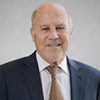
Hon. Stephen Kaus | JAMS
Hon. Stephen Kaus (Ret.) brings over 50 years of legal experience to his JAMS practice, including 12 years as a judge on the Alameda Superior Court. He managed a direct calendar department with 600 to 800 cases, overseeing complex multiparty and two-party disputes while conducting numerous trials and settlement conferences.
Before his judicial career, Judge Kaus served as a deputy public defender in Contra Costa County, transitioning to civil litigation in 1980. He represented professionals, including engineers, attorneys and judges, handling construction, insurance and commercial disputes, representing both plaintiffs and defendants in multiple complex cases.
In 1990, Judge Kaus joined a midsize San Francisco law firm, where he represented media, cable TV and telecom clients in employment, contract and franchising disputes. He chaired the litigation department, served on the Executive Committee and handled construction cases involving major public buildings such as concert halls and hospitals. He also served on the First District Court of Appeal mediation panel.
A dedicated leader in the Bar Association of San Francisco (BASF), Judge Kaus served on its board of directors and received its Award of Merit along with a special award from the San Francisco Public Defender for his work as chair of its Special Committee on Conflicts Counsel in 1995.
Judge Judith H. Ramseyer | JAMS
Judge Judith H. Ramseyer (Ret.) joins JAMS after having acquired a broad range of experience over her 50-year professional career. Known for her thorough preparation, attention to detail and independent thought, Judge Ramseyer wants all participants to feel respected, heard, and to understand how decisions that affect them are made. Having trained as a mental health counselor, she has a strong commitment to problem-solving. Her extensive legal experience helps her quickly identify issues that are key components of complex problems. She also is task-oriented and effective, and her practical insight and creativity help parties reach an equitable resolution. With a relaxed demeanor, Judge Ramseyer brings a confident tenacity to her work.
While she was a practicing lawyer and a superior court judge, Judge Ramseyer gained extensive experience in diverse practice areas and from a variety of perspectives. As an impartial jurist and as an advocate on behalf of both plaintiffs and defendants, she has litigated matters including personal injury, business and commercial disputes, class and shareholder derivative actions, professional negligence, consumer protection, product liability, employment, insurance coverage, real estate and domestic relations. She understands how a case may be viewed by a judge and jury, which can help parties assess the strengths and weaknesses of their own cases.
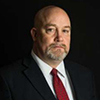
Sean P. Healy | Healy Law Offices P.C
Sean Healy is an attorney in private practice in Tyler, Texas, focusing on business law, civil litigation, family law, and firearms and aviation matters. He has extensive courtroom experience and has spoken at numerous continuing legal education programs for attorneys and judges.
Mr. Healy has served as Course Director for the State Bar of Texas Firearms Law Seminars in 2012 and 2013, is Co-Director of the 2024 Seminar, and has presented at nearly every annual seminar since its inception. He has also taught appellate advocacy in law school and business law at the college level, bringing a strong background in legal instruction.
In addition to his law practice, Mr. Healy is a mediator, arbitrator, and member of the American Arbitration Association’s Panel of Mediators. He has authored multiple publications, including chapters in Texas Perspectives on Firearms Law (2015) and Essentials of Texas Firearms Law (2020), and co-authored the bestselling book The Legal Guide to NFA Firearms and Gun Trusts (2016).
Heather Crawford
Heather Crawford is a Minnesota freelance paralegal with 20 years of experience in civil litigation, family law, indigent law, and class actions. She has supported attorneys at every level of the judicial system, from local municipal court all the way to the US Supreme Court. She loves document production and any tasks that lets her organize large piles of paper.
Agenda
SESSION 1 – Practical Tips for Creating and Using a Trial Notebook | 1:00pm – 2:00pm
Build your trial notebook from the litigation’s earliest stages. Learn what belongs in counsel’s working binder versus the paralegal’s copy, and how to deploy it during pretrial motions, objections, sidebars, and witness examination.
BREAK | 2:00pm – 2:10pm
SESSION 2 – Organize, Prepare, Succeed: Trial Preparation Techniques for Paralegals | 2:10pm – 3:10pm
Master the paralegal’s role in trial readiness. Organize pleadings, exhibits, and witness files, align notebooks with pretrial workflows, pre-mark exhibits, coordinate with court clerks, and weigh digital against paper formats for retrieving materials fast under pressure.
BREAK | 3:10pm – 3:20pm
SESSION 3 – May It Please the Court: Effective Trial Practice | 3:20pm – 4:05pm
Hear what judges actually expect. Two retired jurists explain how to resolve motions early, keep witness schedules tight, eliminate downtime, respect courtroom dynamics, and present efficiently—because preparation and professionalism shape how juries judge your case.
Credits
Alaska
Approved for CLE Credits
2.75 General
Alabama
Approved for Self-Study Credits
2.8 General
Arkansas
Approved for CLE Credits
2.75 General
Arizona
Approved for CLE Credits
2.75 General
California
Approved for CLE Credits
2.75 General
Colorado
Approved for Self-Study Credits
3 General
Connecticut
Approved for CLE Credits
2.75 General
District of Columbia
No MCLE Required
No MCLE Required
Delaware
Pending CLE Approval
2.75 General
Florida
Approved via Attorney Submission
2.75 General Hours
Georgia
Approved for CLE Credits
3 General
Hawaii
Approved for CLE Credits
2.75 General
Iowa
Pending CLE Approval
2.75 General
Idaho
Pending CLE Approval
2.75 General
Illinois
Approved for Self-Study Credits
2.75 General
Indiana
Pending CLE Approval
2.75 General
Kansas
Pending CLE Approval
2.75 Substantive
Kentucky
Pending CLE Approval
2.75 General
Louisiana
Pending CLE Approval
2.75 General
Massachusetts
No MCLE Required
2.75 CLE Hour(s)
Maryland
No MCLE Required
2.75 CLE Hour(s)
Maine
Pending CLE Approval
2.75 General
Michigan
No MCLE Required
2.75 CLE Hour(s)
Minnesota
Approved for Self-Study Credits
2.75 General
Missouri
Approved for Self-Study Credits
3.3 General
Mississippi
Pending CLE Approval
2.8 General
Montana
Approved for Self-Study Credits
2.75 General
North Carolina
Approved for Self-Study Credits
2.75 General
North Dakota
Approved for CLE Credits
2.75 General
Nebraska
Pending CLE Approval
2.75 General
New Hampshire
Approved for CLE Credits
165 General minutes
New Jersey
Approved for CLE Credits
2.75 General
New Mexico
Approved for Self-Study Credits
2.7 General
Nevada
Approved for Self-Study Credits
3 General
New York
Approved for CLE Credits
3 General
Ohio
Approved for Self-Study Credits
2.75 General
Oklahoma
Pending CLE Approval
3.5 General
Oregon
Approved for Self-Study Credits
2.75 General
Pennsylvania
Approved for Self-Study Credits
3 General
Rhode Island
Pending CLE Approval
3 General
South Carolina
Approved for Self-Study Credits
2.75 General
South Dakota
No MCLE Required
2.75 CLE Hour(s)
Tennessee
Pending CLE Approval
2.75 General
Texas
Pending CLE Approval
2.75 General
Utah
Approved for Self-Study Credits
3 General
Virginia
Not Eligible
2.75 General Hours
Vermont
Approved for CLE Credits
2.75 General
Washington
Approved for Self-Study Credits
2 Law & Legal, 0.75 Law & Legal
Wisconsin
Approved for Self-Study Credits
3 General
West Virginia
Pending CLE Approval
3.3 General
Wyoming
Pending CLE Approval
2.75 General
More CLE Webinars
Trending CLE Webinars










Upcoming CLE Webinars




























© 2026 Federal Bar Association