Trial Themes That Move Juries: Building and Threading the Theory of the Case
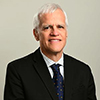
Alan Kabat is a Partner at Bernabei & Kabat, PLLC in Washington, DC, where he practices employment law. He represents clients in matters spanning discrimination and retaliation, whistleblower claims, sexual harassment, and civil rights, and he writes extensively on employment law developments for national legal publications.

Dominic J. Gianna is a shareholder, vice president, and member of the board of directors of Aaron & Gianna, PLC in New Orleans, where he chairs the firm’s civil litigation practice. A trial lawyer for 36 years, he has tried more than 150 cases in state and federal courts across the United States, from both the plaintiff and the defense side, in matters spanning complex commercial litigation, product liability, toxic tort, employment law, medical malpractice, major construction disputes, and antitrust.
On-Demand: August 12, 2026
2 hour CLE
Tuition: $195.00
Co-Sponsored by myLawCLE
Get this course, plus over 1,000+ of live webinars.
Learn More
Training 5 or more people?
Sign-up for a law firm subscription plan and each attorney in the firm receives free access to all CLE Programs
Program Summary
Jurors Don’t Weigh Evidence — They Choose a Story
Jurors do not assemble disconnected pieces of evidence. They decide who should win by the stories presented to them. That story begins at intake. Counsel must hypothesize legal theories early and identify the facts needed to prove each claim.
The stakes compound at every stage. Miss one element in the jury instructions, and the claim collapses. Skip the chronology, and the retaliation claim cannot be established. Send an unprepared client into deposition, and one careless answer gives the case away. Deny a bad fact instead of explaining it, and the jury stops believing your client.
Ms. Bernabei supplies the pretrial method: intake questions, chronologies, deposition outlines, and element-by-element proof mapped to jury instructions. Mr. Gianna supplies the threading test — the tools to give the story moral meaning. Attendees leave able to carry one theme from voir dire through closing without sounding artificial, repetitive, or argumentative.
Key topics to be discussed:
- Intake to Case Theory
Hypothesize legal theories at intake and pin down the facts, dates, and chronology every claim requires. - Elements and Jury Instructions
Check jury instructions before filing and again before trial, so every element is pled, proved, and argued in closing. - Proving the Missing Element
Use “Rules of the Road” theories, supporting witnesses, and deposition document lists to establish what defendants deny knowing. - Simple Stories, Bad Facts
Prepare the client, keep the trial story simple, and give a reasonable explanation for facts you cannot deny. - How Jurors Judge
Why trials are about choices, the Prince of Persuasion, and the two factors of fault attribution. - The Threading Test
Carry one theme with moral meaning from the first question in voir dire to the final words of closing.
This course is co-sponsored with myLawCLE.
 Closed-captioning available
Speakers
Alan Kabat, Partner | Bernabei & Kabat, PLLC
Alan Kabat is a Partner at Bernabei & Kabat, PLLC in Washington, DC, where he practices employment law. He represents clients in matters spanning discrimination and retaliation, whistleblower claims, sexual harassment, and civil rights, and he writes extensively on employment law developments for national legal publications. He is admitted to practice in Maryland, the District of Columbia, and Virginia, as well as before the U.S. Supreme Court and numerous federal district and appellate courts.
- Education & Credentials
Mr. Kabat earned his J.D. from Georgetown University Law Center in 1998, a Ph.D. in Biology from Harvard University in 1990, and a B.A. from the University of Washington in 1983. He was admitted to the Maryland bar in 1998, the District of Columbia bar in 1999, and the Virginia bar in 2008. His federal admissions include the U.S. Supreme Court; the U.S. District Courts for the District of Columbia, the District of Maryland, and the Eastern District of Virginia; the U.S. Bankruptcy Court for Maryland; and the U.S. Courts of Appeals for the District of Columbia, Second, Fourth, Sixth, Ninth, and Tenth Circuits.
- Recognition & Leadership
Mr. Kabat has been recognized by Best Lawyers and Super Lawyers, named a Washington top lawyer, and honored by Lawdragon, including its Hall of Fame and its list of Leading Civil Rights & Plaintiff Employment Lawyers. He serves as Co-chair of the Amicus Committee of the Metropolitan Washington Employment Lawyers’ Association.
- Professional Involvement
Mr. Kabat is a member of the American Bar Association and the D.C. Bar Association’s Publications Committee, in addition to his Amicus Committee leadership at the Metropolitan Washington Employment Lawyers’ Association.
- Experience
Mr. Kabat’s employment law practice is complemented by a substantial body of published scholarship. His articles in Law360, The National Law Journal, The Practical Lawyer, Government Executive, and academic employment law journals address workplace arbitration, Sarbanes-Oxley and Dodd-Frank whistleblower claims, Title VII and retaliation doctrine, the Hatch Act, health care whistleblower protections, sexual harassment class actions, and discovery practice in employment discrimination litigation. Many of these works were co-authored with firm co-founder Lynne Bernabei, reflecting more than two decades of sustained commentary on the field, from his 2000 analysis of federal discovery rule revisions through his 2023 Law360 pieces on employer arbitration and the Supreme Court’s Muldrow job-transfer review.
Dominic J. Gianna, Shareholder, Vice President & Director | Aaron & Gianna, PLC
Dominic J. Gianna is a shareholder, vice president, and member of the board of directors of Aaron & Gianna, PLC in New Orleans, where he chairs the firm’s civil litigation practice. A trial lawyer for 36 years, he has tried more than 150 cases in state and federal courts across the United States, from both the plaintiff and the defense side, in matters spanning complex commercial litigation, product liability, toxic tort, employment law, medical malpractice, major construction disputes, and antitrust.
- Education & Credentials
Mr. Gianna received his B.S. in chemistry from Manhattan College, his M.A. in organic chemistry from the State University of New York at Buffalo in 1971, and his J.D. from Loyola University School of Law in 1974, where he was elected editor-in-chief of the Loyola Law Review. He is admitted in Louisiana and before the U.S. District Courts for the Eastern, Middle, and Western Districts of Louisiana and the Northern District of Texas, the U.S. Courts of Appeals for the Fifth and Tenth Circuits, and the Supreme Court of the United States. He is AV-rated by Martindale-Hubbell. Before entering the law, he worked as an organic chemist, professional athlete, and professional actor.
- Recognition & Leadership
Mr. Gianna received the Robert Keeton Award from the National Institute for Trial Advocacy (NITA), the American Bar Association’s teaching arm, as the best teacher of advocacy in America, and he has been listed in Louisiana Super Lawyers for civil litigation since 2008. He was selected — alongside President Bill Clinton and Justice Scalia — as a Blockbuster Speaker at the Defense Research Institute’s annual meeting, and he chaired the American Bar Association Section of Litigation Annual Meeting in 2001. He has served as District Judge pro tem by appointment of the Supreme Court of Louisiana and as court-appointed Special Master in complex matters, including Turner v. Murphy Oil, the Norplant class action litigation, and Scott v. American Tobacco Company.
- Professional Involvement
For 25 years, Mr. Gianna has served on NITA’s national faculty and as a NITA program director, leading interactive training programs in all 50 states, Canada, Mexico, England, Scotland, and Wales. He is Director of Trial Advocacy at LSU School of Law, principal faculty of the Professional Education Group and of the Louisiana Association of Defense Counsel Trial Academy, and a member of the New Orleans Bar Association, the Louisiana State Bar Association, the Federal Bar Association, and the International Society of Barristers. His books on advocacy and persuasion include Opening Statements 2d, Opening Statements: Winning in the Beginning by Winning the Beginning (with Lisa A. Marcy), Advocacy for the Ages (with Lisa A. Marcy), Winning Before Trial, and Reel Justice!
- Experience
Mr. Gianna’s trial practice spans complex commercial, product liability, toxic tort, employment, medical malpractice, construction, and antitrust matters for a client list that ranges from Fortune 500 companies to medium-sized national businesses and small local organizations. As principal faculty for the Professional Education Group, he has delivered and led more than 400 lectures and seminars throughout the world, and his training programs — including “Reel Justice,” “Winning Before Trial,” “A Day on Trial,” and “Advocacy for the Ages and Sexes: Persuading Genders and Generations” — have changed the careers of thousands of trial lawyers.
Agenda
SESSION 1 – From Case Theory to Provable Case – Pretrial Preparation | 1:00pm – 2:00pm
This session takes the case from intake through the eve of trial. Ms. Bernabei begins with the intake: knowing enough about the case to hypothesize legal theories and the facts needed to prove each claim — especially difficult in whistleblower cases, where the jurisdiction and the statutes and regulations in the technical field covered by the whistleblower’s reports drive the elements. She then covers the client consultation, pinning down facts and dates, and building the chronology that determines retaliation claims; collecting the facts that show whether legal claims exist and how strong they are, including other employees who raised similar claims and witnesses who support the client’s account; and testing every element against the jury instructions before filing, so each is supported in the complaint or stated upon information and belief. The session closes with building out the missing element — using “Rules of the Road” theories and deposition document lists to prove what defendants deny knowing — preparing the client not to give away the claims, and, if summary judgment is denied, working backward from the closing argument: keeping the trial story simple, admitting facts you cannot deny, and giving a reasonable explanation for bad facts so the jury believes your client.
BREAK | 2:00pm – 2:10pm
SESSION 2 – One Story. One Choice. One Moral: Threading a Trial Theme from Voir Dire to Closing | 2:10pm – 3:10pm
Jurors do not decide cases by assembling disconnected pieces of evidence. They decide who should win by looking at the stories presented to them. A powerful trial theme gives the story moral meaning. A theme is not a slogan pasted into separate trial parts: it is the case’s moral meaning, repeated with increasing proof and power. It is the truth jurors begin to believe in the beginning and feel compelled to act upon in the end. This presentation provides trial lawyers with the tools to carry that meaning from first question in voir dire to the final words of the closing argument – without sounding artificial, repetitive, or argumentative
Credits
Alaska
Approved for CLE Credits
2 General
Alabama
Approved for Self-Study Credits
2 General
Arkansas
Approved for CLE Credits
2 General
Arizona
Approved for CLE Credits
2 General
California
Approved for CLE Credits
2 General
Colorado
Approved for Self-Study Credits
2 General
Connecticut
Approved for CLE Credits
2 General
District of Columbia
No MCLE Required
2 CLE Hour(s)
Delaware
Pending CLE Approval
2 General
Florida
Pending CLE Approval
2 General Hours
Georgia
Approved for CLE Credits
2 General
Hawaii
Approved for CLE Credits
2 General
Iowa
Pending CLE Approval
2 General
Idaho
Pending CLE Approval
2 General
Illinois
Approved for Self-Study Credits
2 General
Indiana
Approved For On-Demand Credits
2 General
Kansas
Pending CLE Approval
2 Substantive
Kentucky
Pending CLE Approval
2 General
Louisiana
Pending CLE Approval
2 General
Massachusetts
No MCLE Required
2 CLE Hour(s)
Maryland
No MCLE Required
2 CLE Hour(s)
Maine
Pending CLE Approval
2 General
Michigan
No MCLE Required
2 CLE Hour(s)
Minnesota
Pending CLE Approval
2 General
Missouri
Approved for Self-Study Credits
2.4 General
Mississippi
Pending CLE Approval
2 General
Montana
Pending CLE Approval
2 General
North Carolina
Pending CLE Approval
2 General
North Dakota
Approved for CLE Credits
2 General
Nebraska
Pending CLE Approval
2 General
New Hampshire
Approved for CLE Credits
120 General minutes
New Jersey
Approved for CLE Credits
2 General
New Mexico
Approved for Self-Study Credits
2 General
Nevada
Pending CLE Approval
2 General
New York
Approved for CLE Credits
2 General
Ohio
Approved for Self-Study Credits
2 General
Oklahoma
Pending CLE Approval
2.5 General
Oregon
Approved for Self-Study Credits
2 General
Pennsylvania
Approved for Self-Study Credits
2 General
Rhode Island
Pending CLE Approval
2.5 General
South Carolina
Pending CLE Approval
2 General
South Dakota
No MCLE Required
2 CLE Hour(s)
Tennessee
Approved for Self-Study Credits
2 General
Texas
Approved for CLE Credits
2 General
Utah
Pending CLE Approval
2 General
Virginia
Not Eligible
2 General
Vermont
Approved for CLE Credits
2 General
Washington
Approved via Attorney Submission
2 Law & Legal Hours
Wisconsin
Approved for Self-Study Credits
2 General
West Virginia
Pending CLE Approval
2.4 General
Wyoming
Pending CLE Approval
2 General
Preview
More CLE Webinars
Trending CLE Webinars










Upcoming CLE Webinars







































© 2026 Federal Bar Association