
Ethics for New Associates: What an Unverified Filing Costs
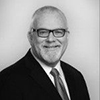
David C. Carr is an ethics lawyer whose practice is State Bar discipline defense, legal ethics advice, attorney licensing, and ethics expert testimony. He spent twelve years at the State Bar of California as a staff attorney, Deputy Trial Counsel, and Assistant Chief Trial Counsel before moving to the defense side of the discipline system he once worked within.
Live Video-Broadcast: November 19, 2026
2 hour CLE
Tuition: $195.00
Co-Sponsored by myLawCLE
Get this course, plus over 1,000+ of live webinars.
Learn More
Training 5 or more people?
Sign-up for a law firm subscription plan and each attorney in the firm receives free access to all CLE Programs
Program Summary
A hallucinated citation now travels from the courtroom to the State Bar
Courts have stopped treating AI-generated citations as research errors. California’s new Code of Civil Procedure §128.7(d)(2)(A), effective January 1, 2027, bars filing any citation the responsible attorney has not personally verified. New Business & Professions Code §6068.1 requires lawyers to verify generative AI output and disclose its use to the court.
Sign a brief with hallucinated citations and Rule 11 and 28 U.S.C. § 1927 sanctions follow. Draw a $1,000 sanction in California and the court must report you to the State Bar. In Noland v. Land of the Free (2025), a $10,000 sanction became a State Bar prosecution and a stayed suspension. Follow a partner’s instruction and Rule 5.2 offers no Nuremberg defense unless the question was arguable. Bill the hours AI saved you and ABA Formal Opinion 512 says you billed time you did not spend.
You leave with a practitioner’s checklist: what to verify before you sign, when Rule 5.2 protects you, and how a sanctions order reaches your bar. You also learn to write time entries that state their basis, communicate under Rule 1.4, and respond when a billing dispute arrives.
Key topics to be discussed:
- What Your Signature Certifies
Under FRCP Rule 11, Code of Civil Procedure §128.7, and 28 U.S.C. § 1927, your name on a filing attests to its purpose, its law, and its facts regardless of who directed the work, and Rules 3.1 through 3.5 govern your candor to the tribunal. - Verification and AI Disclosure
New CCP §128.7(d)(2)(A), Bus. & Prof. Code §6068.1, and S.D. Cal. Bankruptcy General Order 210 now require personal verification of every citation and disclosure of generative AI use to the court. - Supervisor and Subordinate Duties
Rule 5.1 makes supervising lawyers culpable when they order, ratify, or fail to remedy a violation; Rule 5.2 leaves the subordinate responsible unless the subordinate followed a reasonable resolution of an arguable question. - From Sanctions to Discipline
Mandatory reporting under Bus. & Prof. Code §6068(o)(4) and §6087.7, voluntary federal referrals, and Noland v. Land of the Free show how a $10,000 sanction for hallucinated citations became a stayed suspension. - Communication and Fee Rules
Rules 1.4, 1.5, and 1.15 set the duties to inform the client, charge a reasonable fee, and account for client funds within 14 days, and they sit behind every billing decision an associate makes. - Billing and Associate Exposure
ABA Formal Opinions 93-379 and 512 require billing actual time, including AI-assisted work, Cal. Bus. & Prof. Code §6148(b) requires every bill to state its basis, and Rule 8.4(c) reaches an associate who knowingly sends a padded invoice.
This course is co-sponsored with myLawCLE.
Date / Time: November 19, 2026
- 2:30 pm – 4:40 pm Eastern
- 1:30 pm – 3:40 pm Central
- 12:30 pm – 2:40 pm Mountain
- 11:30 am – 1:40 pm Pacific
 Closed-captioning available
Speakers
David C. Carr, Ethics Lawyer | Law Office of David C. Carr
David C. Carr is an ethics lawyer whose practice is State Bar discipline defense, legal ethics advice, attorney licensing, and ethics expert testimony. He spent twelve years at the State Bar of California as a staff attorney, Deputy Trial Counsel, and Assistant Chief Trial Counsel before moving to the defense side of the discipline system he once worked within.
- Education & Credentials
He earned his J.D. from Loyola Law School Los Angeles in 1986 and a B.A. in History from UCLA in 1977. He was admitted to the State Bar of California in 1986, the State Bar of Texas in 2022, and the State Bar of New Mexico in 2023, and is admitted to the U.S. District Courts for the Central (1986), Southern (2002), and Northern (2004) Districts of California.
- Recognition & Leadership
He holds an AV Preeminent peer review rating from Martindale-Hubbell, the highest rating for legal ability and ethical standards awarded by fellow attorneys. He served as President of the Association of Discipline Defense Counsel from 2008 to 2011, and from 2018 to 2021 sat on COPRAC, the State Bar of California’s Standing Committee on Professional Responsibility and Conduct, the body that issues California’s formal ethics opinions. He has published more than twenty articles on legal ethics in the San Diego Daily Transcript, the Los Angeles Daily Journal, and San Diego County Bar Association publications, and has delivered more than twenty presentations to bar and professional groups on topics including client trust accounts, fee agreements, and technology in law practice. He also writes two long-running commentaries on California attorney discipline, the Kafkaesq blog and California Legal Ethics.
- Professional Involvement
He is a member of the Association of Professional Responsibility Lawyers and the ABA Center for Professional Responsibility and has served on the San Diego County Bar Association Legal Ethics Committee since 2002. He was an adjunct professor at Thomas Jefferson School of Law from 2017 to 2021.
- Experience
He began his career as a business and commercial litigator before joining the State Bar of California in 1989, where he spent twelve years as a staff attorney (1989), Deputy Trial Counsel (1992–1999), and Assistant Chief Trial Counsel and Manager in the discipline enforcement office (1999–2001), prosecuting and supervising attorney discipline cases. In 2001 he established the Law Office of David C. Carr, a practice devoted exclusively to legal ethics and State Bar matters and has since represented hundreds of California attorneys and bar applicants. He defends lawyers at every stage of the disciplinary process, from the initial State Bar inquiry through investigation and formal proceedings before the State Bar Court of California and the California Supreme Court and represents applicants in moral character and reinstatement matters before the Committee of Bar Examiners.
Agenda
SESSION 1 – Verification, Supervision, and How a Sanctions Order Becomes Bar Discipline | 2:30pm – 3:30pm
This session examines the personal filing obligations every new associate assumes the moment they sign a pleading, motion, or paper under FRCP Rule 11(b) and 28 U.S.C. § 1927, with particular focus on the AI-hallucination cases reshaping sanctions law in 2024–2025. Attorneys will learn how the supervisory framework under Model Rules 5.1 and 5.2 allocates responsibility between associates and supervising partners — and where the ‘I followed orders’ defense fails. The session closes by tracing the referral pipeline from a sanctions order to state bar discipline, including reciprocal discipline across jurisdictions, so new associates understand the full professional-life consequences of a single deficient filing.
BREAK | 3:30pm – 3:40pm
SESSION 2 – Client Communication and Billing Judgment: From the First Time Entry Through the Fee Dispute | 3:40pm – 4:40pm
This session teaches new associates the ethical framework governing client communication and legal billing from the moment they record their first time entry through the resolution of a fee dispute. Attorneys will learn how Model Rules 1.4, 1.5, and 1.15 apply to everyday billing decisions, which trigger grievances, how ABA Formal Opinion 512 (2024) changes the calculus for AI-assisted work, and how fee disputes escalate into discipline. Attendees leave with concrete practices for writing time entries, structuring client communications, and responding to billing complaints within firm procedures.
Credits
Alaska
Approved for CLE Credits
2 Ethics
Alabama
Approved for CLE Credits
2 Ethics
Arkansas
Approved for CLE Credits
2 Ethics
Arizona
Approved for CLE Credits
2 Professional Responsibility/Ethics
California
Approved for CLE Credits
2 Ethics
Colorado
Pending CLE Approval
2 Ethics / Professionalism
Connecticut
Approved for CLE Credits
2 Ethics / Professionalism
District of Columbia
No MCLE Required
2 CLE Hour(s)
Delaware
Pending CLE Approval
2 Enhanced Ethics
Florida
Approved via Attorney Submission
2 Ethics Hours
Georgia
Pending CLE Approval
2 Ethics
Hawaii
Approved for CLE Credits
2 Ethics or Professional Responsibility Education
Iowa
Pending CLE Approval
2 Ethics
Idaho
Pending CLE Approval
2 Ethics / Professionalism
Illinois
Pending CLE Approval
2 Ethics, Civility, Professionalism
Indiana
Pending CLE Approval
2 Ethics
Kansas
Pending CLE Approval
2 Ethics / Professionalism
Kentucky
Pending CLE Approval
2 Ethics
Louisiana
Pending CLE Approval
2 Ethics
Massachusetts
No MCLE Required
2 CLE Hour(s)
Maryland
No MCLE Required
2 CLE Hour(s)
Maine
Pending CLE Approval
2 Ethics / Professionalism
Michigan
No MCLE Required
2 CLE Hour(s)
Minnesota
Pending CLE Approval
2 Ethics
Missouri
Approved for CLE Credits
2.4 Ethics
Mississippi
Pending CLE Approval
2 Ethics
Montana
Pending CLE Approval
2 Professional Fitness and Integrity
North Carolina
Pending CLE Approval
2 Ethics
North Dakota
Approved for CLE Credits
2 Ethics
Nebraska
Pending CLE Approval
2 Professional Responsibility
New Hampshire
Approved for CLE Credits
120 Ethics / Professionalism minutes
New Jersey
Approved for CLE Credits
2 Ethics / Professionalism
New Mexico
Approved for CLE Credits
2 Ethics / Professionalism
Nevada
Approved for CLE Credits
2 Ethics / Professionalism
New York
Approved for CLE Credits
2 Ethics / Professionalism
Ohio
Pending CLE Approval
2 Professional Conduct
Oklahoma
Pending CLE Approval
2.5 Ethics / Professionalism
Oregon
Pending CLE Approval
2 Ethics
Pennsylvania
Approved for CLE Credits
2 Ethics / Professionalism
Rhode Island
Pending CLE Approval
2.5 Ethics / Professionalism
South Carolina
Pending CLE Approval
2 Ethics / Professionalism
South Dakota
No MCLE Required
2 CLE Hour(s)
Tennessee
Approved for CLE Credits
2 Dual
Texas
Approved for CLE Credits
2 Ethics / Professionalism
Utah
Pending CLE Approval
2 Ethics / Professionalism
Virginia
Not Eligible
2 Ethics / Professionalism Hours
Vermont
Approved for CLE Credits
2 Ethics
Washington
Approved via Attorney Submission
2 Ethics Hours
Wisconsin
Pending CLE Approval
2 Ethics
West Virginia
Pending CLE Approval
2.4 Ethics / Professionalism
Wyoming
Pending CLE Approval
2 Ethics / Professionalism
More CLE Webinars
Trending CLE Webinars










Upcoming CLE Webinars

















© 2026 Federal Bar Association