How a Winning Patent Verdict Lost Its Remedy: Injunctions and Irreparable Harm After Wonderland

Kristopher R. Davis is a Partner at Russ August & Kabat in Los Angeles, where he focuses on intellectual property litigation and licensing, with particular experience in complex patent and trade secret disputes.
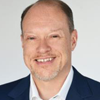
Brian Ledahl is a partner in the Los Angeles office of Russ August & Kabat, where his practice centers on intellectual property and litigation, with particular emphasis on high-technology patent matters and entertainment disputes. His work spans patent infringement, copyright infringement, trade secrets, and entertainment litigation, at trial and on appeal.
On-Demand: September 29, 2026
2 hour CLE
Tuition: $195.00
Co-Sponsored by myLawCLE
Get this course, plus over 1,000+ of live webinars.
Learn More
Training 5 or more people?
Sign-up for a law firm subscription plan and each attorney in the firm receives free access to all CLE Programs
Program Summary
Winning on infringement is no longer the hard part — keeping the remedy is
Wonderland Switzerland AG v. Evenflo Company, Inc. (Fed. Cir. Dec. 17, 2025) tightened what a patentee must show to keep an injunction. The causal nexus requirement now does most of the work, and the RESTORE Act has not changed it. Attorneys who once treated the injunction as the default remedy now have to prove it, factor by factor.
Miss the nexus evidence, and eBay factor one collapses. Lose the injunction, and damages become the whole case. Skip the post-verdict structure, and the ongoing royalty you assumed never gets awarded. Present a royalty without addressing EcoFactor v. Google, and Daubert may take the expert out.
You leave with a framework for gathering and presenting irreparable-harm evidence from discovery through the hearing, plus a working approach to sunset and ongoing royalties, design-arounds, and preserving the royalty fallback at trial. These are judgment calls about ordering proof and choosing structure, not doctrine an AI tool can summarize for you.
Key topics to be discussed:
- Reading Wonderland
Trace what the patentee in Wonderland Switzerland AG v. Evenflo Company, Inc. failed to prove, and test your own record for the same gap before you file. - Working the eBay Factors
Apply each eBay factor to your facts, with the causal nexus requirement carrying the weight it now carries on Federal Circuit review. - Building the Record
Gather the evidentiary categories courts actually demand, from discovery through the injunction hearing, and avoid the mistakes that cost winning patentees their injunctions. - Tracking the RESTORE Act
Advise clients on what the RESTORE Act would change about injunctive relief, and on what it would leave exactly as it is. - Remedies Without an Injunction
Identify what remains available when an injunction is not, and structure sunset versus ongoing royalties across the pre-verdict and post-verdict divide. - Design-Arounds and Daubert
Manage design-around issues, keep your royalty expert past EcoFactor v. Google, and present damages at trial so the ongoing royalty survives as a fallback.
This course is co-sponsored with myLawCLE.
Date / Time:
 Closed-captioning available
Speakers
Kristopher R. Davis, partner | Russ August & Kabat
Kristopher R. Davis is a Partner at Russ August & Kabat in Los Angeles, where he focuses on intellectual property litigation and licensing, with particular experience in complex patent and trade secret disputes. He is highly experienced in all phases of litigation before federal district courts, the Federal Circuit, the International Trade Commission (ITC), and the United States Patent and Trademark Office (USPTO). His work has involved technologies including software applications, mobile devices, telecommunications, networking, graphics processors, computer memories, semiconductors, automotive control systems, and medical devices. Kris is also a registered patent attorney and has represented clients in numerous post-grant proceedings before the USPTO, advised clients through acquisitions of intellectual property assets, and prosecuted utility and design patent applications. Before joining Russ August & Kabat, he was an attorney at Latham & Watkins LLP, where he practiced in the Intellectual Property Litigation group and represented pro bono clients in special education and immigration matters. During law school, he was elected into the Order of the Coif, served as President of the Intellectual Property Legal Society, and was Notes Editor of the University of Illinois Law Review.
- Education & Credentials
Kris earned his J.D. from the University of Illinois College of Law in 2008, where he graduated summa cum laude and was elected into the Order of the Coif. He earned a B.S. in Electrical Engineering from the University of Illinois at Urbana-Champaign in 2005, graduating with honors. He is also a registered patent attorney.
- Recognition & Leadership
Kris was selected by his peers for inclusion in The Best Lawyers: Ones to Watch (2026 Edition). He was also named a “Rising Star” by the publishers of Los Angeles Magazine in 2022 and 2023. During law school, he served as President of the Intellectual Property Legal Society and was Notes Editor of the University of Illinois Law Review.
- Professional Involvement
Kris focuses his practice on intellectual property litigation and licensing, including complex patent and trade secret disputes. He has represented clients in litigation before federal district courts, the Federal Circuit, the ITC, and the USPTO, and has represented clients in post-grant proceedings before the USPTO. His professional work has also included advising clients through acquisitions of intellectual property assets and prosecuting utility and design patent applications. While at Latham & Watkins, he also represented pro bono clients in special education and immigration matters.
- Experience
Kris has handled patent and intellectual property matters involving a broad range of technologies, including software applications, mobile devices, telecommunications, networking, graphics processors, computer memories, semiconductors, automotive control systems, and medical devices. His reported matters include representing Headwater Research in multi-patent cases involving background data savings and push messaging, resulting in jury trial verdicts of $175 million and $279 million, respectively; representing EcoFactor in multi-patent smart thermostat cases that resulted in jury trial verdicts of infringement and validity; and representing clients in patent disputes involving haptic feedback, touch screens and touch controllers, graphics processors, computer memory, motor technology, automotive security and control systems, mobile technologies, electronic records, financial services, electronic infusion pumps, and network and email security. His matters have resulted in jury trial verdicts, favorable settlements, voluntary dismissals, and dismissal of claims, as detailed in his firm biography.
Brian Ledahl, Partner | Russ August & Kabat
Brian Ledahl is a partner in the Los Angeles office of Russ August & Kabat, where his practice centers on intellectual property and litigation, with particular emphasis on high-technology patent matters and entertainment disputes. His work spans patent infringement, copyright infringement, trade secrets, and entertainment litigation, at trial and on appeal.
- Education & Credentials
Mr. Ledahl received his J.D. from Columbia Law School in 1996, where he was named a Harlan Fiske Stone Scholar and served as a judicial extern to the Hon. Sonia Sotomayor. He earned his Bachelors Degree from Columbia University in 1993. He is admitted in the state and Federal Courts in California, the Federal Courts in the Eastern and Western Districts of Texas, the District of Colorado, the U.S. Courts of Appeals for the Ninth Circuit and the Federal Circuit, and the United States Supreme Court.
- Recognition & Leadership
The publishers of Los Angeles Magazine have named him a Southern California Super Lawyer each year from 2014 through 2026, and in 2021 he was recognized as a Southern California Top 100 Super Lawyer. Martindale has peer rated him AV Preeminent. As an undergraduate he was a member of Columbia’s 1992 and 1993 NCAA Champion fencing teams and received the Eisenhower Scholar Athlete Award.
- Professional Involvement
Alongside his litigation practice, Mr. Ledahl counsels clients on business and strategic issues arising from intellectual property and related matters. He has served on the board of the Los Angeles Children’s Chorus.
- Experience
Mr. Ledahl has appeared in numerous Federal trial courts around the United States, in state courts in California, and before the U.S. International Trade Commission. His recent trial results include a $135mm judgment in AlmondNet v. Amazon, a $379mm judgment in MR Technologies v. Western Digital, a $279mm verdict in Headwater Research v. Samsung, and a $175mm verdict in Headwater Research v. Verizon. His appellate record includes successful arguments against Apple, Google, and many others before the U.S. Court of Appeals for the Federal Circuit, as well as appeals before the U.S. Court of Appeals for the Ninth Circuit and the California state appellate courts. He recently argued before the Federal Circuit sitting en banc in EcoFactor v. Google. Over the course of his career he has helped clients recover more than $3.4 billion in judgments and settlements. Before joining Russ August & Kabat, he practiced at Irell & Manella LLP from 1996 to 2013.
Agenda
SESSION 1 – Building an irreparable-harm record that survives federal circuit review | 12:00pm – 1:00pm
This session examines what it takes to build an irreparable-harm evidentiary record that can withstand Federal Circuit scrutiny in a post-eBay, post-Wonderland landscape. Using Wonderland Switzerland AG v. Evenflo Company, Inc. (Fed. Cir. Dec. 17, 2025) as the organizing case, attorneys will work through each eBay factor—with particular focus on the causal nexus requirement, the evidentiary categories courts demand, and the mistakes that cost winning patentees their injunctions. Attorneys will leave with a concrete framework for gathering, structuring, and presenting irreparable-harm evidence from discovery through the injunction hearing.
This session examines willful patent infringement after Halo, focusing on how courts evaluate enhanced damages, the strategic value of clearance opinions, privilege waiver risks, opinion counsel structures, and the continued role of the Read factors in mitigating willfulness and damages exposure.
BREAK | 1:00pm – 1:10pm
SESSION 2 – When an Injunction Isn’t Available – Navigating Patent Damages Presentation | 1:10pm – 2:10pm
This section focuses on how to present damages in a case where an injunction isn’t available or was reversed, how to navigate the different types of reasonable royalty structures and approaches, possible design around issues, and the common pitfalls around presenting royalty damages.
This session examines the remedies available to patent owners when a permanent injunction is unavailable, with a particular focus on securing and calculating ongoing monetary relief. Attendees will explore the distinctions between pre-verdict and post-verdict damages, including how litigation strategy, evidentiary requirements, and legal standards evolve after liability has been established. The program will also explain the concept of sunset royalties, how they differ from ongoing royalties, and the circumstances in which each may be appropriate. In addition, the session will address practical challenges related to design-around efforts, recent developments affecting damages experts—including the impact of the EcoFactor v. Google decision on Daubert challenges—and effective strategies for presenting damages evidence at trial to preserve the possibility of an ongoing royalty award if injunctive relief is denied.
Credits
Alaska
Approved for CLE Credits
2 General
Alabama
Approved for Self-Study Credits
2 General
Arkansas
Approved for CLE Credits
2 General
Arizona
Approved for CLE Credits
2 General
California
Approved for CLE Credits
2 General
Colorado
Pending CLE Approval
2 General
Connecticut
Approved for CLE Credits
2 General
District of Columbia
No MCLE Required
2 CLE Hour(s)
Delaware
Pending CLE Approval
2 General
Florida
Approved via Attorney Submission
2 General Hours
Georgia
Approved for CLE Credits
2 General
Hawaii
Approved for CLE Credits
2 General
Iowa
Pending CLE Approval
2 General
Idaho
Pending CLE Approval
2 General
Illinois
Approved for Self-Study Credits
2 General
Indiana
Approved For On-Demand Credits
2 General
Kansas
Pending CLE Approval
2 Substantive
Kentucky
Pending CLE Approval
2 General
Louisiana
Pending CLE Approval
2 General
Massachusetts
No MCLE Required
2 CLE Hour(s)
Maryland
No MCLE Required
2 CLE Hour(s)
Maine
Pending CLE Approval
2 General
Michigan
No MCLE Required
2 CLE Hour(s)
Minnesota
Pending CLE Approval
2 General
Missouri
Approved for Self-Study Credits
2.4 General
Mississippi
Pending CLE Approval
2 General
Montana
Pending CLE Approval
2 General
North Carolina
Pending CLE Approval
2 General
North Dakota
Approved for CLE Credits
2 General
Nebraska
Pending CLE Approval
2 General
New Hampshire
Approved for CLE Credits
120 General minutes
New Jersey
Approved for CLE Credits
2 General
New Mexico
Approved for Self-Study Credits
2 General
Nevada
Approved for Self-Study Credits
2 General
New York
Approved for CLE Credits
2 General
Ohio
Approved for Self-Study Credits
2 General
Oklahoma
Pending CLE Approval
2.5 General
Oregon
Pending CLE Approval
2 General
Pennsylvania
Approved for Self-Study Credits
2 General
Rhode Island
Pending CLE Approval
2.5 General
South Carolina
Pending CLE Approval
2 General
South Dakota
No MCLE Required
2 CLE Hour(s)
Tennessee
Approved for Self-Study Credits
2 General
Texas
Approved for CLE Credits
2 General
Utah
Pending CLE Approval
2 General
Virginia
Pending CLE Approval
2 General
Vermont
Approved for CLE Credits
2 General
Washington
Approved via Attorney Submission
2 Law & Legal Hours
Wisconsin
Approved for Self-Study Credits
2 General
West Virginia
Pending CLE Approval
2.4 General
Wyoming
Pending CLE Approval
2 General
Preview
More CLE Webinars
Trending CLE Webinars





Upcoming CLE Webinars

© 2026 Federal Bar Association