Negotiating with Liars: Puffery, Fraud, and Playing Defense in Settlement Negotiations

Barry Temkin is a partner at Mound Cotton. He is a litigator with extensive trial experience, having tried over fifty jury trials to verdict. He has also litigated numerous arbitrations, including securities, commercial and employment disputes. Barry also represents lawyers and law firms in professional responsibility matters, including conflicts, sanction proceedings, fee disputes, legal malpractice cases and proceedings before the attorney grievance committee.
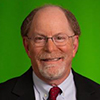
John B. Harris is a litigation partner with the New York City law firm of Frankfurt Kurnit Klein & Selz, P.C. He has more than 35 years’ experience representing clients in civil and white collar criminal matters, with a current focus is on the representation of lawyers and law firms.
Live Video-Broadcast: September 30, 2026
2 hour CLE
Tuition: $195.00
Co-Sponsored by myLawCLE
Get this course, plus over 1,000+ of live webinars.
Learn More
Training 5 or more people?
Sign-up for a law firm subscription plan and each attorney in the firm receives free access to all CLE Programs
Program Summary
The Same Sentence Is Puffery From Counsel and Misrepresentation From a Neutral
ABA Formal Opinion 518 redrew the ethical terrain for attorney-mediators. Rule 4.1 and Comment [2] still shelter ordinary negotiation convention. That shelter narrows once counsel steps into a neutral role. The same statement changes character with the chair you sit in.
Overstate your authority and Rule 4.1 is in play. Stay silent on an insurance coverage limit and the half-truth doctrine reaches you anyway. Cross into Rule 8.4(c) and state-law and criminal exposure open beyond the Model Rules. Accept a no-reliance clause and your fraud claim may die at signing.
You leave with a working taxonomy of permissible, gray-zone, and impermissible statements. You leave with live-negotiation red flags, the FRCP 60(b)(3) route, and rescission and tort alternatives. You leave with defensive drafting language that survives an integration clause. These are judgment calls no research tool performs for you.
Key topics to be discussed:
- Rule 4.1 Boundaries
How the negotiation-convention safe harbor in Comment [2] changes which settlement statements Model Rule 4.1 actually reaches. - Puffery Versus Fraud
How the categories identified in ABA Formal Opinion 06-439 change the way you sort a statement into permissible, gray-zone, or impermissible. - Half-Truths and Omissions
How the half-truth doctrine and omission-based liability change your duty to speak, including on insurance coverage. - Mediator Ethics Divergence
How ABA Formal Opinion 518 changes the calculus when the same statement comes from a neutral rather than from counsel. - Detecting Deception Live
How false authority claims and strategic omissions change what you do while the negotiation is still open. - Unwinding and Preventing Fraud
How mediation confidentiality exceptions, FRCP 60(b)(3), rescission, and no-reliance and integration clauses change what you can undo after signing and what you draft before it.
This course is co-sponsored with myLawCLE.
Date / Time: September 30, 2026
- 1:00 pm – 3:10 pm Eastern
- 12:00 pm – 2:10 pm Central
- 11:00 am – 1:10 pm Mountain
- 10:00 am – 12:10 pm Pacific
 Closed-captioning available
Speakers
Barry Temkin, Partner | Mound Cotton
Barry Temkin is a partner at Mound Cotton. He is a litigator with extensive trial experience, having tried over fifty jury trials to verdict. He has also litigated numerous arbitrations, including securities, commercial and employment disputes. Barry also represents lawyers and law firms in professional responsibility matters, including conflicts, sanction proceedings, fee disputes, legal malpractice cases and proceedings before the attorney grievance committee.
- Education & Credentials
He is a graduate of the University of Pennsylvania Law School and the University of Rochester.
- Recognition & Leadership
Barry is an adjunct professor at Fordham University School of Law, where he teaches courses on securities regulation and professional responsibility. He has published articles on securities law and attorney professionalism in the Georgetown Journal of Legal Ethics, Law360, the Securities Regulation Law Journal, Seattle University Law Review, Securities Arbitration Commentator, and the New York Law Journal. He has been quoted in the ABA Journal, Investment News, the New York Law Journal, The Economist, the Wall Street Journal, Law360, the National Law Journal, American Banker, Lawyers U.S.A. and other publications.
Adjunct Professor, Fordham University School of Law, 2007–present; Super Lawyer, New York Metro 2021: Professional Liability: Defense, 2015-2023; Otto L. Walter Distinguished Writing Award, New York Law School, 2008.
- Professional Involvement
Barry has been a member of the FINRA (Financial Industry Regulatory Authority) Board of Arbitrators since 1999, and served for ten years as co-chair of the New York Country Lawyers’ Association Professional Ethics Committee. He has lectured on securities law, professional liability and legal ethics at the New York State Bar Association, the New York County Lawyers’ Association, the Association of the Bar of the City of New York, the Practicing Law Institute, the Futures Industry Association and numerous corporations and insurance companies.
Co-chair, New York County Lawyers’ Association Committee on Professional Ethics, 2006 –2016; Member, 2001–present; Member, Editorial Board of Oxford University Press, New York Rules of Professional Conduct; Member, Financial Industry Regulatory Authority (FINRA) Board of Arbitrators, 1999–present; New York County Lawyers’ Association, Committee on Futures and Derivatives; Volunteer Attorney, Trial Lawyers Care, 2001–2004.
- Experience
As an Assistant District Attorney in Brooklyn, he tried dozens of jury cases and served as a Senior Trial Attorney in the Homicide Bureau. He represents broker dealers, financial advisors, insurance brokers, financial firms and investment advisers in litigation, arbitration and regulatory investigations. He also litigates and tries commercial, construction and professional liability cases.
John B. Harris, Partner | Frankfurt Kurnit Klein & Selz, P.C
John B. Harris is a litigation partner with the New York City law firm of Frankfurt Kurnit Klein & Selz, P.C. He has more than 35 years’ experience representing clients in civil and white collar criminal matters, with a current focus is on the representation of lawyers and law firms.
- Education & Credentials
John is a graduate of Yale University and the New York University School of Law. He earned his B.A. cum laude from Yale University in 1978 and his J.D. from New York University School of Law in 1985, where he was a member of the Annual Survey of American Law. He is admitted in New York and Connecticut and before the United States District Courts for the Southern and Eastern Districts of New York, and he appears in SEC, FINRA, and Departmental Disciplinary Committee proceedings.
- Recognition & Leadership
He is a former Chair of the Professional Responsibility Committee of the New York City Bar Association and serves as a mediator for the United States District Court for the Southern District of New York.
Super Lawyers has recognized him for eighteen consecutive years, and he sat on Law360’s Legal Ethics Editorial Board in 2022. Within the New York City Bar Association he has also served on the Committee on Professional and Judicial Ethics, the Committee on Professional Discipline, the Judiciary Committee, and the Task Force on Multi-Disciplinary Practice. At the Anti-Defamation League he has chaired both the New York Regional Board and the National Civil Rights Committee.
- Professional Involvement
He sits as a Delegate to the House of Delegates of the New York State Bar Association and on its Professional Discipline Committee, and belongs to the American Bar Association, the New York State Bar Foundation, and the NYU Law Alumni Association. His writing on professional responsibility includes “Probing the Mysterious ‘Materially Adverse’ Standard for Attorney-Client Conflicts” in the PLI Chronicle and “Masking Tapes: An Analysis of the Law of Secret Recording in New York” in the New York Legal Ethics Reporter, alongside expert analysis columns for Law360. He presented “When the Lawyer Becomes the Source of Evidence” at the APRL Conference in San Antonio on February 6, 2026 and has taught “Current Ethical Issues for In-House Counsel” for the New York City Bar in 2024 and 2025.
- Experience
He regularly testifies as an expert witness on professional responsibility and legal ethics matters.
Before joining Frankfurt Kurnit Klein & Selz he was a partner at Stillman & Friedman, P.C. and at Ballard Spahr LLP, and earlier a reporter for The Hartford Courant. His defense work for lawyers and law firms includes a conflicts disqualification defense for a patent firm, a discrimination defense for a law firm, and the defense of an in-house lawyer accused of aiding and abetting fraud. Other representations include SEC v. Thrasher and the Crown Heights civil rights litigation on behalf of former New York City Mayor David Dinkins and Police Commissioner Lee Brown.
Agenda
SESSION 1 – Puffery or Misrepresentation: What Lawyers May Say in Settlement Negotiations | 1:00pm – 2:00pm
This session examines the ethical and legal boundaries governing attorney statements in settlement negotiations, focusing on the line between permissible puffery and actionable misrepresentation under Model Rule 4.1, Rule 8.4(c), and ABA Formal Opinions 06-439 and 518. Attorneys will learn which categories of statements qualify for the negotiation-convention safe harbor under Comment [2], which statements cross into material misrepresentation, and how the half-truth doctrine and omission-based liability expand exposure beyond affirmative falsehoods. Attendees will leave with a working taxonomy of permissible, gray-zone, and impermissible statements they can apply immediately to their own negotiation and settlement practice.
BREAK | 2:00pm – 2:10pm
SESSION 2 – Detecting, Proving, and Remedying Deception in Settlement Negotiations and Mediation | 2:10pm – 3:10pm
This session equips attorneys with a practical framework for identifying deception during settlement negotiations and mediation, challenging fraudulent agreements after execution, and drafting defensive provisions that reduce exposure from the outset. Attendees will examine the evidentiary and procedural requirements for setting aside settlements obtained by fraud, the state-by-state landscape of mediation confidentiality exceptions, and the full menu of post-settlement remedies including FRCP 60(b)(3) motions, rescission, and direct tort claims. Attorneys leave with specific detection techniques, defensive drafting strategies, and an understanding of the ethical enforcement mechanisms available when opposing counsel crosses the line.
Credits
Alaska
Approved for CLE Credits
1 General, 1 Ethics
Alabama
Pending CLE Approval
1 General, 1 Ethics
Arkansas
Approved for CLE Credits
1 General, 1 Ethics
Arizona
Approved for CLE Credits
1 General, 1 Professional Responsibility/Ethics
California
Approved for CLE Credits
1 General, 1 Ethics
Colorado
Pending CLE Approval
1 General, 1 Ethics / Professionalism
Connecticut
Approved for CLE Credits
1 General, 1 Ethics / Professionalism
District of Columbia
No MCLE Required
2 CLE Hour(s)
Delaware
Pending CLE Approval
1 General, 1 Enhanced Ethics
Florida
Pending CLE Approval
1 General Hours, 1 Ethics Hours
Georgia
Pending CLE Approval
1 General, 1 Ethics
Hawaii
Approved for CLE Credits
1 General, 1 Ethics or Professional Responsibility Education
Iowa
Pending CLE Approval
1 General, 1 Ethics
Idaho
Pending CLE Approval
1 General, 1 Ethics / Professionalism
Illinois
Pending CLE Approval
1 General, 1 Ethics, Civility, Professionalism
Indiana
Pending CLE Approval
1 General, 1 Ethics
Kansas
Pending CLE Approval
1 Substantive, 1 Ethics / Professionalism
Kentucky
Pending CLE Approval
1 General, 1 Ethics
Louisiana
Pending CLE Approval
1 General, 1 Ethics
Massachusetts
No MCLE Required
2 CLE Hour(s)
Maryland
No MCLE Required
2 CLE Hour(s)
Maine
Pending CLE Approval
1 General, 1 Ethics / Professionalism
Michigan
No MCLE Required
2 CLE Hour(s)
Minnesota
Pending CLE Approval
1 General, 1 Ethics
Missouri
Approved for CLE Credits
1.2 General, 1.2 Ethics
Mississippi
Pending CLE Approval
1 General, 1 Ethics
Montana
Pending CLE Approval
1 General, 1 Professional Fitness and Integrity
North Carolina
Pending CLE Approval
1 General, 1 Ethics
North Dakota
Approved for CLE Credits
1 General, 1 Ethics
Nebraska
Pending CLE Approval
1 General, 1 Professional Responsibility
New Hampshire
Approved for CLE Credits
60 General minutes, 60 Ethics / Professionalism minutes
New Jersey
Approved for CLE Credits
1 General, 1 Ethics / Professionalism
New Mexico
Approved for CLE Credits
1 General, 1 Ethics / Professionalism
Nevada
Pending CLE Approval
1 General, 1 Ethics / Professionalism
New York
Approved for CLE Credits
1 General, 1 Ethics / Professionalism
Ohio
Pending CLE Approval
1 General, 1 Professional Conduct
Oklahoma
Pending CLE Approval
1 General, 1 Ethics / Professionalism
Oregon
Pending CLE Approval
1 General, 1 Ethics
Pennsylvania
Approved for CLE Credits
1 General, 1 Ethics / Professionalism
Rhode Island
Pending CLE Approval
1 General, 1 Ethics / Professionalism
South Carolina
Pending CLE Approval
1 General, 1 Ethics / Professionalism
South Dakota
No MCLE Required
2 CLE Hour(s)
Tennessee
Pending CLE Approval
1 General, 1 Dual
Texas
Approved for CLE Credits
1 General, 1 Ethics / Professionalism
Utah
Pending CLE Approval
1 General, 1 Ethics / Professionalism
Virginia
Not Eligible
1 General Hours, 1 Ethics / Professionalism Hours
Vermont
Approved for CLE Credits
1 General, 1 Ethics
Washington
Approved via Attorney Submission
1 Law & Legal Hours, 1 Ethics Hours
Wisconsin
Pending CLE Approval
1 General, 1 Ethics
West Virginia
Pending CLE Approval
1.2 General, 1.2 Ethics / Professionalism
Wyoming
Pending CLE Approval
1 General, 1 Ethics / Professionalism
More CLE Webinars
Trending CLE Webinars









Upcoming CLE Webinars





































© 2026 Federal Bar Association