
Bias in the Case: Implicit Bias and the Rules Now Governing Jury Selection
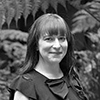
Beth W. Mora has spent much of the last five years on the question this program takes up: how bias operates inside the legal system and what the profession does about it.
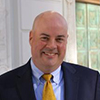
Rich Matthews is a trial consultant and California attorney whose work centers on jury selection: juror questionnaires, voir dire questions, and the exercise of cause and peremptory challenges.
Live Video-Broadcast: November 6, 2026
2 hour CLE
Tuition: $195.00
Co-Sponsored by myLawCLE
Get this course, plus over 1,000+ of live webinars.
Learn More
Training 5 or more people?
Sign-up for a law firm subscription plan and each attorney in the firm receives free access to all CLE Programs
Program Summary
Your strike was race neutral. Under the new rules, that may not be enough
For decades a peremptory strike survived if the lawyer did not intend to discriminate. Courts and bar regulators now treat implicit bias as a legally cognizable issue distinct from intentional discrimination. States have rewritten jury selection around it. Washington, New Jersey, and Connecticut apply an objective-observer standard. Arizona abolished peremptory challenges. California built a hybrid under CCP § 231.7.
Try a FEHA, Unruh, or specified federal civil rights case in California and § 231.7 governs your strikes. Try most other civil cases and SB 645, signed October 11, 2025, returns you to Batson-Wheeler. Pick a jury in Arizona and cause challenges are your only tool. Omit the documentation an objective observer expects, and the strike may not survive. Meanwhile ABA Model Rule 8.4(g) and state CLE bias mandates diverge, and jury instructions and orientation videos differ in what they actually reduce.
Attendees leave with a framework for identifying which standard governs their case. They get voir dire and questionnaire adjustments matched to each model, and strike documentation practices built to survive judicial scrutiny. They also get a clear-eyed map of which debiasing protocols the evidence supports and where critical gaps remain.
Key topics to be discussed:
- Bias as a Legal Standard
How courts and bar regulators now treat implicit bias as a legally cognizable issue distinct from intentional discrimination, and what that shift changes in criminal and civil decision-making. - Court Protocols That Work
Which jury instructions, orientation videos, and bench cards courts are deploying, which debiasing strategies have empirical support, and where the honest limits of any single intervention lie. - Conduct Rules and CLE Mandates
What ABA Model Rule 8.4(g) requires, which states have adopted or rejected it, and how state CLE bias-elimination requirements are changing what your jurisdiction demands. - Three Reform Models
How the objective-observer standard in Washington, New Jersey, and Connecticut, Arizona’s abolition of peremptory challenges, and California’s hybrid under CCP § 231.7 each reshape civil jury selection. - California After SB 645
Which civil cases returned to Batson-Wheeler when SB 645 was signed on October 11, 2025, and which FEHA, Unruh, and federal civil rights cases stay under the stricter § 231.7 procedures. - Voir Dire and Strike Documentation
How to adapt to the voir dire questions, juror questionnaires, and cause-challenge strategy across jurisdictions, what Arizona’s three-plus years of data show, and which strike documentation practices are required or fatal to omit.
This course is co-sponsored with myLawCLE.
Date / Time: November 6, 2026
- 12:00 pm – 2:10 pm Eastern
- 11:00 am – 1:10 pm Central
- 10:00 am – 12:10 pm Mountain
- 9:00 am – 11:10 am Pacific
 Closed-captioning available
Speakers
Beth W. Mora, Owner and Founder | Mora Employment Law
Beth W. Mora has spent much of the last five years on the question this program takes up: how bias operates inside the legal system and what the profession does about it. She served as Co-Chair of the California Employment Lawyers Association’s Elimination of Bias in the Judiciary effort and sat on the Bias Committee of the Contra Costa County Superior Court. Her recent presentations include “Bias Incivility: What is it & Why Does it Matter?” for the Beverly Hills Bar Association (March 27, 2025), “Civility, Bias & the Legal Profession – Oh My!” (July 18, 2024) and “Ethics & Bias: A Primer” (January 19, 2024) for the California Lawyers Association’s Labor & Employment Law Section, and “Bias in the Judiciary, What Complaint Options Exist?” for Continuing Education of the Bar (August 20, 2022). She is the owner and founder of Mora Employment Law, where she represents employees.
- Education & Credentials
Ms. Mora earned her J.D. from Golden Gate University School of Law in 2000, graduating in the top 15 percent of her class with a Certificate in Employment Law and Public Interest, and served as Research Editor and Writer for the Golden Gate University Law Review from 1998 to 2000. She holds a B.A. in Liberal Studies from Sonoma State University (1997), where she graduated with honors. Admitted to the California bar in 2000, she practices before the United States District Courts for the Northern, Eastern, and Southern Districts of California and the Court of Appeal in the State of California.
- Recognition & Leadership
She has been recognized in Best Lawyers in America for Employment Law (2024–2026) and as a Northern California Super Lawyer in plaintiff employment law every year since 2011, including the Top 50 Women list (2016, 2022–2026) and the Top 100 list (2022–2026). The California Employment Lawyers Association has honored her with the Joe Posner Award (2023), its Service Award (2022–2023, 2025), the Strike Force One Award (2021), and the Torch Award (2019). The Contra Costa County Bar Association presented her with the Justice James J. Marchiano Distinguished Service Award (2022), its Diversity Award (Gold in 2018, Platinum 2019–2022), and a place on its Pro-Bono Honor Roll (2020–2023).
- Professional Involvement
Ms. Mora is Vice Chair of the Executive Board of the California Lawyers Association’s Labor & Employment Law Section and serves on the Association’s Government Affairs Committee, on the California Employment Lawyers Association’s Legislative Committee, and as Supervising Attorney of the Legal Aid at Workers’ Rights Clinic. Her past roles include Co-Chair of CELA’s Elimination of Bias in the Judiciary, the Contra Costa County Superior Court’s Bias Committee, First Vice President and District 3 Board of Governor for California Women Lawyers, the Board of Directors of Emerge California, pro bono legal services for the Transgender Law Center, the Editorial Board of Contra Costa Lawyer Magazine, the Contra Costa County Commission for Women and Girls, and Chair of the Contra Costa County Bar Association’s Employment Section.
- Experience
Her writing on bias in the courts spans several years: “Bias-Driven Incivility: What Legal Professionals Need to Know” (Daily Journal, April 7, 2025), “Judicial Bias – What are your options?” (San Francisco Trial Lawyers Association Magazine, Fall 2021), “Practice Guide: Bias From the Bench: How CELA Has and Continues to Shape the Discussion” (CELA Bulletin, April 2021), and “Let’s Say Something! Addressing Judicial Bias in the Courts” (Advocate and Plaintiff, March 2021). She has also presented “Trauma Informed Lawyering” at Berkeley Law (January 23, 2025) and “Language Matters: Gender Equity in Language” for Continuing Education of the Bar (September 17, 2024). Beyond the bias work, she speaks and publishes regularly on California employment law, including annual “New California Employment Laws” articles in the California Labor & Employment Law Review (2023–2026), programs for PLI, Berkeley Law, and Continuing Education of the Bar, and recurring appearances on KALW’s Know Your Legal Rights.
Rich Matthews, Trial Consultant and California Attorney | Juryology
Rich Matthews is a trial consultant and California attorney whose work centers on jury selection: juror questionnaires, voir dire questions, and the exercise of cause and peremptory challenges. He serves on the California Bar Litigation Section’s committee for comment on proposed revisions to California’s standard jury instructions. Based in San Francisco, he works nationwide through Juryology, his trial consulting practice.
- Education & Credentials
Mr. Matthews earned his J.D. from the University of Oregon School of Law, where he served on the Moot Court Board and the Mock Trial Team, and holds a bachelor’s degree in economics from the University of Washington. He is a member of the California Bar. Before founding Juryology in January 2000, he practiced as an attorney at Kornblum, Ferry & Frye and at Sarrail, Lynch & Hall, where he specialized in bad-faith insurance defense. He has worked as a trial consultant for more than two decades and serves on the California Bar Litigation Section’s committee for comment on proposed revisions to California’s standard jury instructions.
- Recognition & Leadership
Mr. Matthews was featured in the ABA Journal’s January 2015 examination of how trial consulting has evolved in the two decades since the O.J. Simpson verdict, where he was identified as a senior trial consultant with Juryology and quoted on the profession’s shift from jury selection toward earlier case framing and pretrial resolution. He has appeared on national television and in major publications offering commentary on high profile trials, and he is the author of the Juryology blog, Art & Science of Jury Persuasion, where he writes on jury selection, trial strategy, and juror psychology. He has innovated the use of focus group results at mediations and in negotiations to achieve better settlements.
- Professional Involvement
Mr. Matthews serves on the California Bar Litigation Section’s committee to comment on proposed revisions to California’s standard jury instructions. He is a repeat presenter on jury selection for Pincus Professional Education, including the Art of Jury Selection California program (July 12–14, 2022) and a two-part jury selection webinar (December 12 and 14, 2023), and he presented “Winning Opening & Closing Arguments: The Art & Science” for Celesq AttorneysEd Center (March 14, 2025). He has also spoken to the Los Angeles chapter of the Association of Certified Fraud Examiners on jury persuasion skills for expert witnesses and has written for The Expert Institute on expert witness testimony and the distinction between an expert and an expert witness.
- Experience
His consulting practice separates jury issues from legal issues, crafts the themes and frames through which jurors perceive a case, writes openings and closings, and prepares witnesses, in addition to the jury selection work at its core. He has produced results for both plaintiffs and defendants in civil cases and for prosecutors and defendants in criminal cases, and he brings focus group results into mediations and negotiations.
Agenda
SESSION 1 – Implicit Bias in Legal Decision-Making and the Protocols That Reduce It | Beth W. Mora | 12:00pm – 1:00pm
This session examines how implicit bias operates in legal decision-making across criminal and civil contexts, from police discretion and jury deliberation to attorney conduct standards. Attorneys will learn how courts and bar regulators are treating bias as a legally cognizable issue—distinct from intentional discrimination—and what evidence-based protocols have been adopted to mitigate it. Attendees will leave with a grounded understanding of the current statutory, evidentiary, and regulatory landscape, including where science supports intervention and where critical gaps remain.
BREAK | 1:00pm – 1:10pm
SESSION 2 – Jury Selection Under the New Peremptory Strike Rules in Civil Trials | Rich Matthews | 1:10pm – 2:10pm
This session maps the three active reform models — Washington/New Jersey/Connecticut’s objective observer standard, Arizona’s abolition of peremptory challenges, and California’s hybrid framework under CCP § 231.7 — and examines how each reshapes civil jury selection in practice. Attorneys will learn how California’s SB 645 (signed October 11, 2025) exempts most civil cases from the § 231.7 procedures while preserving that stricter standard for FEHA, Unruh, and specified federal civil rights cases. Attendees leave with a framework for identifying which standard governs their case, adjusting voir dire strategy accordingly, and documenting strike decisions to survive judicial scrutiny under any of the three models.
Credits
Alaska
Approved for CLE Credits
2 Ethics
Alabama
Approved for CLE Credits
2 Ethics
Arkansas
Approved for CLE Credits
2 Ethics
Arizona
Approved for CLE Credits
2 Professional Responsibility/Ethics
California
Approved for CLE Credits
2 Elimination of Bias
Colorado
Pending CLE Approval
2 EDI
Connecticut
Approved for CLE Credits
2 Ethics / Professionalism
District of Columbia
No MCLE Required
2 CLE Hour(s)
Delaware
Pending CLE Approval
2 Enhanced Ethics
Florida
Approved via Attorney Submission
2 Ethics Hours
Georgia
Pending CLE Approval
2 Ethics
Hawaii
Approved for CLE Credits
2 Ethics or Professional Responsibility Education
Iowa
Pending CLE Approval
2 Diversity & Inclusion
Idaho
Pending CLE Approval
2 Ethics / Professionalism
Illinois
Pending CLE Approval
2 Diversity & Inclusion
Indiana
Pending CLE Approval
2 Ethics
Kansas
Pending CLE Approval
2 Ethics / Professionalism
Kentucky
Pending CLE Approval
2 Ethics
Louisiana
Pending CLE Approval
2 Professionalism
Massachusetts
No MCLE Required
2 CLE Hour(s)
Maryland
No MCLE Required
2 CLE Hour(s)
Maine
Pending CLE Approval
2 Harassment Or Discriminatory
Michigan
No MCLE Required
2 CLE Hour(s)
Minnesota
Pending CLE Approval
2 Elimination of Bias
Missouri
Approved for CLE Credits
2.4 Elimination of Bias
Mississippi
Pending CLE Approval
2 Other (Professional Responsibilty)
Montana
Pending CLE Approval
2 Professional Fitness and Integrity
North Carolina
Pending CLE Approval
2 Ethics
North Dakota
Approved for CLE Credits
2 Ethics
Nebraska
Pending CLE Approval
2 Professional Responsibility
New Hampshire
Approved for CLE Credits
120 Ethics / Professionalism minutes
New Jersey
Approved for CLE Credits
2 Diversity, Inclusion and Elimination of Bias
New Mexico
Approved for CLE Credits
2 Equity in Justice (EIJ)
Nevada
Pending CLE Approval
2 Ethics / Professionalism
New York
Approved for CLE Credits
2 Diversity, Inclusion and Elimination of Bias
Ohio
Pending CLE Approval
2 Professional Conduct
Oklahoma
Pending CLE Approval
2.5 Ethics / Professionalism
Oregon
Pending CLE Approval
2 Access To Justice
Pennsylvania
Approved for CLE Credits
2 Ethics / Professionalism
Rhode Island
Pending CLE Approval
2.5 Diversity, Equity and Inclusion (DEI)
South Carolina
Pending CLE Approval
2 Ethics / Professionalism
South Dakota
No MCLE Required
2 CLE Hour(s)
Tennessee
Approved for CLE Credits
2 Dual
Texas
Approved for CLE Credits
2 Ethics / Professionalism
Utah
Pending CLE Approval
2 Professionalism & Civility
Virginia
Not Eligible
2 Ethics / Professionalism Hours
Vermont
Approved for CLE Credits
2 Diversity & Inclusion
Washington
Approved via Attorney Submission
2 Ethics, Equity & Inclusion Hours
Wisconsin
Pending CLE Approval
2 Law Practice Management
West Virginia
Pending CLE Approval
2.4 Ethics / Professionalism
Wyoming
Pending CLE Approval
2 Ethics / Professionalism
More CLE Webinars
Trending CLE Webinars










Upcoming CLE Webinars



























© 2026 Federal Bar Association