Getting Paid for Doing Good: Practice Pointers to Avoid Reduction in Fees – Track II (Presented by National Organization of Social Security Claimants’ Representatives)
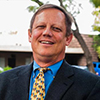
Larry is a 30-year veteran of making presentations before NOSSCR and other organizations and 25 years addressing various fee issues.

Sarah H. Bohr is an appellate attorney who has specialized in Social Security law for over 40 years and for the past 20 years, has had an appellate practice writing Social Security federal court briefs for lawyers.
Live Video-Broadcast: October 15, 2026
1 hour CLE
Tuition: $395.00
Co-Sponsored by myLawCLE
Get this course, plus over 1,000+ of live webinars.
Learn More
Training 5 or more people?
Sign-up for a law firm subscription plan and each attorney in the firm receives free access to all CLE Programs
Program Summary
The Fee You Sought Isn't Always the Fee You Recover
Doing good work doesn't guarantee getting fully paid for it. Between the fee sought and the fee awarded sit the stumbling blocks — and two experienced Social Security litigators will address them across every fee source: 406(a), EAJA, and 406(b).
Each source has its own traps. The 406(a) expedited fee process does not always apply — and when it doesn't, the fee petition has to succeed on its own. EAJA fees draw common objections: failure to recover on all issues, briefing time, clerical time, seeking extensions of time. In 406(b) litigation, windfall findings cut awards — and a missing contingent fee contract complicates the recovery entirely.
You walk out with the practice pointers: tips for successful 406(a) fee petitions, answers to the EAJA objections, 406(b) fees obtained without a contingent fee contract and defended against windfall findings — closing with effective strategies for negotiating fees with SSA.
Key topics to be discussed:
- 406(a) Fee Petitions
When the expedited fee process does not apply, and tips for successful 406(a) fee petitions. - Common EAJA Objections
Failure to recover on all issues, briefing time, clerical time, and seeking extensions of time. - Answering the Objections
Practice pointers for recovering EAJA fees over each stumbling block. - 406(b) Without a Contract
Obtaining 406(b) fees without a contingent fee contract. - Avoiding Windfall Findings
Defending the 406(b) award in fee litigation. - Negotiating with SSA
Effective strategies for fee negotiations with the agency.
Eligible for up to 1 CLE Credit Hour
This session was originally submitted for CLE as a live, in-person presentation and a live webcast for the 2026 Fall National Conference and may be eligible for self-study credit. Each state handles self-study credit differently; for questions, please consult your State Bar Association.
Recorded Thursday, October 15, 2026.
This course is co-sponsored with myLawCLE.
Date / Time: October 15, 2026
- 11:00 am – 12:00 pm Eastern
- 10:00 am – 11:00 pm Central
- 9:00 am – 10:00 pm Mountain
- 8:00 am – 9:00 pm Pacific
 Closed-captioning available
Speakers
Lawrence D. Rohlfing, Founder | Law Offices of Lawrence D. Rohlfing, Inc. CPC
Larry is a 30-year veteran of making presentations before NOSSCR and other organizations and 25 years addressing various fee issues.
- Education & Credentials
He earned his J.D. from Whittier Law School and has been licensed in California since 1985.
- Recognition & Leadership
He is a past president of the National Organization of Social Security Claimants’ Representatives (NOSSCR), where he also served as Secretary, Treasurer, and Vice President, and is a past chair of the Los Angeles County Bar Association’s Social Security Section.
- Professional Involvement
He is a sustaining member of NOSSCR.
- Experience
He successfully argued Crawford v. Astrue, 586 F.3d 1142 (9th Cir. 2009) (en banc) convincing an eleven-judge panel that the lodestar did not apply after the panel violated Gisbrecht.
Sarah H. Bohr, Partner | Bohr & Harrington, LLC
Sarah H. Bohr is an appellate attorney who has specialized in Social Security law for over 40 years and for the past 20 years, has had an appellate practice writing Social Security federal court briefs for lawyers.
- Education & Credentials
She earned her J.D. from the Antioch School of Law in 1977 and a B.A. from the College of Wooster in 1974, and was admitted in the District of Columbia and Florida in 1978.
- Recognition & Leadership
She is a past president of the NOSSCR and a current representative on the Board from the 11th Circuit and a member of its Executive Committee. She is the author of five Social Security publications and her new updated 2026 Editions addressing the Appeals Council, Rulings, Overview of Disability Law, and attorneys
- Professional Involvement
Sarah is a frequent speaker at national and regional Social Security conferences.
- Experience
She learned Social Security law while working at Jacksonville Area Legal Aid, Inc. for 21 years. Sarah is most proud of her successful argument before the Supreme Court 25 years ago, in Sims v. Apfel, 530 U.S. 103 (2000).
Agenda
SESSION 1 – Getting Paid for Doing Good: Practice Pointers to Avoid Reduction in Fees | 11:00am – 12:00pm
Two experienced Social Security litigators will address stumbling blocks to recovering all fees sought. Topics covered include 406(a) fees and when the expedited fee process does not apply, along with tips for successful 406(a) fee petitions. The session will also cover EAJA fees, including common objections to EAJA fees such as failure to recover on all issues, briefing time, clerical time, and seeking extensions of time. Turning to 406(b) fees, the speakers will discuss obtaining 406(b) fees without a contingent fee contract and avoiding windfall findings in 406(b) fee litigation, before closing with effective strategies for negotiating fees with SSA.
Credits
Alaska
Approved for CLE Credits
1 General
Alabama
Pending CLE Approval
1 General
Arkansas
Approved for CLE Credits
1 General
Arizona
Approved for CLE Credits
1 General
California
Approved for CLE Credits
1 General
Colorado
Pending CLE Approval
1 General
Connecticut
Approved for CLE Credits
1 General
District of Columbia
No MCLE Required
1 CLE Hour(s)
Delaware
Pending CLE Approval
1 General
Florida
Pending CLE Approval
1 General
Georgia
Pending CLE Approval
1 General
Hawaii
Approved for CLE Credits
1 General
Iowa
Pending CLE Approval
1 General
Idaho
Pending CLE Approval
1 General
Illinois
Pending CLE Approval
1 General
Indiana
Pending CLE Approval
1 General
Kansas
Pending CLE Approval
1 Substantive
Kentucky
Pending CLE Approval
1 General
Louisiana
Pending CLE Approval
1 General
Massachusetts
No MCLE Required
1 CLE Hour(s)
Maryland
No MCLE Required
1 CLE Hour(s)
Maine
Pending CLE Approval
1 General
Michigan
No MCLE Required
1 CLE Hour(s)
Minnesota
Pending CLE Approval
1 General
Missouri
Approved for CLE Credits
1.2 General
Mississippi
Pending CLE Approval
1 General
Montana
Pending CLE Approval
1 General
North Carolina
Pending CLE Approval
1 General
North Dakota
Approved for CLE Credits
1 General
Nebraska
Pending CLE Approval
1 General
New Hampshire
Approved for CLE Credits
60 General minutes
New Jersey
Approved for CLE Credits
1 General
New Mexico
Approved for CLE Credits
1 General
Nevada
Pending CLE Approval
1 General
New York
Approved for CLE Credits
1 General
Ohio
Pending CLE Approval
1 General
Oklahoma
Pending CLE Approval
1 General
Oregon
Pending CLE Approval
1 General
Pennsylvania
Approved for CLE Credits
1 General
Rhode Island
Pending CLE Approval
1 General
South Carolina
Pending CLE Approval
1 General
South Dakota
No MCLE Required
1 CLE Hour(s)
Tennessee
Pending CLE Approval
1 General
Texas
Approved for CLE Credits
1 General
Utah
Pending CLE Approval
1 General
Virginia
Not Eligible
1 General Hours
Vermont
Approved for CLE Credits
1 General
Washington
Approved via Attorney Submission
1 Law & Legal Hours
Wisconsin
Pending CLE Approval
1 General
West Virginia
Pending CLE Approval
1.2 General
Wyoming
Pending CLE Approval
1 General
More CLE Webinars
Trending CLE Webinars










Upcoming CLE Webinars




















































© 2026 Federal Bar Association