
Deposing the Opposing Expert in Federal Court to Build the Rule 702 Exclusion Record
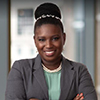
Shannon N. Proctor is a partner in the Washington, DC office of Hollingsworth LLP, where her litigation work covers the full life of a case: developing expert witnesses, taking and defending depositions, drafting complex motions, and arguing in court.

Elyse A. Shimada is a partner in the Washington, DC office of Hollingsworth LLP who writes and speaks regularly on Federal Rule of Evidence 702, its 2023 amendments, and the court’s gatekeeping role over expert testimony.
Live Video-Broadcast: December 1, 2026
2 hour CLE
Tuition: $195.00
Co-Sponsored by myLawCLE
Get this course, plus over 1,000+ of live webinars.
Learn More
Training 5 or more people?
Sign-up for a law firm subscription plan and each attorney in the firm receives free access to all CLE Programs
Program Summary
The Exclusion Motion Is Won or Lost Before You Draft It
Expert discovery in federal court is not running on the old playbook. The Fourth Circuit’s August 2026 O’Connor v. Fairfax Taxi exclusion turned on the expert’s assumed facts. The September 2026 Villanueva ruling put an expert’s ChatGPT use squarely in play. The Ninth Circuit’s preparation-fee rule in Miller v. Sawant puts a price on the decision to depose.
Depose without a gap chart, and you lock in nothing. Skip the AI paragraph in your Rule 45 rider, and the expert’s ChatGPT use stays off the record. Leave the facts-or-data list open, and you invite a fresh analysis. Chase every new opinion, and you lose the examination. Ignore the scheduling order, and the Rule 702 deadline arrives before your record does.
You walk out with practitioner work product built for the next report on your desk. Before the deposition, a gap-chart template, a depose-or-not decision tree, and an annotated Rule 45 rider with an AI paragraph. At the deposition, a modular examination outline, a Rule 30(c)(2) record script, and an excerpt checklist for the motion. These are judgment calls made across the table in real time, the kind no research tool makes for you.
Key topics to be discussed:
- Deciding Whether to Depose
How a gap chart, witness research, and a consulting expert tell you whether to depose, subpoena the file only, take a short deposition, or move on the report. - Pricing and Sequencing
How Rule 26(b)(4)(E) and the Ninth Circuit’s preparation-fee rule in Miller v. Sawant price the deposition, and how to sequence it against the scheduling order and the 702 deadline. - Reaching Expert AI Use
How to draft a file rider within the Rule 26(b)(4)(B)–(C) limits that reaches the expert’s AI use, then build the AI-use section and the on-the-record preservation request. - Running the Examination
How to order the examination, lock the report, decide whether to object, pin down, chase, or stop on a new opinion, and stay inside Rule 26(b)(4)(C) with a Rule 30(c)(2) record. - Building the Exclusion Record
How to close the facts-or-data list after Villanueva and EcoFactor, isolate the assumed fact with the O’Connor drill, and ask Rule 702(b)–(d) element questions with FRE 703, 705, and 803(18) in view. - From Transcript to Motion
How to weigh admissions on paper against impeachment held for trial, handle errata and contradicting declarations, and excerpt the transcript for the motion.
This course is co-sponsored with myLawCLE.
Date / Time: December 1, 2026
- 12:00 pm – 2:10 pm Eastern
- 11:00 am – 1:10 pm Central
- 10:00 am – 12:10 pm Mountain
- 9:00 am – 11:10 am Pacific
 Closed-captioning available
Speakers
Shannon N. Proctor, Partner | Hollingsworth LLP
Shannon N. Proctor is a partner in the Washington, DC office of Hollingsworth LLP, where her litigation work covers the full life of a case: developing expert witnesses, taking and defending depositions, drafting complex motions, and arguing in court. She has spoken nationally on expert testimony under Federal Rule of Evidence 702. Her practice is concentrated in pharmaceutical and medical device products liability litigation for Fortune 500 companies across the country, and also includes toxic torts, business interruption and commercial disputes, and amicus advocacy. She came to the law after more than a decade working in the pharmaceutical industry and holds a degree in chemistry.
- Education & Credentials
She earned her J.D. from Emory University School of Law in 2015 and her B.S. from Jacksonville University in 2008. She served as a law clerk to Judge Deborah A. Robinson of the U.S. District Court for the District of Columbia and to Christian J. Moran in the Office of Special Masters of the U.S. Court of Federal Claims.
She is admitted to practice in the District of Columbia, Florida, and Georgia, and before the U.S. Supreme Court, the U.S. Courts of Appeals for the Fifth and Ninth Circuits, the U.S. District Courts for the District of Columbia and the District of Nebraska, and the U.S. Court of Federal Claims.
- Recognition & Leadership
Best Lawyers in America has recognized her as one of its “Ones to Watch” in Product Liability Litigation – Defendants from 2024 through 2027 and in Personal Injury Litigation – Defendants for 2026 and 2027. Super Lawyers named her a Rising Star in Personal Injury Products Defense from 2023 through 2025, and she was included on the Lawyers of Color Hot List in 2022. Her pro bono service has placed her on the Capital Pro Bono High Honor Roll from 2021 through 2023 and on its Honor Roll in 2024 and 2025. She was named a partner of the firm in February 2024.
- Professional Involvement
Her writing tracks the law of expert evidence. With Eric G. Lasker and Elyse A. Shimada, she co-authored “How to Make the Most of the Rule 702 Amendments” (2024) and a November 2023 Bloomberg Law piece on the Rule 702 amendments, and she wrote “Delaware Supreme Court Shuts Down Flawed Expert Testimony” for Bloomberg Law in August 2025. With Robert Johnston, she also co-authored “FDA Labeling Preemption Precludes Plaintiffs’ Failure-to-Warn Claims in MDL Targeting Vaccine” (2025).
She has presented at the 2024 DRI Drug and Medical Device Seminar on recent U.S. and European product liability developments and at the ABA’s 2022 Corporate Counsel CLE Seminar on approaches to resolving consumer class actions. She is a Fellow of the American Bar Association and a member of the Defense Research Institute and the Washington Bar Association, serves on the D.C. Court of Appeals Pro Bono Mediation Panel, and mentors through The Legal Mentor Network.
- Experience
Expert work sits at the center of her litigation practice, from developing the company’s own expert witnesses to taking and defending depositions and drafting the motions that follow, principally in pharmaceutical and medical device products liability matters. Working with Robert Johnston and Matt Malinowski, she represented Novartis Pharmaceuticals in a Tegretol innovator liability appeal in which the Fifth Circuit affirmed summary judgment in February 2021.
Her pro bono work includes the DC Bar Pro Bono Center’s Advice & Referral Clinic, the firm’s Legal Aid Committee, and, with Patria Lohvinski, the representation of a Guatemalan mother and child in immigration proceedings on referral from the Tahirih Justice Center. Earlier, she worked with Legal Aid and AmeriCorps.
Elyse A. Shimada, Partner | Hollingsworth LLP
Elyse A. Shimada is a partner in the Washington, DC office of Hollingsworth LLP who writes and speaks regularly on Federal Rule of Evidence 702, its 2023 amendments, and the court’s gatekeeping role over expert testimony. She defends manufacturers in products liability litigation in state and federal courts nationwide, and she also handles insurance coverage matters, pursuing recovery from insurers on covered claims.
- Education & Credentials
She received her J.D., cum laude, from George Washington University Law School in 2014, where she was a managing editor of the Public Contract Law Journal and a member of the Mock Trial Board. She received her B.A., magna cum laude, from the University of California, Irvine, in 2010, and is a member of Phi Beta Kappa.
She clerked for Judge Thomas C. Wheeler of the U.S. Court of Federal Claims, working on bid protests and on patent, military pay, and takings claims, including the six-week trial in Starr International v. United States. She is admitted in the District of Columbia and California, and before the U.S. District Court for the Northern District of California and the U.S. Court of Federal Claims.
- Recognition & Leadership
Best Lawyers in America has named her one of its “Ones to Watch” in Product Liability Litigation (Defendants) from 2024 through 2027 and in Insurance Law for 2026. Super Lawyers recognized her as a Rising Star in Personal Injury Products Defense in 2023 and 2024, and she was named to the inaugural Lawyers of Color “Wonderful Women” list in 2023. She was elected a partner of the firm effective January 1, 2021.
- Professional Involvement
Her recent programs focus on expert admissibility. In February 2026, she presented on causation experts in products liability cases, drawing admissibility lessons from the Tylenol MDL. She joined Eric Lasker on a July 2024 Strafford webinar on amended Federal Rule of Evidence 702 and its effect on Daubert challenges, presented on the forthcoming Rule 702 amendments at an October 2023 IADC webinar, and addressed the amendments at the National Foundation for Judicial Excellence in Washington, DC, in July 2023.
Her publications include “How to Make the Most of the Rule 702 Amendments” (2024), with Eric G. Lasker and Shannon N. Proctor; “Expert Evidence Rule Will Be Tool to Improve Scientific Testimony,” Bloomberg Law (November 2023), with Eric Lasker and Shannon Proctor; and “Dark Money: Why Courts Should Enforce Disclosure of Third-Party Litigation Funding” (2024), with Brett Clements, for the Washington Legal Foundation.
- Experience
With Eric Lasker, she co-authored an October 2024 amicus brief urging the Seventh Circuit to uphold the Rule 702 exclusion of the plaintiffs’ general causation expert in the Paraquat MDL. As an on-site member of multiple trial teams, she has handled pretrial motions, legal research, witness preparation, and cross-examination outlines and demonstratives.
On the corporate defense side, she prepares corporate representatives for deposition and trial, manages corporate document review and production, and handles third-party discovery. She has also drafted motions and briefs, including appellate briefs filed in the federal courts of appeals.
Agenda
SESSION 1 – Reading the Opposing Expert Report and Deciding Whether to Depose in Federal Court | Shannon N. Proctor & Elyse A. Shimada | 12:00pm – 1:00pm
This hour covers the decision you make before the opposing expert says a word under oath. The question is whether to depose, serve a file-only subpoena, take a short factual-basis deposition, or move on the report alone, with an incomplete file and the Rule 702 deadline running. It works from the Fourth Circuit’s August 2026 O’Connor v. Fairfax Taxi exclusion, the Ninth Circuit’s preparation-fee rule in Miller v. Sawant, and the September 2026 Villanueva ruling on an expert’s ChatGPT use. You leave with a gap-chart template, a depose-or-not decision tree, and an annotated Rule 45 rider with an AI paragraph, ready to apply to the next report on your desk.
BREAK | 1:00pm – 1:10pm
SESSION 2 – Examining the Opposing Expert at Deposition to Build the Rule 702 Exclusion Record | Shannon N. Proctor & Elyse A. Shimada | 1:10pm – 2:10pm
This hour is taught from the examining chair. It shows how to take the deposition of an opposing retained expert so the transcript carries a Rule 702 motion. The decision points are where an intermediate litigator stalls: whether to pursue a new opinion that surfaces mid-examination or stop, how to close the facts-or-data list after EcoFactor and Villanueva without inviting a fresh analysis, how to isolate assumed facts under the O’Connor holding, and how to stay inside Rule 26(b)(4)(C). Attendees leave with a modular examination outline, a Rule 30(c)(2) record script, and an excerpt checklist for the motion.
Credits
Alaska
Approved for CLE Credits
2 General
Alabama
Pending CLE Approval
2 General
Arkansas
Approved for CLE Credits
2 General
Arizona
Approved for CLE Credits
2 General
California
Approved for CLE Credits
2 Technology in the Practice of Law
Colorado
Pending CLE Approval
2 General
Connecticut
Approved for CLE Credits
2 General
District of Columbia
No MCLE Required
2 CLE Hour(s)
Delaware
Pending CLE Approval
2 General
Florida
Approved via Attorney Submission
2 Technology Hours
Georgia
Pending CLE Approval
2 General
Hawaii
Approved for CLE Credits
2 General
Iowa
Pending CLE Approval
2 General
Idaho
Pending CLE Approval
2 General
Illinois
Pending CLE Approval
2 General
Indiana
Pending CLE Approval
2 General
Kansas
Pending CLE Approval
2 Law Practice Management
Kentucky
Pending CLE Approval
2 General
Louisiana
Pending CLE Approval
2 General
Massachusetts
No MCLE Required
2 CLE Hour(s)
Maryland
No MCLE Required
2 CLE Hour(s)
Maine
Pending CLE Approval
2 General
Michigan
No MCLE Required
2 CLE Hour(s)
Minnesota
Pending CLE Approval
2 General
Missouri
Approved for CLE Credits
2.4 General
Mississippi
Pending CLE Approval
2 General
Montana
Pending CLE Approval
2 General
North Carolina
Pending CLE Approval
2 Technology
North Dakota
Approved for CLE Credits
2 General
Nebraska
Pending CLE Approval
2 General
New Hampshire
Approved for CLE Credits
120 General minutes
New Jersey
Approved for CLE Credits
2 General
New Mexico
Approved for CLE Credits
2 General
Nevada
Pending CLE Approval
2 General
New York
Approved for CLE Credits
2 General
Ohio
Pending CLE Approval
2 General
Oklahoma
Pending CLE Approval
2.5 General
Oregon
Pending CLE Approval
2 General
Pennsylvania
Approved for CLE Credits
2 General
Rhode Island
Pending CLE Approval
2.5 General
South Carolina
Pending CLE Approval
2 General
South Dakota
No MCLE Required
2 CLE Hour(s)
Tennessee
Pending CLE Approval
2 General
Texas
Approved for CLE Credits
2 General
Utah
Pending CLE Approval
2 General
Virginia
Not Eligible
2 General Hours
Vermont
Approved for CLE Credits
2 General
Washington
Approved via Attorney Submission
2 Other (Office Management) Hours
Wisconsin
Pending CLE Approval
2 Law Practice Management
West Virginia
Pending CLE Approval
2.4 General
Wyoming
Pending CLE Approval
2 General
More CLE Webinars
Trending CLE Webinars










Upcoming CLE Webinars































© 2026 Federal Bar Association