Algorithms and Professional Responsibility: What Do the Rules Caution About Use of AI – And How Social Media Use Raises Ethical Concerns

Ronald J. Hedges is a nationally recognized former federal judge with extensive experience in e-discovery and the management of complex litigation

Marissa J. Moran is an attorney admitted to practice before the U.S. Supreme Court, the courts of New York and New Jersey, and the United States District Courts.
Live Video-Broadcast: April 8, 2026
1.5 hour CLE
Tuition: $395.00
Co-Sponsored by myLawCLE
Get this course, plus over 1,000+ of live webinars.
Learn More
All-Access Pass
Free access to all CLE programs w/active subscription. Annual subscription only $395/yr.
Training 5 or more people?
Sign-up for a law firm subscription plan and each attorney in the firm receives free access to all CLE Programs
Program Summary
What Will You Learn
Competence in AI is no longer optional; courts and bar regulators expect it now. Attorneys will learn how to identify and evaluate the benefits and risks of AI tools in their daily practice, with particular emphasis on the litigation implications of AI-generated content. The program addresses how AI intersects with discovery obligations, evidentiary admissibility, and emerging theories of liability, providing a litigation-ready framework for counseling clients. Participants will also gain a comprehensive understanding of the ethics rules implicated by AI use, including competence, confidentiality, communication, billing, supervision, and the evolving boundaries of technology-assisted juror research along with concrete strategies for compliance.
What Will You Gain
Gain a clear, practice-ready understanding of how AI is transforming both litigation and the ethical obligations governing the profession. Learn to recognize the specific risks AI poses to attorney-client privilege, candor to the tribunal, and supervisory duties before those risks become disciplinary complaints. Walk away with actionable best practices for building internal AI policies, structuring informed consent disclosures, adapting billing practices to reflect AI-driven efficiencies, and navigating the ethical boundaries of social media research on prospective jurors. This program provides the tools to advise clients with confidence while protecting your license and your firm's reputation.
Key topics to be discussed:
- AI adoption and risk assessment in legal practice
- How attorneys are deploying AI tools across workflows and the practical steps needed to evaluate benefits, risks, and compliance requirements before integration into client matters.
- Emerging AI litigation and defense frameworks
- How novel causes of action arising from AI-driven decision-making are being litigated, and what defenses counsel should consider when advising clients on AI-related exposure.
- Discovery and admissibility of AI-generated evidence
- How courts are addressing the preservation, production, authentication, and admissibility of evidence generated or processed by artificial intelligence systems.
- Competence, confidentiality, and informed consent under the Model Rules
- How Rules 1.1, 1.4, and 1.6 require attorneys to understand AI technology, protect client data from third-party AI platforms, and disclose AI use in client communications.
- Billing, supervision, and the evolving practice model
- How AI-driven efficiencies are challenging traditional hourly billing under Rule 1.5 and how supervisory duties under Rules 5.1–5.3 extend to AI-assisted work by associates and staff.
- AI hallucinations, social media juror research, and candor obligations
- How fabricated AI outputs are triggering court sanctions under Rules 3.3 and 3.4, how technology-driven juror research on social media is creating new ethical exposure under Rule 3.5 and court standing orders, and the verification and compliance practices attorneys must adopt to protect themselves from disciplinary action.
This course is co-sponsored with myLawCLE.
Date / Time: April 8, 2026
- 1:00 pm – 2:40 pm Eastern
- 12:00 pm – 1:40 pm Central
- 11:00 am – 12:40 pm Mountain
- 10:00 am – 11:40 am Pacific
 Closed-captioning available
Speakers
Hon. Ronald J. Hedges (Ret.) | Mediator, Arbitrator & Special Master
Ronald J. Hedges is a nationally recognized former federal judge with extensive experience in e-discovery and the management of complex litigation. Based in the New York metropolitan area, he serves as a special master, arbitrator, and mediator nationwide through Resolute Systems, LLC, and consults on the management and discovery of electronically stored information. Judge Hedges has been at the forefront of the intersection between technology and the legal profession for decades, with particular focus on artificial intelligence, cybersecurity, data privacy, and the ethical obligations these technologies impose on practitioners. He is a member of the NYSBA Task Force on Artificial Intelligence and has presented extensively on AI, legal ethics, and emerging technology at institutions including the Practising Law Institute, the New York State Bar Association, the American Bar Association, the Federal Bar Association, and Georgetown University Law Center.
- Education & Credentials
Judge Hedges holds a J.D. from Georgetown University Law Center (1977). He is admitted to practice in the District of Columbia, New Jersey, New York, and Texas, and is a member of the College of the State Bar of Texas.
- Recognition & Leadership
Judge Hedges is a Life Member of the American Law Institute and a Fellow of the Fellows of the New York Bar Foundation. He has chaired the ABA Judicial Division Committee on Court Technology and co-chaired the ABA Section of Litigation’s Pretrial Practice and Discovery Committee. He serves on the Founders’ Circle Advisory Board of the Advanced E-Discovery Institute at Georgetown University Law Center and is a member of The Sedona Conference Judicial Advisory Board.
- Professional Involvement
Judge Hedges is active across multiple bar associations and professional organizations, including the American Bar Association, the Federal Bar Association, the EDRM Global Advisory Council, the New Jersey State Bar Association Privacy Law Committee, the NYSBA Task Force on Modernization of Criminal Practice, and the New York City Bar Association’s Diversity in the Judiciary Subcommittee. He served as a Fellow at Princeton University’s Center for Information Technology for the 2010–12 academic years.
- Experience
Judge Hedges served as a United States Magistrate Judge for the District of New Jersey from 1986 to 2007. During his tenure, he served as Compliance Judge for the Court Mediation Program, a member of the Lawyers Advisory Committee, a member and reporter for the Civil Justice Reform Act Advisory Committee, and a member of the Advisory Group of Magistrate Judges from 2001 to 2005. He has taught as an adjunct professor at Georgetown University Law Center, Rutgers School of Law–Newark, and Seton Hall University School of Law, where his courses have included electronic discovery, evidence, and mediation skills.
Marissa J. Moran, Esq. | City University of New York (CUNY)
Marissa J. Moran is an attorney admitted to practice before the U.S. Supreme Court, the courts of New York and New Jersey, and the United States District Courts. She is currently Chair and Professor in the Department of Law and Paralegal Studies at New York City College of Technology (City Tech), CUNY, where she teaches Legal Technology, Forensic Science and The Legal Process, Legal Ethics and Professional Responsibilities, and Theatre of Law. Professor Moran is a member of the New York State Bar Association Task Force on Artificial Intelligence, where she served as one of the principal drafters and contributors of the task force’s published report, including sections on the legal profession’s impact and the evolution of AI and generative AI. She has spoken extensively at NYSBA CLEs and national paralegal educator conferences on topics including artificial intelligence, cybersecurity, legal technology, and forensic science and law. Her article on biometrics and facial recognition technology was featured as the cover article in the May/June 2023 New York State Bar Association Journal.
- Education & Credentials
Professor Moran holds a B.A. in Economics, cum laude, from Fordham University and a J.D. from Brooklyn Law School. She is admitted to practice before the U.S. Supreme Court, New York State, New Jersey, and the United States District Courts.
- Recognition & Leadership
Professor Moran was appointed to the New York State Bar Association Task Force on Artificial Intelligence, where she served as a principal drafter of the task force’s published report. Her scholarship on biometrics and facial recognition was featured as the cover article in the NYSBA Journal. She has served as a judge for numerous competitions, including the We the People High School Competitions, Mock Trial NYC High School Tournaments, ABA National Appellate Advocacy Competitions, ABA Dispute Resolution/Mediation Competitions, and Cardozo Law School Moot Court Competitions, among others.
- Professional Involvement
Professor Moran currently serves as Vice Chair of the NYSBA Committee on Technology and the Legal Profession and is a member of the NYSBA Committee on Continuing Legal Education, the NYSBA Committee on Committees, the ABA International Law Section Privacy, Cybersecurity and Digital Rights Committee, and the International Legal Education and Specialist Certification Committee.
- Experience
Before entering academia, Professor Moran interned at the U.S. Attorney’s Office for the Southern District of New York and upon graduation clerked for U.S. Bankruptcy Chief Judge Burton R. Lifland in the Southern District of New York. She subsequently practiced as an associate at two prominent New York law firms, Kaye, Scholer, Fierman, Hays & Handler and Emmet, Marvin & Martin. She currently chairs the Department of Law and Paralegal Studies at City Tech, which offers both an ABA-accredited Associate and Bachelor of Science degree in Paralegal Studies.
Agenda
I. The Current AI Landscape and Attorney Adoption | 1:00pm – 1:15pm
Artificial intelligence is rapidly transforming the practice of law. This session examines how attorneys are integrating AI tools into their workflows, the practical benefits these technologies offer, and the corresponding risks practitioners must evaluate before deployment. Understanding the current landscape is essential for counsel seeking to leverage AI effectively while safeguarding client interests.
The discussion covers the range of AI applications now in use across law firms and corporate legal departments, from generative drafting tools and predictive analytics to automated document review. It addresses the gap between personal AI adoption and firm-wide implementation, the lack of consistent internal policies, and the practical realities attorneys face when deciding whether and how to deploy these tools in client matters.
II. Causes of Action, Defenses, and Evidentiary Considerations | 1:15pm – 1:30pm
AI-driven decision-making is generating novel theories of liability across multiple practice areas. The discussion addresses emerging causes of action arising from AI use, the defenses available to practitioners and their clients, and the unique challenges AI presents in discovery and admissibility. Counsel will gain a framework for navigating AI-related evidence from preservation through trial.
As AI systems become embedded in business operations and legal processes, attorneys must anticipate how these tools generate discoverable data and how courts evaluate AI-derived evidence for reliability and admissibility. The panel examines the evolving case law surrounding AI-related claims, the technical and procedural hurdles in obtaining and authenticating AI evidence, and the defense strategies that are emerging in response to this new class of litigation.
III. Key Takeaways and Best Practices for Litigators | 1:30pm – 1:45pm
Practical guidance for attorneys encountering AI in litigation, offering actionable strategies to manage risk, advise clients, and adapt to the evolving technological landscape.
This segment synthesizes the core lessons from the program’s litigation-focused sessions into a concrete framework that practitioners can apply immediately. Topics include developing internal protocols for AI use in case preparation, advising clients on AI-related exposure, and anticipating judicial expectations around the disclosure and verification of AI-generated work product.
IV. Ethical Obligations Governing Attorney Use of AI | 1:45pm – 2:00pm
The integration of AI into legal practice implicates several foundational ethics rules. The panel provides a comprehensive analysis of counsel’s duties when utilizing AI tools, including competence (Rule 1.1), confidentiality (Rule 1.6), communication and informed consent (Rule 1.4), fee arrangements and the future of hourly billing (Rule 1.5), and supervisory responsibilities over attorneys and staff (Rules 5.1–5.3).
As bar associations and courts issue new guidance on AI use, practitioners must understand how longstanding professional conduct rules apply to emerging technologies. This session walks through each implicated rule with practical scenarios, examining how competence now requires technological literacy, how confidentiality obligations restrict the use of third-party AI platforms, how informed consent duties extend to disclosing AI involvement in client matters, how billing models must account for AI-generated efficiencies, and how supervising attorneys bear responsibility for the AI-assisted work product of associates and nonlawyer staff.
Break | 2:00pm – 2:10pm
V. AI Hallucinations, Social Media Juror Research, and Candor to the Tribunal | 2:10pm – 2:40pm
AI-generated content carries inherent risks of fabrication and inaccuracy, and AI-powered tools are increasingly being used for juror research on social media platforms, both of which implicate counsel’s duties of candor, competence, and compliance with court orders. Obligations under Rules 3.3, 3.4, and 3.5 require vigilance when relying on AI-generated research or when using technology to investigate prospective jurors.
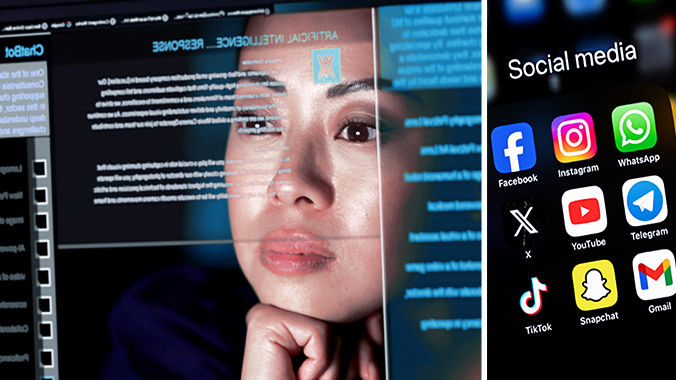
Courts across the country have sanctioned, fined, suspended, and referred attorneys for discipline after AI-generated hallucinations fabricated case citations, fictitious quotations, and misrepresented holdings appeared in filed briefs and motions. At the same time, attorneys have faced sanctions for conducting social media research on prospective jurors in ways that violate standing orders or trigger automatic notifications, as illustrated by the $10,000 sanction imposed in Contour IP Holding, LLC v. GoPro, Inc. (N.D. Cal. 2025) for LinkedIn-based juror research that violated the court’s standing order. This session examines leading disciplinary cases in both areas, the verification protocols every practitioner should adopt before submitting AI-assisted work product, and the ethical boundaries attorneys must observe when using technology, including AI-powered tools to research the jury venire. The discussion also addresses the emerging question of whether opposing counsel has a duty to detect and report an adversary’s hallucinated citations.
Credits
Alaska
Approved for CLE Credits
1.5 Ethics
Alabama
Pending CLE Approval
1.5 Ethics
Arkansas
Approved for CLE Credits
1.5 Ethics
Arizona
Approved for CLE Credits
1.5 Professional Responsibility/Ethics
California
Approved for CLE Credits
1.5 Ethics
Colorado
Pending CLE Approval
1.5 Ethics / Professionalism
Connecticut
Approved for CLE Credits
1.5 Ethics / Professionalism
District of Columbia
No MCLE Required
1.5 CLE Hour(s)
Delaware
Pending CLE Approval
1.5 Enhanced Ethics
Florida
Pending CLE Approval
1.5 Ethics
Georgia
Pending CLE Approval
1.5 Ethics
Hawaii
Approved for CLE Credits
1.5 Ethics or Professional Responsibility Education
Iowa
Pending CLE Approval
1.5 Ethics
Idaho
Pending CLE Approval
1.5 Ethics / Professionalism
Illinois
Pending CLE Approval
1.5 Ethics, Civility, Professionalism
Indiana
Pending CLE Approval
1.5 Ethics
Kansas
Pending CLE Approval
1.5 Ethics / Professionalism
Kentucky
Pending CLE Approval
1.5 Ethics
Louisiana
Pending CLE Approval
1.5 Ethics
Massachusetts
No MCLE Required
1.5 CLE Hour(s)
Maryland
No MCLE Required
1.5 CLE Hour(s)
Maine
Pending CLE Approval
1.5 Ethics / Professionalism
Michigan
No MCLE Required
1.5 CLE Hour(s)
Minnesota
Pending CLE Approval
1.5 Ethics
Missouri
Approved for CLE Credits
1.8 Ethics
Mississippi
Pending CLE Approval
1.5 Ethics
Montana
Pending CLE Approval
1.5 Professional Fitness and Integrity
North Carolina
Pending CLE Approval
1.5 Ethics
North Dakota
Approved for CLE Credits
1.5 Ethics
Nebraska
Pending CLE Approval
1.5 Professional Responsibility
New Hampshire
Approved for CLE Credits
90 Ethics / Professionalism minutes
New Jersey
Approved for CLE Credits
1.8 Ethics / Professionalism
New Mexico
Approved for CLE Credits
1.5 Ethics / Professionalism
Nevada
Pending CLE Approval
1.5 Ethics / Professionalism
New York
Approved for CLE Credits
1.8 Ethics / Professionalism
Ohio
Pending CLE Approval
1.5 Professional Conduct
Oklahoma
Pending CLE Approval
2 Ethics / Professionalism
Oregon
Pending CLE Approval
1.5 Ethics
Pennsylvania
Approved for CLE Credits
1.5 Ethics / Professionalism
Rhode Island
Pending CLE Approval
2 Ethics / Professionalism
South Carolina
Pending CLE Approval
1.5 Ethics / Professionalism
South Dakota
No MCLE Required
1.5 CLE Hour(s)
Tennessee
Pending CLE Approval
1.5 Dual
Texas
Approved for CLE Credits
1.5 Ethics / Professionalism
Utah
Pending CLE Approval
1.5 Ethics / Professionalism
Virginia
Not Eligible
1.5 Ethics / Professionalism Hours
Vermont
Approved for CLE Credits
1.5 Ethics
Washington
Approved via Attorney Submission
1.5 Ethics Hours
Wisconsin
Pending CLE Approval
1.5 Ethics
West Virginia
Pending CLE Approval
1.8 Ethics / Professionalism
Wyoming
Pending CLE Approval
1.5 Ethics / Professionalism
More CLE Webinars
Trending CLE Webinars








Upcoming CLE Webinars







































© 2026 Federal Bar Association