
Drafting Federal Complaints and Answers That Survive Shotgun-Pleading Dismissal and Preserve Every Defense

Live Video-Broadcast: December 14, 2026
2 hour CLE
Tuition: $195.00
Co-Sponsored by myLawCLE
Get this course, plus over 1,000+ of live webinars.
Learn More
Training 5 or more people?
Sign-up for a law firm subscription plan and each attorney in the firm receives free access to all CLE Programs
Program Summary
The Shotgun Complaint Is the Defense's Opening; the Careless Answer Is the Plaintiff's
On January 29, 2026, the Ninth Circuit in Gibson v. City of Portland rejected a complaint as a shotgun pleading that blurred which defendant did what under which legal theory. Read with Twombly and Rule 9(b), it gives the corporate defendant a sharper tool against multi-defendant complaints in antitrust, fraud, RICO, and class actions.
The stakes run both ways. Let a count that lumps parents, subsidiaries, and individuals together stand and the vicarious-liability theory survives. Miss the Rule 9(b) gap in a fraud count or a RICO predicate act and discovery follows. Mishandle the first-response calendar and Rule 12(h)(1) waives the defense. Answer a conspiracy allegation carelessly and the admission is unintended. Omit a limitations or forum-selection defense and it may not come back.
This two-session program gives litigators who defend corporations a working method for both sides of the pleading stage. Attendees leave with a shotgun-pleading audit checklist for choosing between Rule 12(b)(6) and Rule 12(e), an answer-paragraph response key for the three Rule 8(b) responses, and an affirmative-defense worksheet covering limitations, preemption, capacity, choice of law, and forum selection.
Key topics to be discussed:
- The Gibson Standard
Decide when Gibson's shotgun-pleading standard calls for a Rule 12(b)(6) motion, a Rule 12(e) motion, or both. - Group Pleading Attacks
Dismantle counts that lump parents, subsidiaries, and affiliates together on vicarious-liability allegations that fail. - Rule 9(b) Particularity
Test fraud counts, RICO predicate acts, and information-and-belief allegations against the particularity requirement. - Pairing Threshold Defenses
Pair the pleading attack with personal jurisdiction, forum non conveniens, and preemption, and strike class allegations before leave to amend. - The First-Response Calendar
Manage removal, snap removal, and the Rule 12(h)(1) waiver trap, then choose admit, deny, or lack knowledge under Rule 8(b) for parents and foreign affiliates. - The Defense-Preserving Answer
Plead affirmative defenses that survive Rule 12(f), answer class and conspiracy allegations without unintended admissions, and use Rule 13 counterclaims and the Rule 15(a)(1) window.
This course is co-sponsored with myLawCLE.
Date / Time: December 14, 2026
- 2:30 pm – 4:40 pm Eastern
- 1:30 pm – 3:40 pm Central
- 12:30 pm – 2:40 pm Mountain
- 11:30 am – 1:40 pm Pacific
 Closed-captioning available
Speakers
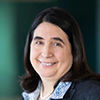
Caroline N. Mitchell, Partner | Jones Day
Caroline N. Mitchell is a Partner in the San Francisco office of Jones Day, where she practices in the firm’s Global Disputes, Business & Tort Litigation, Antitrust & Competition Law, and Cybersecurity, Privacy & Data Protection practices. For more than three decades she has litigated complex commercial disputes, principally defending corporations in federal cases with demanding discovery arising from events in the United States and abroad — antitrust, health care, environmental, human rights, RICO, Alien Tort Statute, and fraud claims. Her record of defeating class certification, winning dismissal of a multibillion-dollar environmental claim, and securing defense jury verdicts gives her a first-hand view of how a federal pleading holds up — or falls apart — at the motion-to-dismiss stage and beyond.
- Education & Credentials
Ms. Mitchell earned her J.D., magna cum laude, from the University of Minnesota Law School in 1989, where she was elected to the Order of the Coif and served as Managing Editor of the Minnesota Law Review. She earned her A.B. from Bryn Mawr College in 1984. She is admitted to practice in California and has passed the International Association of Privacy Professionals (IAPP) privacy professional certification examination.
- Recognition & Leadership
Ms. Mitchell was named one of the top women litigators in California by the Los Angeles Daily Journal. She received the 2012 Outstanding Public Service Award from the U.S. District Court for the Northern District of California and the Bar Association of San Francisco’s Volunteer Legal Services Program, and the Roll Call for Social Justice Award from the Legal Aid Society. She was the founding board president of the Family Violence Appellate Project.
- Professional Involvement
Ms. Mitchell is a frequent author on federal procedure and cross-border litigation. Her Jones Day publications address snap removal by forum defendants in the Fifth Circuit after Texas Brine, the enforceability of foreign forum selection clauses, the Hague Choice of Court Convention, the French Blocking Statute, corporate legal exposure arising from the coronavirus pandemic, and the U.S. Supreme Court’s review of the standard for Excessive Fines Clause challenges. She has also written for COMPETITION, the journal of the Antitrust, UCL and Privacy Section of the State Bar of California, and has presented “Managing a Data Breach” to the Bay Area General Counsel’s Group and Jones Day’s CLE University. Her pro bono practice includes domestic violence restraining orders, prisoner rights litigation, and immigration and asylum matters.
- Experience
Ms. Mitchell’s defense victories span the country’s most consequential federal dockets. She was part of the trial team that won a complete defense jury verdict for Sutter Health in an antitrust class action seeking $1.2 billion in treble damages. For Chevron, she defeated Anti-Terrorism Act and Alien Tort Statute claims brought by 298 plaintiffs, defeated a class action brought on behalf of 65,000 Nigerians seeking $5 billion over an offshore gas well blowout, secured Ninth Circuit affirmance of a defense jury verdict in a Nigerian Alien Tort Statute case, helped obtain a unanimous merits award against the Republic of Ecuador in a Permanent Court of Arbitration proceeding, and resolved 14 federal multidistrict and state class actions concerning reformulated gasoline. She also has defended a national retailer in a consumer class action over alleged forced labor in its seafood supply chain. She regularly advises on the threshold issues that decide cases at the pleading stage — jurisdiction, choice of law, preemption, capacity, statutes of limitations, vicarious liability, RICO, and the Alien Tort Statute — and on international discovery, including 28 U.S.C. § 1782. Having spent her career attacking deficient complaints and building the defenses that end cases early, Ms. Mitchell is uniquely positioned to show attorneys how to plead with the precision federal courts demand and how to draft an answer that preserves every defense.
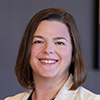
Sarah G. Conway, Partner | Jones Day
Sarah G. Conway is a Partner in the Los Angeles office of Jones Day and a member of the firm’s Business & Tort Litigation practice. She represents corporations, businesses, and individuals in high-stakes complex litigation and has led litigation teams through every phase of a case, from the pleadings through post-trial motions. Her commercial litigation practice covers product liability, contract, fraud, consumer class action, deceptive trade practices, false claims, and business tort matters for clients in the retail, food supply, health care, financial services, and product manufacturing industries. She has argued motions in multiple state courts, defended bench and jury trials, and led arbitrations.
- Education & Credentials
Ms. Conway earned her J.D., with honors, from Georgetown University Law Center in 2008 and her B.A., with honors, in History and Gender and Sexuality Studies from New York University in 2005. She is admitted to practice in California.
- Recognition & Leadership
Ms. Conway was named a “Rising Star” by Southern California Super Lawyers for five consecutive years, from 2013 through 2017. She serves on the board of directors of the California Women’s Law Center.
- Professional Involvement
Ms. Conway has spoken and written on legal ethics, jury instructions for affirmative defenses, and developments affecting food suppliers. She is a recurring faculty member at Jones Day’s MCLE University, where her ethics programs include “Are You More Ethical Than a First Year” (2024 and 2025). Her recent Jones Day publications analyze mandatory PFAS disclosure laws and the consumer class actions they fuel, the FDA’s Human Foods Program and post-market safety assessments of food chemicals, the federal food additive “loophole,” proposed California legislation on ultra-processed foods in school meals, and New York’s state-level restrictions on food marketing. She has also written for The Recorder on the collateral source rule.
- Experience
Ms. Conway’s results come at every stage of litigation. At the pleading stage, she won dismissal of federal and state securities fraud actions against former managers and executive officers of the Quiznos brand arising from a 2012 restructuring. At class certification, she defeated certification of dozens of consumer protection claims under several states’ laws for Mattel and Fisher-Price in the Northern District of Alabama, and defeated certification in several cases alleging that a client’s product tended to grow mold. At trial, she was part of the team that tried a three-month bellwether product liability case in Orange County Superior Court for Yamaha Motor Co., ending in a complete defense verdict. She also helped secure a tax refund of more than $130 million for Expedia, Hotels.com, and Hotwire following a Hawaii Supreme Court ruling, overturned a $30 million City of Los Angeles transient occupancy tax assessment, obtained a defense award for Lehman Brothers in a FINRA arbitration over auction-rate securities, and negotiated a class settlement for BSH Home Appliances. More recently she has led defensive discovery across numerous concurrent state court actions in nationwide pharmaceutical litigation. Because she has both won cases on the pleadings and carried the defenses asserted in an answer all the way through verdict, Ms. Conway is uniquely positioned to explain which pleading choices matter months and years later.
Tyler A. Tafuri, Associate | Jones Day
Tyler A. Tafuri is an Associate in the Los Angeles office of Jones Day and a member of the firm’s Business & Tort Litigation practice. He handles complex civil litigation in state and federal courts on behalf of international and U.S. clients, including commercial disputes, structured product disputes, public nuisance claims, health care matters, and business restructuring and reorganization. He has worked on every stage of a case — fact investigation, discovery, expert preparation, dispositive motions, and trial — which gives him a working command of how the allegations and defenses framed in the pleadings shape everything that follows.
- Education & Credentials
Mr. Tafuri earned his J.D. from the University of Southern California Gould School of Law in 2018, where he served as Executive Senior Editor of the Southern California Law Review. He earned his B.A., magna cum laude, from Pepperdine University in 2014. He is admitted to practice in California.
- Recognition & Leadership
Mr. Tafuri graduated magna cum laude from Pepperdine University and held a senior editorial leadership position on the Southern California Law Review. At Jones Day, he has overseen several matters through discovery in one of the largest coordinated litigations in the country and served on a state court trial team in that litigation.
- Professional Involvement
Mr. Tafuri maintains an active pro bono practice, with a particular focus on representing Central American asylum seekers, primarily in claims based on political opinion.
- Experience
Mr. Tafuri recently defended a major retailer in hundreds of lawsuits brought by states and municipalities alleging that the distribution and sale of prescription opioids constitutes a public nuisance. He oversaw several of those matters through discovery and served on the state court trial team. He was part of the team representing Wells Fargo Bank, N.A. in residential mortgage-backed securities litigation in which the Second Circuit affirmed summary judgment dismissing the claims. He also advised entities affiliated with Dr. Patrick Soon-Shiong on the $135 million Section 363 acquisition of St. Vincent Medical Center in Los Angeles from Verity Health System. Having responded to hundreds of complaints filed by different plaintiffs in different courts on overlapping theories, Mr. Tafuri brings a practical, current perspective on evaluating a complaint for pleading defects, structuring a responsive pleading, and making sure no defense is waived.
Agenda
SESSION 1 – Attacking a Shotgun Complaint Under Rules 12(b)(6) and 9(b) After Gibson | Caroline N. Mitchell, Sarah G. Conway & Tyler A. Tafuri | 2:30pm – 3:30pm
This session is taught from the corporate defendant’s chair: auditing a multi-defendant complaint for counts that lump parents, subsidiaries, and individuals together, fraud and RICO allegations that fail Rule 9(b), and class allegations that should not survive the pleadings. It draws on the faculty’s record of securing dismissal of a multibillion-dollar claim, defeating class certification, and advising clients on RICO, Alien Tort Statute, and vicarious-liability questions.
BREAK | 3:30pm – 3:40pm
SESSION 2 – Drafting a Federal Answer That Preserves Every Defense | Caroline N. Mitchell, Sarah G. Conway & Tyler A. Tafuri | 3:40pm – 4:40pm
This session walks a sample antitrust complaint through the removal and first-response calendar, Rule 12(h)(1) waiver, the three Rule 8(b) responses for a corporate defendant, and the affirmative defenses litigated most often: statute of limitations, preemption, capacity, choice of law, and forum selection. It draws on the faculty’s experience answering federal complaints in unfavorable forums, training associates to do the same, and writing on snap removal and foreign forum selection clauses.
Credits
Alaska
Approved for CLE Credits
2 General
Alabama
Pending CLE Approval
2 General
Arkansas
Approved for CLE Credits
2 General
Arizona
Approved for CLE Credits
2 General
California
Approved for CLE Credits
2 General
Colorado
Pending CLE Approval
2 General
Connecticut
Approved for CLE Credits
2 General
District of Columbia
No MCLE Required
2 CLE Hour(s)
Delaware
Pending CLE Approval
2 General
Florida
Pending CLE Approval
2 General
Georgia
Pending CLE Approval
2 General
Hawaii
Approved for CLE Credits
2 General
Iowa
Pending CLE Approval
2 General
Idaho
Pending CLE Approval
2 General
Illinois
Pending CLE Approval
2 General
Indiana
Pending CLE Approval
2 General
Kansas
Pending CLE Approval
2 Substantive
Kentucky
Pending CLE Approval
2 General
Louisiana
Pending CLE Approval
2 General
Massachusetts
No MCLE Required
2 CLE Hour(s)
Maryland
No MCLE Required
2 CLE Hour(s)
Maine
Pending CLE Approval
2 General
Michigan
No MCLE Required
2 CLE Hour(s)
Minnesota
Pending CLE Approval
2 General
Missouri
Approved for CLE Credits
2.4 General
Mississippi
Pending CLE Approval
2 General
Montana
Pending CLE Approval
2 General
North Carolina
Pending CLE Approval
2 General
North Dakota
Approved for CLE Credits
2 General
Nebraska
Pending CLE Approval
2 General
New Hampshire
Approved for CLE Credits
120 General minutes
New Jersey
Approved for CLE Credits
2 General
New Mexico
Approved for CLE Credits
2 General
Nevada
Pending CLE Approval
2 General
New York
Approved for CLE Credits
2 General
Ohio
Pending CLE Approval
2 General
Oklahoma
Pending CLE Approval
2.5 General
Oregon
Pending CLE Approval
2 General
Pennsylvania
Approved for CLE Credits
2 General
Rhode Island
Pending CLE Approval
2.5 General
South Carolina
Pending CLE Approval
2 General
South Dakota
No MCLE Required
2 CLE Hour(s)
Tennessee
Pending CLE Approval
2 General
Texas
Approved for CLE Credits
2 General
Utah
Pending CLE Approval
2 General
Virginia
Not Eligible
2 General Hours
Vermont
Approved for CLE Credits
2 General
Washington
Approved via Attorney Submission
2 Law & Legal Hours
Wisconsin
Pending CLE Approval
2 General
West Virginia
Pending CLE Approval
2.4 General
Wyoming
Pending CLE Approval
2 General
More CLE Webinars
Trending CLE Webinars










Upcoming CLE Webinars
























































© 2026 Federal Bar Association