Employed-Physician Compensation After Erlanger: FMV Files, Scienter, and Commercial Reasonableness
Live Video-Broadcast: November 30, 2026
2 hour CLE
Tuition: $195.00
Co-Sponsored by myLawCLE
Get this course, plus over 1,000+ of live webinars.
Learn More
Training 5 or more people?
Sign-up for a law firm subscription plan and each attorney in the firm receives free access to all CLE Programs
Program Summary
The FMV opinion you commissioned may be the first exhibit against you
Until Erlanger, a fair market value opinion was the hospital's shield. The DOJ's theory in United States ex rel. Sullivan v. Erlanger Western Carolina Hospital inverts it. Opinions, referral pro formas, consultant warnings, and compensation spreadsheets become affirmative evidence of what the hospital knew. The 2026 Erlanger orders put that theory in play.
Pay above the stated FMV range, and the opinion itself becomes proof of scienter. Leave call pay, medical directorships, or bonuses out of the opinion, and the gap creates exposure. Keep referral leakage tracking or downstream revenue pro formas in the same file, and the hospital's position changes. Under SuperValu's subjective-knowledge standard, a later legal memo cannot fix contemporaneous knowledge. After the OIG's April 2026 FAQ update, the question is whether the subsidy is commercially reasonable, not merely FMV-compliant.
Attendees leave with a working framework for auditing existing FMV files for scienter risk before an inquiry begins. They gain criteria for a defensible commercial-reasonableness file across base salary, productivity incentives, administrative stipends, and quality-based metrics. And they take away a component-by-component approach to redesigning compensation plans. This is practitioner judgment applied to a client's actual file, not a doctrine walk-through.
Key topics to be discussed:
- Erlanger's Core Theory
How the DOJ's theory in United States ex rel. Sullivan v. Erlanger Western Carolina Hospital reframes the FMV file from shield to exhibit, and what that means for compensation arrangements already in place. - FMV-to-Scienter Inversion
How paying above a stated FMV range, omitting call pay, medical directorships, or bonuses, and keeping referral leakage tracking or downstream revenue pro formas in the same file each turn the opinion into proof of scienter. - SuperValu's Knowledge Standard
Why SuperValu's subjective-knowledge standard means a later legal memo can no longer fix contemporaneous knowledge, and how to assess what the hospital knew and when. - Documentation Failure Patterns
Which internal compliance warning practices most commonly become the government's best evidence of subjective knowledge, and which documentation failures are most likely to survive a motion to dismiss. - Commercial Reasonableness Redefined
What 'commercially reasonable' requires after the April 2026 OIG FAQ update, and why FMV compliance alone no longer carries a Stark Law, Anti-Kickback Statute, or False Claims Act analysis. - Component-by-Component Redesign
How to diagnose wRVU incentives, stacked compensation, and undocumented administrative duties, then rebuild base salary, productivity incentives, administrative stipends, and quality-based metrics into a defensible subsidy file.
This course is co-sponsored with myLawCLE.
Date / Time: November 30, 2026
- 2:30 pm – 4:40 pm Eastern
- 1:30 pm – 3:40 pm Central
- 12:30 pm – 2:40 pm Mountain
- 11:30 am – 1:40 pm Pacific
 Closed-captioning available
Speakers
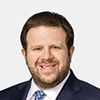
Noam B. Fischman, Co-Team Leader, Healthcare Litigation | Akerman LLP
Noam B. Fischman co-leads Akerman’s Healthcare Litigation team from Washington, D.C., where he helps hospitals, behavioral health centers, ambulance companies, skilled nursing facilities, pharmaceutical and life sciences companies, and healthcare vendors manage risk from fraud and alleged false claims. He has written repeatedly on the False Claims Act’s knowledge standard, including “SafeCo No More: The Changing Landscape of Scienter under the False Claims Act” in June 2023 and “Mind Games: SCOTUS to Rule on what ‘Knowing’ Means under the False Claims Act” in January 2023, and co-authored Akerman’s January 2026 review of False Claims Act enforcement trends for fiscal year 2025. His healthcare practice spans more than 25 years.
- Education & Credentials
Mr. Fischman earned his J.D. with honors from The George Washington University Law School in 1999, where he was Notes Editor of The Environmental Lawyer, and his B.A. with high honors from the Rutgers University Honors Program in 1996, where he was an Undergraduate Associate of the Eagleton Institute of Politics. He is admitted to the bars of the District of Columbia, Maryland, and Virginia, and to the U.S. Courts of Appeals for the District of Columbia, Fourth, and Ninth Circuits and the U.S. District Courts for the District of Columbia and the District of Maryland.
- Recognition & Leadership
He leads Akerman’s Healthcare Litigation team as Co-Team Leader and, before joining the firm in March 2022, chaired the Mergers & Acquisitions Litigation Working Group at Polsinelli. He was named The Capital Pro Bono Honor Roll in 2023 and was recognized as a Rising Star by Super Lawyers Magazine for Washington, D.C. in 2013 and 2014. Since July 2025 he has chaired the board of directors of the Bender JCC of Greater Washington, an organization he has served since 2017, beginning as its pro bono general counsel.
- Professional Involvement
Mr. Fischman writes and speaks regularly on healthcare enforcement. He co-hosts The Akerman Angle: Health Law Rx podcast, including a December 2025 episode on government healthcare enforcement policies, is a frequent author on Akerman’s Health Law Rx blog, co-authored a February 2023 article in the American Health Law Association’s Health Law Weekly, and presented a December 2022 Thomson Reuters West LegalEdcenter webinar. He has been quoted on False Claims Act developments by Law360, Bloomberg Law, Corporate Compliance Insights, and Healthcare Risk Management, including on the Eleventh Circuit’s September 2026 qui tam ruling.
- Experience
His False Claims Act work includes arguing a successful Ninth Circuit appeal for a major ambulance company in multi-year litigation involving hundreds of thousands of allegedly false claims, winning a motion to dismiss for a hospital facing False Claims Act allegations from a senior official, winning a motion to dismiss in a government contracts False Claims Act case, defending an educational institution against False Claims Act allegations concerning government grants, representing a healthcare trade association in responding to Congressional subpoenas, and defending nursing homes challenging Small Business Administration PPP loan determinations. He has conducted an internal investigation for a hospital system on Foreign Corrupt Practices Act risk arising from an international joint venture and dozens of corruption-related due diligence reviews. His broader practice includes fiduciary duty defense, including securing reimbursement of all defendants’ fees and costs for five former directors of a life sciences company, commercial disputes, and post-closing litigation in healthcare transactions.
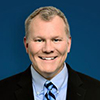
Charles B. Oppenheim, Partner | Hooper, Lundy & Bookman
Charles B. Oppenheim is a Partner at Hooper, Lundy & Bookman in Los Angeles and San Francisco whose practice centers on the Stark Law and federal anti-kickback law, fraud and abuse counseling, hospital-physician integration, and value-based arrangements. He co-authored the American Health Law Association’s monograph on the Stark Law, first written in 1998 and now in its eighth edition for 2026, and his work on the statute was cited by the Fourth Circuit Court of Appeals in United States ex rel. Drakeford v. Tuomey in 2015. He has been ranked by Chambers USA as a top California health care attorney every year since 2010.
- Education & Credentials
Mr. Oppenheim earned his J.D. from Fordham University School of Law in 1988, where he was a member of the Fordham Law Review, and his B.A. from Cornell University in 1984. He was admitted to the California bar in 1988.
- Recognition & Leadership
He was named a Fellow of the American Health Law Association in 2026 and has been listed in Best Lawyers for Health Care Law from 2013 through 2027, in Chambers USA as a top California health care lawyer from 2010 through 2026, in Super Lawyers for Southern California from 2004 through 2026, and among the Daily Journal’s Top Health Care Lawyers in California in 2023. He is AV rated by Martindale-Hubbell, received the Leading Lawyer Award from The Ambulatory M&A Advisor in 2015, and appears in Who’s Who in America and Who’s Who in American Law. He is a past chair of the Los Angeles County Bar Association’s Annual Healthcare Law Compliance Symposium and a past chair of the State Bar of California’s Health Law Committee of the Business Law Section.
- Professional Involvement
Mr. Oppenheim is a member of the American Bar Association Health Law Section, the American Health Lawyers Association, and the California Society for Healthcare Attorneys, and serves on the planning committee of the Los Angeles County Bar Association’s Healthcare Law Section. He donates legal services to Los Angeles charities and previously served as Finance Committee Chair and Board Trustee of The Accelerated School, a charter school in South Central Los Angeles.
- Experience
His matters include structuring value-based enterprises and arrangements under the Stark Law exceptions that took effect in 2021, and integrating physicians and hospitals through joint ventures and affiliations. Representative engagements include a joint venture among a nonprofit health system’s four hospitals, two medical groups, and seventeen community physical therapy centers; a $545 million multistep integration of a professional medical corporation; the October 2021 affiliation of a physician enablement company with more than 125 locations, 400 providers, and 42 specialties; a joint venture between a major California medical center and a Pennsylvania operator of 27 outpatient physical therapy clinics; and ongoing counsel to a tattoo removal business with more than 40 studios through a $50 million private equity investment and acquisitions. His practice also covers mergers and acquisitions, compliance programs, managed care and accountable care organizations, ambulatory surgery centers, and hospice.
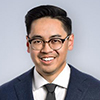
Michael Shimada, Associate | Hooper, Lundy & Bookman
Michael Shimada is an Associate in the San Francisco office of Hooper, Lundy & Bookman who advises hospitals and health systems, physician groups, medical foundations, ambulatory surgery centers, and public health agencies on business transactions and regulatory compliance, including healthcare fraud and abuse laws, the corporate practice of medicine, and licensing. His transactional work includes the employment, professional services, and restrictive covenant agreements through which providers are engaged and compensated. During law school he served as a legal extern in the Civil Fraud Unit of the U.S. Attorney’s Office for the Central District of California.
- Education & Credentials
Mr. Shimada earned his J.D. from the University of California, Los Angeles in 2021 and his B.A. from the University of California, Los Angeles in 2016. He was admitted to the California bar in 2021.
- Recognition & Leadership
He has been named Best Lawyers: Ones to Watch in Health Care Law for 2026 and 2027.
- Professional Involvement
Mr. Shimada is a member of the American Bar Association Health Law Section.
- Experience
His practice covers commercial contracting, including employment, professional services, data privacy, restrictive covenant, and intellectual property agreements; mergers and acquisitions; joint ventures; and corporate reorganizations, together with the healthcare-specific regulatory questions those transactions raise. Before joining the firm, he practiced at a global law firm, assisting employers with domestic and cross-border employment matters, employment policies and practices, and the workforce aspects of mergers, acquisitions, reorganizations, and spin-offs. He also served as a summer law clerk in the General Counsel Division of the Los Angeles City Attorney’s Office.
Agenda
SESSION 1 – How the Erlanger Theory Turns a Hospital’s FMV File Into Scienter Evidence | |Noam Fischman | 2:30pm – 3:30pm
This session examines how the DOJ’s theory in United States ex rel. Sullivan v. Erlanger Western Carolina Hospital converts a hospital’s own fair market value documentation—opinions, referral pro formas, consultant warnings, and compensation spreadsheets—into affirmative evidence of scienter under the False Claims Act. Attendees will learn the five specific mechanisms through which an FMV file becomes a liability, the doctrinal role of SuperValu’s subjective-knowledge standard, and the documentation failures most likely to survive a motion to dismiss. Attorneys will leave with a working framework for auditing existing FMV files for scienter risk before litigation or government inquiry begins.
BREAK | 3:30pm – 3:40pm
SESSION 2 – Building the Commercially Reasonable Compensation File: Redesigning Employed-Physician Pay After the April 2026 OIG FAQ |Charles Oppenheim, Michael Shimada | 3:40pm – 4:40pm
This session examines how hospitals and health systems structure and document employed-physician compensation, so the embedded subsidy is defensible as commercially reasonable—not merely fair-market-value compliant—under the Stark Law, Anti-Kickback Statute, and False Claims Act. Attendees will learn what the OIG’s April 23, 2026, FAQ update means when it confirms that fair market value alone does not resolve Anti-Kickback risk, how to design each compensation component—base salary, productivity incentives, administrative stipends, and quality metrics—to withstand scrutiny, and how stacked arrangements combining employment, medical directorships, and call coverage create exposure. Attorneys will leave with a framework for documenting legitimate business purposes hired and at each annual review, so the compensation file reads as commercially reasonable before anyone asks.
Credits
Alaska
Approved for CLE Credits
2 General
Alabama
Pending CLE Approval
2 General
Arkansas
Approved for CLE Credits
2 General
Arizona
Approved for CLE Credits
2 General
California
Approved for CLE Credits
2 General
Colorado
Pending CLE Approval
2 General
Connecticut
Approved for CLE Credits
2 General
District of Columbia
No MCLE Required
2 CLE Hour(s)
Delaware
Pending CLE Approval
2 General
Florida
Approved via Attorney Submission
2 General Hours
Georgia
Pending CLE Approval
2 General
Hawaii
Approved for CLE Credits
2 General
Iowa
Pending CLE Approval
2 General
Idaho
Pending CLE Approval
2 General
Illinois
Pending CLE Approval
2 General
Indiana
Pending CLE Approval
2 General
Kansas
Pending CLE Approval
2 Substantive
Kentucky
Pending CLE Approval
2 General
Louisiana
Pending CLE Approval
2 General
Massachusetts
No MCLE Required
2 CLE Hour(s)
Maryland
No MCLE Required
2 CLE Hour(s)
Maine
Pending CLE Approval
2 General
Michigan
No MCLE Required
2 CLE Hour(s)
Minnesota
Pending CLE Approval
2 General
Missouri
Approved for CLE Credits
2.4 General
Mississippi
Pending CLE Approval
2 General
Montana
Pending CLE Approval
2 General
North Carolina
Pending CLE Approval
2 General
North Dakota
Approved for CLE Credits
2 General
Nebraska
Pending CLE Approval
2 General
New Hampshire
Approved for CLE Credits
120 General minutes
New Jersey
Approved for CLE Credits
2 General
New Mexico
Approved for CLE Credits
2 General
Nevada
Pending CLE Approval
2 General
New York
Approved for CLE Credits
2 General
Ohio
Pending CLE Approval
2 General
Oklahoma
Pending CLE Approval
2.5 General
Oregon
Pending CLE Approval
2 General
Pennsylvania
Approved for CLE Credits
2 General
Rhode Island
Pending CLE Approval
2.5 General
South Carolina
Pending CLE Approval
2 General
South Dakota
No MCLE Required
2 CLE Hour(s)
Tennessee
Pending CLE Approval
2 General
Texas
Approved for CLE Credits
2 General
Utah
Pending CLE Approval
2 General
Virginia
Not Eligible
2 General Hours
Vermont
Approved for CLE Credits
2 General
Washington
Approved via Attorney Submission
2 Law & Legal Hours
Wisconsin
Pending CLE Approval
2 General
West Virginia
Pending CLE Approval
2.4 General
Wyoming
Pending CLE Approval
2 General
More CLE Webinars
Trending CLE Webinars










Upcoming CLE Webinars


























































© 2026 Federal Bar Association