
Beneficiary Designations Override the Trust: Coordinating Retirement Accounts, Life Insurance, and TOD Registrations
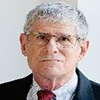
Mark DeBofsky is a Chicago-based attorney and one of the country's leading practitioners in ERISA law, disability insurance, and employee benefits litigation. He is the founding partner of DeBofsky Law, Ltd. (previously known through iterations as DeBofsky & Associates and DeBofsky, Sherman & Casciari), a firm that concentrates on representing individuals whose disability, health, and life insurance claims have been denied.

Barry Salkin is Of Counsel at The Wagner Law Group, resident in the firm's New York office, where he concentrates his practice in ERISA and employee benefits law. Before joining the firm, he served as counsel and senior attorney at leading Manhattan law firms. His clients have included multi-national corporations, closely held companies, financial institutions, governmental agencies, investment groups, hospitals, physicians' organizations, tax-exempt organizations, and high-net-worth individuals.
On-Demand: September 1, 2026
2 hour CLE
Tuition: $195.00
Co-Sponsored by myLawCLE
Get this course, plus over 1,000+ of live webinars.
Learn More
Training 5 or more people?
Sign-up for a law firm subscription plan and each attorney in the firm receives free access to all CLE Programs
Program Summary
The designation decides who inherits. SECURE 2.0 decides what they keep
The first program established that the beneficiary form — not the will or trust — controls who inherits retirement accounts. Once the designation controls, the analysis has only begun. The post-SECURE Act and SECURE 2.0 regime now dictates what the named beneficiary actually receives, when, and at what tax cost.
The choice of beneficiary now drives the payout timeline and the income tax result. Name a spouse, and rollover versus inherited IRA elections set the schedule. Name a trust, and demanding see-through requirements decide the outcome. Death before or after the required beginning date changes the annual RMDs inside the 10-year window. Accumulation trusts run into compressed trust brackets; qualified plans add the ERISA overlay of QJSA/QPSA spousal consent.
This session delivers the working framework. Attendees master the post-SECURE beneficiary hierarchy, the five eligible designated beneficiary categories, and the spousal elections. They leave able to structure designations and trust terms that work after death, not just on paper.
Key topics to be discussed:
- Post-SECURE Beneficiary Hierarchy
Distinguish designated from non-designated beneficiaries and apply the five categories of eligible designated beneficiaries (EDBs). - The 10-Year Rule
Apply annual RMDs within the 10-year window under the final RMD regulations, distinguishing deaths before and after the required beginning date. - Spousal Beneficiary Elections
Choose between the rollover and inherited IRA election and apply the SECURE 2.0 “spouse as employee” election. - Trusts as Beneficiaries
Meet see-through trust requirements and select conduit versus accumulation trusts, including trusts for minors and disabled or chronically ill beneficiaries (SNTs). - The ERISA Overlay
Navigate QJSA/QPSA spousal consent, plan document terms, and nonspouse rollovers where qualified plans diverge from IRAs. - Tax Traps and Responses
Counter compressed trust brackets with qualified disclaimers, the IRD deduction, and Roth accounts under SECURE 2.0.
This course is co-sponsored with myLawCLE.
 Closed-captioning available
Speakers
Mark D. DeBofsky, Founding Partner | DeBofsky Law, Ltd
Mark DeBofsky is a Chicago-based attorney and one of the country’s leading practitioners in ERISA law, disability insurance, and employee benefits litigation. He is the founding partner of DeBofsky Law, Ltd. (previously known through iterations as DeBofsky & Associates and DeBofsky, Sherman & Casciari), a firm that concentrates on representing individuals whose disability, health, and life insurance claims have been denied.
- Education & Credentials
DeBofsky earned a B.A. from the University of Michigan in 1977, then went on to law school, graduating from the University of Illinois College of Law in 1980. He was admitted to practice law that same year and has now practiced for over four decades.
- Recognition & Leadership
DeBofsky’s professional accolades are extensive. He has been selected to the Super Lawyers list for 20 consecutive years as of 2025, and has been repeatedly named among the Top 10 and Top 100 Illinois Lawyers, in addition to being the subject of a Super Lawyers feature story. He was named to the 2026 edition of The Best Lawyers in America®, one of the legal profession’s most respected peer-review honors. He has been ranked among the top five percent of Illinois attorneys in Social Security Disability law by the Leading Lawyers Network and has earned Martindale-Hubbell’s AV® Preeminent™ peer review rating.
- Professional Involvement
Alongside his legal practice, DeBofsky has taught as an adjunct professor of law, serving at the University of Illinois-Chicago School of Law (formerly John Marshall Law School) from 2000 to 2022. His public service work includes completing an appointment to a task force selected by Illinois Governor J.B. Pritzker to study mental health parity issues in disability insurance, after which he received a three-year appointment to the U.S. Department of Labor’s ERISA Advisory Council in 2023.
DeBofsky is a prolific legal author. He has been a regular columnist for Law360 since 2020 and for the Chicago Daily Law Bulletin since 2004. He also contributes annually to the ERISA Survey of Federal Circuits published by the American Bar Association, has served for many years as a senior editor of Employee Benefits Law published by Bloomberg, and was recently appointed to the editorial board of Bender’s Labor & Employment Bulletin (LEXIS-NEXIS). He is also a frequent lecturer at conferences hosted by organizations such as the American Bar Association, the American Association for Justice, the Illinois State Bar Association, the Illinois Institute of Continuing Legal Education, the Chicago Bar Association, and LexisNexis/Mealey’s.
- Experience
DeBofsky has built his career primarily around ERISA (Employee Retirement Income Security Act) litigation, insurance coverage disputes, and employment litigation on behalf of plaintiffs. Many of his cases have produced precedent-setting decisions issued by the U.S. Courts of Appeals for the Third, Seventh, Eighth, and Ninth Circuits. In 2008, he was nominated as a finalist for LexisNexis’ Insurance Law Center Policyholder Attorney of the Year award.
DeBofsky continues to practice at DeBofsky Law in Chicago, representing professionals, executives, and policyholders whose disability or insurance claims have been denied or wrongfully terminated, and remains active as a public commentator — including recent appearances discussing the complexities of disability insurance coverage for high-income professionals.
Barry Salkin, Of Counsel | The Wagner Law Group
Barry Salkin is Of Counsel at The Wagner Law Group, resident in the firm’s New York office, where he concentrates his practice in ERISA and employee benefits law. Before joining the firm, he served as counsel and senior attorney at leading Manhattan law firms. His clients have included multi-national corporations, closely held companies, financial institutions, governmental agencies, investment groups, hospitals, physicians’ organizations, tax-exempt organizations, and high-net-worth individuals.
- Education & Credentials
Mr. Salkin earned his J.D., cum laude, from Harvard Law School in 1977. He also holds a Ph.D. (1974) and an M.A. (1969) in American History from Harvard University, and received his B.A. in History, summa cum laude, from Rutgers University in 1968, where he was class valedictorian. He is admitted to practice in New York and before the U.S. Tax Court, the U.S. District Court for the Southern District of New York, and the U.S. Court of Appeals for the Second Circuit.
- Recognition & Leadership
Mr. Salkin has been a Fellow of the American College of Employee Benefits Counsel since 2006. He has been named to the New York Super Lawyers list each year since 2011 and has been listed in Who’s Who in America since 2020. His pro bono service has also been recognized: he received Pro Bono Partnership’s Volunteer of the Year award in 2010 and was recognized as a founding volunteer attorney of that organization in 2017.
- Professional Involvement
Mr. Salkin is a co-author of the IRA Answer Book and serves on the editorial board of the Journal of Pension Planning & Compliance and the editorial advisory board of the Benefits Law Journal. Since 2000, he has served on the Legal Advisory Counsel of the National Association of Professional Employer Organizations. A prolific author, he has published dozens of articles on ERISA and employee benefits topics in publications including the Benefits Law Journal, Bloomberg Tax’s Compensation Planning Journal, the New York University Review of Employee Benefits and Executive Compensation, 401(k) Advisor, and LexisNexis Practical Guidance, including recent analyses of the Roth catch-up contribution requirement under the SECURE 2.0 Act, pooled employer plans, and the Department of Labor’s Voluntary Fiduciary Correction Program. He is also a frequent speaker, with presentations for the Pennsylvania Bar Institute, Strafford, The Knowledge Group, and the National Association of Professional Employer Organizations.
- Experience
Mr. Salkin has significant experience in drafting, amending, and negotiating the full range of employee benefit plans, including defined benefit pension plans, profit sharing plans, 401(k) plans, and both qualified and non-qualified deferred compensation programs. His practice also encompasses group medical and health plans, including Health Care Reform, HIPAA, and COBRA matters, as well as executive compensation, fiduciary compliance, ERISA audits, and ERISA litigation. His work extends to tax-exempt organizations and to bankruptcy and restructuring matters involving employee benefit plans.
Agenda
SESSION 1 – After the Designation: SECURE 2.0, the 10-Year Rule, and Trusts as Beneficiaries of Retirement Accounts | 2:30pm – 3:30pm
The first program established that the beneficiary form—not the will or trust—controls who receives retirement accounts, life insurance, and TOD assets. This session takes the next step: once the designation controls, what does the named beneficiary actually receive, when, and at what tax cost? Barry Salkin walks practitioners through the post-SECURE Act and SECURE 2.0 distribution regime for inherited retirement accounts, including the final RMD regulations, the 10-year rule, eligible designated beneficiary categories, spousal elections, and the demanding requirements for naming trusts—conduit or accumulation—as retirement account beneficiaries. Attendees will learn how the choice of beneficiary drives the payout timeline and income tax result, and how to structure designations and trust terms so the client’s plan works after death, not just on paper.
BREAK | 3:30pm – 3:40pm ET
SESSION 2 – Recent Litigation Involving Disputes Over Beneficiary Designations and Lessons Learned | 3:40pm – 4:40pm
This session examines recent litigation involving beneficiary designations, retirement and life insurance benefits, marriage and divorce, powers of attorney, slayer statutes, and interpleader actions, highlighting key court rulings, practical lessons, and strategies for avoiding beneficiary designation disputes before they arise.
Credits
Alaska
Approved for CLE Credits
2 General
Alabama
Approved for Self-Study Credits
2 General
Arkansas
Approved for CLE Credits
2 General
Arizona
Approved for CLE Credits
2 General
California
Approved for CLE Credits
2 General
Colorado
Pending CLE Approval
2 General
Connecticut
Approved for CLE Credits
2 General
District of Columbia
No MCLE Required
2 CLE Hour(s)
Delaware
Pending CLE Approval
2 General
Florida
Approved via Attorney Submission
2 General Hours
Georgia
Approved for CLE Credits
2 General
Hawaii
Approved for CLE Credits
2 General
Iowa
Pending CLE Approval
2 General
Idaho
Pending CLE Approval
2 General
Illinois
Approved for Self-Study Credits
2 General
Indiana
Approved For On-Demand Credits
2 General
Kansas
Pending CLE Approval
2 Substantive
Kentucky
Pending CLE Approval
2 General
Louisiana
Pending CLE Approval
2 General
Massachusetts
No MCLE Required
2 CLE Hour(s)
Maryland
No MCLE Required
2 CLE Hour(s)
Maine
Approved for Self-Study Credits
2 General
Michigan
No MCLE Required
2 CLE Hour(s)
Minnesota
Pending CLE Approval
2 General
Missouri
Approved for Self-Study Credits
2.4 General
Mississippi
Pending CLE Approval
2 General
Montana
Pending CLE Approval
2 General
North Carolina
Pending CLE Approval
2 General
North Dakota
Approved for CLE Credits
2 General
Nebraska
Pending CLE Approval
2 General
New Hampshire
Approved for CLE Credits
120 General minutes
New Jersey
Approved for CLE Credits
2 General
New Mexico
Approved for Self-Study Credits
2 General
Nevada
Pending CLE Approval
2 General
New York
Approved for CLE Credits
2 General
Ohio
Approved for Self-Study Credits
2 General
Oklahoma
Pending CLE Approval
2.5 General
Oregon
Pending CLE Approval
2 General
Pennsylvania
Approved for Self-Study Credits
2 General
Rhode Island
Pending CLE Approval
2 General
South Carolina
Pending CLE Approval
2 General
South Dakota
No MCLE Required
2 CLE Hour(s)
Tennessee
Approved for Self-Study Credits
2 General
Texas
Approved for CLE Credits
2 General
Utah
Pending CLE Approval
2 General
Virginia
Not Eligible
2 General Hours
Vermont
Approved for CLE Credits
2 General
Washington
Approved via Attorney Submission
2 Law & Legal Hours
Wisconsin
Approved for Self-Study Credits
2 General
West Virginia
Pending CLE Approval
2.4 General
Wyoming
Pending CLE Approval
2 General
Preview
More CLE Webinars
Trending CLE Webinars










Upcoming CLE Webinars

























































© 2026 Federal Bar Association