Mass Tort Settlement Architecture: Protecting Vulnerable Claimants, Avoiding Distribution Delays, and Reducing Counsel’s Exposure
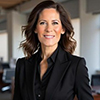
Michele P. Fuller is the founding attorney of The Architected Settlement Law Group, a division of Michigan Law Center, PLLC, and President of Advocacy, Inc., a nonprofit professional trustee organization that administers stand-alone special needs and settlement trusts. Since 1997 she has practiced at the intersection of public benefits, special needs trust drafting and administration, settlement planning, and fiduciary trusteeship.
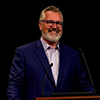
Kevin Urbatsch is the principal attorney of The Urbatsch Law Firm, P.C. in Berkeley, California, where he specializes in special needs, estate, and settlement planning. He has practiced law for over 30 years and has represented clients in establishing and administering hundreds of special needs trusts throughout California and the United States.
On-Demand: September 16, 2026
2 hour CLE
Tuition: $195.00
Co-Sponsored by myLawCLE
Get this course, plus over 1,000+ of live webinars.
Learn More
Training 5 or more people?
Sign-up for a law firm subscription plan and each attorney in the firm receives free access to all CLE Programs
Program Summary
The Second Injury Lands After the Case Is Won
Mass tort settlement infrastructure moves money fast and tracks liens well. It was never built to ask whether the claimant can actually keep the check. Every claimant list holds minors and adults without legal capacity. It also holds people who depend on Medicaid, SSI, SNAP, HUD assistance, or VA benefits.
For these claimants, a lump sum is a trigger, not relief. One deposit can suspend essential benefits and force an immediate spend-down. Left unaddressed, the gap delays global distributions and spawns guardianship and conservatorship proceedings. Complaints arrive after the work is done. Model Rules 1.1, 1.4, and 1.14 place that exposure squarely on the attorney.
This program delivers settlement architecture built before approval, not damage control after. Attendees leave with an intake triage system and a Qualified Settlement Fund playbook under I.R.C. 468B. A decision framework matches special needs trusts, ABLE accounts, and periodic payments to each claimant. Vendor vetting tools and a multi-jurisdiction approval checklist complete the workflow. Faculty proved it on a class settlement protecting more than fifty vulnerable claimants.
Key topics to be discussed:
- Second Injury
Benefit loss, spend-down, and attorney duty exposure under Model Rules 1.1, 1.4, 1.14. - Claimant Triage
Repeatable intake screening that flags minors, incapacitated adults, and benefits recipients. - QSF Sequencing
Using I.R.C. 468B funds to buy planning time and avoid constructive receipt. - Trust Selection
Matching SNTs, pooled trusts, ABLE accounts, and structured payments to each claimant. - Vendor Vetting
Exposing referral fees, revenue sharing, and undisclosed conflicts behind settlement advisers. - Scaled Approval
Multi-jurisdiction court routing without individual conservatorships, plus a repeatable implementation checklist.
This course is co-sponsored with myLawCLE.
Date / Time:
 Closed-captioning available
Speakers
Michele P. Fuller, Attorney and Counselor at Law | Michigan Law Center, PLLC
Michele P. Fuller is the founding attorney of The Architected Settlement Law Group, a division of Michigan Law Center, PLLC, and President of Advocacy, Inc., a nonprofit professional trustee organization that administers standalone special needs and settlement trusts. Since 1997 she has practiced at the intersection of public benefits, special needs trust drafting and administration, settlement planning, and fiduciary trusteeship.
- Education & Credentials
Ms. Fuller earned her Juris Doctor from the University of Detroit Mercy School of Law and her Bachelor of Arts in International Relations from James Madison College at Michigan State University. She has been admitted to practice law in Michigan since 1997.
- Recognition & Leadership
Ms. Fuller is a Fellow of the Academy of Court-Appointed Neutrals, where she is the only member practicing in special needs and public benefits settlement planning. She received the 2018 State Bar of Michigan Unsung Hero Award and has been selected to Super Lawyers annually since 2018. Lawyer’s Monthly Magazine named her the Women-in-Law Elder Law and Special Needs Planning Attorney of the Year in 2016, and Parenting Magazine named her a Top Special Needs Child Advocate in 2013.
- Professional Involvement
Ms. Fuller is a former Chair of the Elder Law and Disability Rights Section of the State Bar of Michigan, an Advisory Board Member of the Academy of Special Needs Planners, a member of the Board of Directors of the Michigan Chapter of the National Academy of Elder Law Attorneys, a member of the Elder Law and Special Needs Advisory Board of the Institute for Continuing Legal Education, and an active member of the Michigan Association for Justice. She co-hosts the Special Needs Planning Symposium, held every February in Napa, California, and the Great Lakes Special Needs Planning Symposium, held annually since 2021.
- Experience
Ms. Fuller served as Special Assistant Attorney General for the State of Michigan from 2019 to 2020, architecting the settlement process for minor and legally incapacitated claimants in the $600 million Flint Water Cases. She also advocated on behalf of the minor patient claimants in the $13 million Hawthorn class action. Her books, co-authored with Kevin Urbatsch, include Administering the Michigan Special Needs Trust, Administering the California Special Needs Trust, and Special Needs Trusts: Protect Your Child’s Financial Future. Her article on architecting settlements for vulnerable clients is forthcoming in the Michigan Bar Journal, and she has contributed articles to Trial Magazine, Elder Law Answers, NAELA News, and the MAJ Journal.
Kevin Urbatsch, Esq., Principal Attorney | The Urbatsch Law Firm, P.C
Kevin Urbatsch is the principal attorney of The Urbatsch Law Firm, P.C. in Berkeley, California, where he specializes in special needs, estate, and settlement planning. He has practiced law for over 30 years and has represented clients in establishing and administering hundreds of special needs trusts throughout California and the United States.
- Education & Credentials
Mr. Urbatsch received his law degree from St. Louis University in 1993 and his undergraduate degree from Truman State University in 1988. He has been a member of the California Bar since 1993 and is a Certified Specialist in Estate Planning, Trust, and Probate Law by the California State Bar.
- Recognition & Leadership
Mr. Urbatsch is a Fellow of the American College of Trust and Estate Counsel (ACTEC) and serves as the National Director of the Academy of Special Needs Planners, leading over 500 professionals dedicated to enhancing the lives of individuals with disabilities. He served over five years as Editor-in-Chief of the NAELA Journal, received NAELA’s Presidential Recognition Award in 2011 for his work in special needs planning, was named one of the nation’s Top Child Advocates by Parenting Magazine in 2013, and has been repeatedly selected as a Northern California Super Lawyer.
- Professional Involvement
Mr. Urbatsch is a member of the National Academy of Elder Law Attorneys, California Advocates for Nursing Home Reform, the Bar Association of San Francisco Probate and Trust Section, and the State Bar of California Trust and Estate Section, as well as the Consumer Attorneys of California, the San Francisco Trial Lawyers Association, and the Alameda/Contra Costa Trial Lawyers Association. He hosts the annual California Special Needs Planning Symposium, a three-day event for attorneys, financial advisors, and professional fiduciaries.
- Experience
Mr. Urbatsch has written or co-authored leading texts in the field, including Special Needs Trusts: Protecting Your Child’s Financial Future (10th edition, 2023) and Administering the California Special Needs Trust (4th edition, 2026), and serves as the Attorney-Editor of CEB’s Special Needs Trusts: Planning, Drafting, and Administration. A frequent speaker, he has presented at over 150 seminars nationwide, taught courses for the bench and for fiduciaries, and served as an expert witness internationally, with certified expert testimony in Alameda County and in Great Britain. He began his California practice as a litigator handling elder financial abuse, Americans with Disabilities Act public access, and trust and estate litigation matters.
Agenda
SESSION 1 – The Settlement Blind Spot: Why Vulnerable Claimants Can Derail Distribution | 1:00pm – 1:15pm
Ordinary settlement infrastructure was not designed to protect every claimant. An unrestricted payment can cause benefit loss, court intervention, or an immediate spend-down, trigger duties under Model Rules 1.1, 1.4, and 1.14, and delay the entire settlement.
SESSION 2 – Find Them Early: A Scalable Claimant-Triage System | 1:15pm – 1:35pm
This segment builds a scalable triage system: intake questions that identify minors, incapacitated adults, and public-benefits recipients, red flags hidden in medical and claimant-communication records, handling nonresponsive claimants, and escalation categories that replace one-size-fits-all processing.
SESSION 3 – Buy Time Without Delaying the Settlement: QSFs and Distribution Sequencing | 1:35pm – 1:50pm
A Qualified Settlement Fund can separate defendant finality from claimant-level planning. Attendees learn to avoid constructive receipt, pay ordinary claims while complex cases remain in planning, and define responsibilities among attorneys, administrators, and planners.
SESSION 4 – Choose the Right Solution: SNTs, Pooled Trusts, ABLE Accounts, and Structured Payments | 1:50pm – 2:00pm
A rapid decision framework matches solutions to age, capacity, benefits, recovery size, and timing: when ABLE is enough, when a pooled trust beats a standalone trust, drafting and funding mistakes that destroy eligibility, and avoiding unnecessary guardianships.
BREAK | 2:00pm – 2:10pm
SESSION 5 – Follow the Money: Vendor Conflicts, Fees, and Fiduciary Risk | 2:10pm – 2:30pm
This segment follows the money: who pays the adviser, referral fees, revenue sharing, proprietary products, and affiliated trustees. Attendees learn to evaluate insurance, organizational stability, investment results, and total costs, and to build a defensible RFP-based selection process.
SESSION 6 – Scaling the Solution: Court Approval Across Multiple Jurisdictions | 2:30pm – 2:50pm
Scaling approval across jurisdictions: next friends, guardians ad litem, and court-appointed neutrals, standardized orders with enumerated authority, state-by-state minor-settlement requirements, and routing exceptions without opening thousands of separate proceedings.
SESSION 7 – Two Settlements, Two Outcomes—and the Checklist for Your Next Case | 2:50pm – 3:10pm
The program closes with two case studies: one process that protected more than fifty vulnerable claimants and closed on schedule, and one that failed. Attendees leave with a repeatable workflow and a final implementation checklist.
Credits
Alaska
Approved for CLE Credits
2 General
Alabama
Approved for Self-Study Credits
2 General
Arkansas
Approved for CLE Credits
2 General
Arizona
Approved for CLE Credits
2 General
California
Approved for CLE Credits
2 General
Colorado
Pending CLE Approval
2 General
Connecticut
Approved for CLE Credits
2 General
District of Columbia
No MCLE Required
2 CLE Hour(s)
Delaware
Pending CLE Approval
2 General
Florida
Pending CLE Approval
2 General Hours
Georgia
Approved for CLE Credits
2 General
Hawaii
Approved for CLE Credits
2 General
Iowa
Pending CLE Approval
2 General
Idaho
Pending CLE Approval
2 General
Illinois
Approved for Self-Study Credits
2 General
Indiana
Approved For On-Demand Credits
2 General
Kansas
Pending CLE Approval
2 Substantive
Kentucky
Pending CLE Approval
2 General
Louisiana
Pending CLE Approval
2 General
Massachusetts
No MCLE Required
2 CLE Hour(s)
Maryland
No MCLE Required
2 CLE Hour(s)
Maine
Pending CLE Approval
2 General
Michigan
No MCLE Required
2 CLE Hour(s)
Minnesota
Pending CLE Approval
2 General
Missouri
Approved for Self-Study Credits
2.4 General
Mississippi
Pending CLE Approval
2 General
Montana
Pending CLE Approval
2 General
North Carolina
Pending CLE Approval
2 General
North Dakota
Approved for CLE Credits
2 General
Nebraska
Pending CLE Approval
2 General
New Hampshire
Approved for CLE Credits
120 General minutes
New Jersey
Approved for CLE Credits
2 General
New Mexico
Approved for Self-Study Credits
2 General
Nevada
Approved for Self-Study Credits
2 General
New York
Approved for CLE Credits
2 General
Ohio
Approved for Self-Study Credits
2 General
Oklahoma
Pending CLE Approval
2.5 General
Oregon
Pending CLE Approval
2 General
Pennsylvania
Approved for Self-Study Credits
2 General
Rhode Island
Pending CLE Approval
2.5 General
South Carolina
Pending CLE Approval
2 General
South Dakota
No MCLE Required
2 CLE Hour(s)
Tennessee
Approved for Self-Study Credits
2 General
Texas
Approved for CLE Credits
2 General
Utah
Pending CLE Approval
2 General
Virginia
Not Eligible
2 General Hours
Vermont
Approved for CLE Credits
2 General
Washington
Approved via Attorney Submission
2 Law & Legal Hours
Wisconsin
Approved for Self-Study Credits
2 General
West Virginia
Pending CLE Approval
2.4 General
Wyoming
Pending CLE Approval
2 General
More CLE Webinars
Trending CLE Webinars










Upcoming CLE Webinars
















































© 2026 Federal Bar Association