
Expanded Opportunities for Fixing Qualified Retirement Plan Operational Failures through Self Correction under the New EPCRS Revenue Procedure
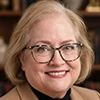
Kathleen Salas Bass is a Partner at KLB Benefits Law Group, where her practice centers on qualified retirement plans, plan compliance and corrections, and IRS and DOL audit support. She has concentrated on employee benefits law for more than 20 years, advising on defined contribution plans, including ROBS plans, as well as health and welfare plans.

Dorothy “Doll” Lank is a co-founder and Partner of KLB Benefits Law Group, where she advises employers on their tax-qualified benefit plans in matters ranging from correcting employer plan failures and avoiding prohibited transactions to the benefits consequences of an acquisition.
Live Video-Broadcast: January 19, 2027
2 hour CLE
Tuition: $195.00
Co-Sponsored by myLawCLE
Get this course, plus over 1,000+ of live webinars.
Learn More
Training 5 or more people?
Sign-up for a law firm subscription plan and each attorney in the firm receives free access to all CLE Programs
Program Summary
Self-Correction Is Now the First Option, Not the Last Resort
Rev. Proc. 2026-34 updates the IRS Employee Plans Compliance Resolution System (EPCRS) and incorporates the expanded Self-Correction Program (SCP). Sponsors can now correct more errors in qualified plans such as 401(k) and 403(b) plans without IRS involvement. That is a big change from Rev. Proc. 2021-30 and a new direction for the IRS.
The new options carry firm rules. Claim an Eligible Inadvertent Failure, and you must follow the procedures and correct within 18 months of discovery. Wait until the plan is under examination, and the examination limits apply. Exclude a rehired, reclassified or LTPT employee, and you have an eligibility failure. Miss an RMD, overpay a participant or mishandle a loan, and the distribution side needs repair. Skip a required restatement, and you must decide whether it is a qualification failure at all.
You walk out with the correction method for each failure, illustrated with examples, and the analysis for choosing SCP, VCP or Audit CAP, including what VCP costs. You also learn how to document an SCP correction, where its risks sit, and when the DOL’s VFCP or the delinquent filer program fits. That judgment is what a correction template cannot supply.
Key topics to be discussed:
- Self-Correction’s New Reach
How Rev. Proc. 2026-34 turns the IRS toward self-correction, and what the Eligible Inadvertent Failure test demands: the procedures, no letter, 18 months from discovery and the examination limit.
- Eligibility Failure Fixes
How to correct the exclusion of eligible employees, including rehired, reclassified and LTPT employees, along with 403(b) employer eligibility and universal availability failures.
- Deferral and Deposit Errors
How to fix automatic-enrollment failures and missed deferrals, compensation definition errors, and late deposits of loan repayments with the appropriate correction method.
- Distribution Failure Corrections
How to correct missed required minimum distributions, overpayments including distributions the plan does not permit, and participant loan failures.
- Plan Document Failures
How to decide whether a missed restatement or interim amendment is a qualification failure and an EIF, when to correct it, and how to handle retroactive discretionary amendments and the cutback quandary.
- SCP, VCP or Audit CAP
How to decide whether VCP is required or preferred, compare its cost with SCP and Audit CAP, use the DOL’s VFCP and the delinquent filer program, and document an SCP against its risks.
This course is co-sponsored with myLawCLE.
Date / Time: January 19, 2027
- 2:30 pm – 4:40 pm Eastern
- 1:30 pm – 3:40 pm Central
- 12:30 pm – 2:40 pm Mountain
- 11:30 am – 1:40 pm Pacific
 Closed-captioning available
Speakers
Kathleen Salas Bass, Partner | KLB Benefits Law Group
Kathleen Salas Bass is a Partner at KLB Benefits Law Group, where her practice centers on qualified retirement plans, plan compliance and corrections, and IRS and DOL audit support. She has concentrated on employee benefits law for more than 20 years, advising on defined contribution plans, including ROBS plans, as well as health and welfare plans.
- Education & Credentials
Kathleen received her J.D. from Stanford Law School in 1998, where she served as an Editor of the Stanford Law and Policy Review in 1995. She earned her B.A. from the University of California, Irvine in 1987, graduating on the Dean’s List. She was admitted to practice in California in 1998.
- Recognition & Leadership
Kathleen has held leadership roles in the Western Pension & Benefits Council at both the local and regional levels. She served as President of the Council’s Governing Board from 2012 to 2013 and on the Steering Committee of the Western Benefits Conference from 2011 to 2014. Within the Orange County Chapter, she served as President from 2010 to 2012, Programs Chair from 2006 to 2008, and Special Events Chair from 2003 to 2006, and she now sits on the chapter’s Board of Directors. She also served on the San Diego Chapter’s Spring Conference Committee in 2003.
- Professional Involvement
Kathleen writes regularly on employee benefits issues. Her articles have appeared in Bloomberg Law’s Professional Perspectives and the Journal of Pension Benefits, and her blog posts are published on the firm’s website and on BenefitsLink. She places particular weight on educating plan sponsors and plan service providers on benefit compliance and best practices. She is a member of The State Bar of California and the Western Pension & Benefits Council, Orange County Chapter.
- Experience
Kathleen’s practice at KLB Benefits Law Group covers plan compliance, corrections, and IRS and DOL audit support for qualified retirement plans, together with qualified domestic relations order issues, training, employee communications, and benefits issues that arise in mergers and acquisitions. She joined the firm as Of Counsel in 2021 and became a partner in 2025.
Before joining KLB, Kathleen was Of Counsel with Boutwell Fay for 18 years. She began her career as an associate with Wilson Sonsini Goodrich & Rosati, DLA Piper, and Pillsbury Winthrop Shaw Pittman.
Dorothy E. Lank, Partner | KLB Benefits Law Group
Dorothy “Doll” Lank is a co-founder and Partner of KLB Benefits Law Group, where she advises employers on their tax-qualified benefit plans in matters ranging from correcting employer plan failures and avoiding prohibited transactions to the benefits consequences of an acquisition. Her work concentrates on qualified retirement plans, particularly ROBS plans, and the federal tax law that governs them.
- Education & Credentials
Doll received her J.D. from Stanford Law School in 1997, where she served as Co-Editor-in-Chief of The Stanford Journal of Law, Business & Finance in 1996. She earned her B.A. from the University of Virginia in 1987. She is admitted to practice in the District of Columbia (2014) and holds inactive admissions in Colorado (2009) and California (1997).
- Recognition & Leadership
Doll has served on the Steering Committee of the Women Owned Law District of Columbia Chapter since 2019, and she served on the Steering Committee of the Western Pension & Benefits Council, Denver Chapter, from 2010 to 2012. She is also a Founding Director of the International School of Monterey and of SOAR Charter School in Denver.
- Professional Involvement
Doll presents regularly on benefits topics to employers and service providers, and she takes an active part in industry associations that promote best practices in employee benefits. She is a member of The Bar of the District of Columbia, Women Owned Law, and WIPN, and she was especially active in the Western Pension & Benefits Council, Denver Chapter.
- Experience
Doll’s practice spans ERISA, employee benefits, and prohibited transaction law, including the correction of employer plan failures. She is building particular depth in the prohibited transaction rules that apply to qualified retirement plans and self-directed IRAs.
Before co-founding KLB, Doll was Of Counsel to employee benefits boutique firms in California and Colorado. Earlier in her career, she practiced general business law, handling entity formation, mergers and acquisitions, nonprofit law, real estate, land use, local government law, and water law.
Agenda
SESSION 1 – Correcting Contribution-Side 401(k) and 403(b) Failures Under the Rewritten EPCRS | Kathleen Salas Bass & Dorothy E. Lank | 2:30pm – 3:30pm
This session will cover the following: A brief overview of the history of EPCRS and self-correction to understand the significance of the new opportunities under the new revenue procedure. What the new revenue procedure says about self-correction and how this is a big change since the prior revenue procedure and a new direction for the IRS. What is an “Eligible Inadvertent Failure”? The requirements (procedures, no letter required), timeframes (18 months from discovery) and other limitations (examination).
With self-correction more of an option, it is important to understand the appropriate correction methods available to plan sponsors. We will discuss and illustrate with examples of the following failures related to contributions: eligibility failures: such as exclusion of eligible employees, including rehired, reclassified, and LTPT employees; for 403(b) plans—employer eligibility failures; for 403(b) plans—universal availability failures; automatic-enrollment failures and missed deferrals; compensation definition errors; late deposits loan repayments. We will also touch on other self-correction options such as the delinquent filer program for late Form 5500s and the DOL’s voluntary fiduciary correction program. We will address issues regarding whether VCP is required, or even preferred, and the costs of VCP compared with SCP and Audit CAP. We will also discuss the importance and form of documentation of any SCP and the risks involved with SCP.
BREAK | 3:30pm – 3:40pm
SESSION 2 – Correcting Distribution-Side and Plan Document Failures | Kathleen Salas Bass & Dorothy E. Lank | 3:40pm – 4:40pm
This session will cover the following: A brief overview of the history of EPCRS and self-correction to understand the significance of the new opportunities under the new revenue procedure. What the new revenue procedure says about self-correction and how this is a big change since the prior revenue procedure and a new direction for the IRS. What is an “Eligible Inadvertent Failure”? The requirements, timeframes and other limitations.
This session will focus on the self-correction of failures related to distributions and plan document compliance. We will discuss and illustrate with examples of distribution failures related to: missed Required Minimum Distributions; overpayment errors, including distributions not permitted under the terms of the plan; participant loan failures. We will then discuss and illustrate with examples plan document failures such as: missed required restatements and interim amendments (Is it a qualification failure? Is it an EIF? What is the timing for correction?); failures related to discretionary amendments (Is a retroactive amendment permitted? The cutback quandary). We will address issues regarding whether VCP is required or even preferred, and the costs of VCP compared with SCP and Audit CAP. We will also discuss the importance and form of documentation of any SCP and the risks involved with SCP.
Credits
Alaska
Approved for CLE Credits
2 General
Alabama
Pending CLE Approval
2 General
Arkansas
Approved for CLE Credits
2 General
Arizona
Approved for CLE Credits
2 General
California
Approved for CLE Credits
2 General
Colorado
Pending CLE Approval
2 General
Connecticut
Approved for CLE Credits
2 General
District of Columbia
No MCLE Required
2 CLE Hour(s)
Delaware
Pending CLE Approval
2 General
Florida
Approved via Attorney Submission
2 General Hours
Georgia
Pending CLE Approval
2 General
Hawaii
Approved for CLE Credits
2 General
Iowa
Pending CLE Approval
2 General
Idaho
Pending CLE Approval
2 General
Illinois
Pending CLE Approval
2 General
Indiana
Pending CLE Approval
2 General
Kansas
Pending CLE Approval
2 Substantive
Kentucky
Pending CLE Approval
2 General
Louisiana
Pending CLE Approval
2 General
Massachusetts
No MCLE Required
2 CLE Hour(s)
Maryland
No MCLE Required
2 CLE Hour(s)
Maine
Pending CLE Approval
2 General
Michigan
No MCLE Required
2 CLE Hour(s)
Minnesota
Pending CLE Approval
2 General
Missouri
Approved for CLE Credits
2.4 General
Mississippi
Pending CLE Approval
2 General
Montana
Pending CLE Approval
2 General
North Carolina
Pending CLE Approval
2 General
North Dakota
Approved for CLE Credits
2 General
Nebraska
Pending CLE Approval
2 General
New Hampshire
Approved for CLE Credits
120 General minutes
New Jersey
Approved for CLE Credits
2 General
New Mexico
Approved for CLE Credits
2 General
Nevada
Pending CLE Approval
2 General
New York
Approved for CLE Credits
2 General
Ohio
Pending CLE Approval
2 General
Oklahoma
Pending CLE Approval
2.5 General
Oregon
Pending CLE Approval
2 General
Pennsylvania
Approved for CLE Credits
2 General
Rhode Island
Pending CLE Approval
2.5 General
South Carolina
Pending CLE Approval
2 General
South Dakota
No MCLE Required
2 CLE Hour(s)
Tennessee
Pending CLE Approval
2 General
Texas
Approved for CLE Credits
2 General
Utah
Pending CLE Approval
2 General
Virginia
Not Eligible
2 General Hours
Vermont
Approved for CLE Credits
2 General
Washington
Approved via Attorney Submission
2 Law & Legal Hours
Wisconsin
Pending CLE Approval
2 General
West Virginia
Pending CLE Approval
2.4 General
Wyoming
Pending CLE Approval
2 General
More CLE Webinars
Trending CLE Webinars










Upcoming CLE Webinars



























































© 2026 Federal Bar Association