When Someone Dies in Government Hands: Wrongful Death Claims Against Police, Jails, and Detention Contractors


On-Demand: September 24, 2026
2 hour CLE
Tuition: $195.00
Co-Sponsored by myLawCLE
Get this course, plus over 1,000+ of live webinars.
Learn More
Training 5 or more people?
Sign-up for a law firm subscription plan and each attorney in the firm receives free access to all CLE Programs
Program Summary
The Same File Looks Different From the Other Side of the Table
Most custody-death programs teach one side of the case. This one puts plaintiff-side civil rights litigators and the county and contractor lawyers who defend these claims on the same faculty.
Misread the decedent’s status and you plead under the wrong amendment. Eighth and Fourteenth Amendment claims carry different standards. Miss the cause-and-manner question early and the factual basis for the claim never forms. Qualified immunity disposes of cases that were never properly framed.
You leave with a framework for evaluating and developing wrongful death claims involving government defendants. You also learn how the other side reads the file — where counties locate defenses, and what a contractor’s involvement changes. Practical lessons and creative resolution strategies come from lawyers who have handled these cases.
Key topics to be discussed:
- Cause and Manner
Establish the factual basis for the claim by resolving how and why the death occurred before the litigation framework is chosen. - Amendment Framework
Determine whether an Eighth or Fourteenth Amendment analysis governs, and adjust the burden you carry to the standard that follows. - Qualified Immunity
Evaluate immunity exposure in claims against government actors at the point where it still changes case selection. - The County Perspective
Anticipate how counties and their personnel defend in-custody death claims, and plead against the defenses they actually raise. - Contractor Involvement
Identify what shifts in the analysis when a private detention contractor sits alongside the governmental defendants. - Lessons and Resolution
Apply practical lessons and creative approaches drawn from difficult custody-death disputes that faculty have resolved.
This course is co-sponsored with myLawCLE.
Date / Time:
 Closed-captioning available
Speakers
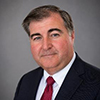
Julia Yoo, Partner | Iredale and Yoo, APC
Julia Yoo is a civil rights attorney with more than 22 years of experience litigating cases involving police misconduct, excessive force, wrongful arrest, wrongful death, and constitutional violations. Her practice includes representing individuals whose rights have been violated by law enforcement and correctional officials, with substantial experience addressing serious injuries and deaths arising from government conduct.
- Education & Credentials
Julia earned her J.D. from the University of Colorado School of Law and graduated cum laude from Wellesley College. After law school, she founded the Law Center for Women Prisoners, where she provided legal assistance to incarcerated women facing issues including inadequate medical care and termination of parental rights.
- Recognition & Leadership
Julia is the immediate past president of the National Police Accountability Project and has served in leadership roles with the Consumer Attorneys of California. She has been recognized by The Best Lawyers in America and Super Lawyers and has received the American Constitution Society’s Roberto Alvarez Award and the Consumer Attorneys of California’s Robert E. Cartwright Award.
- Professional Involvement
Julia has co-authored briefs before the United States Supreme Court and numerous amicus briefs addressing police violence and the constitutional rights of incarcerated and detained individuals. She has also written and spoken on police use of force, treatment of prisoners, and qualified immunity, bringing extensive experience with the legal issues that frequently arise in civil rights litigation against government actors.
- Experience
Julia has devoted her practice to civil rights litigation involving wrongful arrest, excessive force, wrongful death, and constitutional violations in correctional settings. Her cases have addressed inadequate medical care, sexual abuse, and other misconduct in jails, prisons, and juvenile facilities. She also has significant experience with qualified immunity and police-use-of-force litigation, making her well positioned to address the challenges of establishing liability when a government actor’s conduct results in serious injury or death.
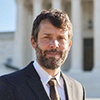
Steve P. Inman, Supervising Deputy County Counsel | County of San Diego
Steve P. Inman is a Supervising Deputy County Counsel for the County of San Diego, where he represents the County and San Diego Sheriff’s Office personnel in civil rights litigation arising from jail and patrol incidents. His practice directly includes wrongful-death, inadequate-medical-care, unlawful-search-and-seizure, and excessive-force claims.
- Education & Credentials
Steve is admitted to practice in California, before the U.S. District Courts for the Central, Southern, and Eastern Districts of California, and before the U.S. Court of Appeals for the Ninth Circuit. He has also been admitted pro hac vice in multiple other judicial districts throughout the country.
- Recognition & Leadership
Steve was recognized as a California Super Lawyers Rising Star from 2012 through 2014. Before joining the County of San Diego, he represented insurance policyholders in coverage and bad-faith lawsuits and other complex litigation and authored multiple publications addressing insurance recovery.
- Professional Involvement
Steve previously held in-house legal positions as Director of Legal Affairs at Welk Reports and Director of Legal Affairs & Litigation at TV Guide. His professional experience therefore spans government practice, private litigation, and in-house legal work, including complex litigation and legal-risk management.
- Experience
During more than six years with the County of San Diego, Steve has represented the County and Sheriff’s Office personnel in civil rights litigation arising from jail and patrol incidents. He has won state and federal trials and obtained multiple summary-judgment victories in matters involving wrongful death, inadequate medical care, unlawful searches and seizures, and excessive force. His current defense practice provides direct experience with evaluating civil rights liability arising from deaths and serious injuries involving government personnel.
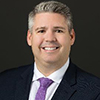
John Burton, Attorney | The Law Offices of John Burton
John Burton has litigated hundreds of civil rights cases in state and federal courts, including complex and significant cases involving police misconduct, jail conditions, constitutional violations, and government liability. He has served as counsel of record in decisions from the California Court of Appeal, California Supreme Court, Fourth, Sixth, Eighth, and Ninth Circuits, and the United States Supreme Court.
- Education & Credentials
John has practiced civil rights law for decades and, from 1981 through 1989, served as an adjunct professor of Torts at the University of West Los Angeles School of Law. His extensive litigation and teaching experience reflects a career focused on constitutional and civil liability issues.
- Recognition & Leadership
John is a past President of the Board of Directors of the National Police Accountability Project, which has approximately 600 attorney members nationally. He also previously served as President of the Board of Directors of Los Angeles Police Watch, the Police Misconduct Lawyer’s Referral Service, which included more than 80 attorneys on its referral panel.
- Professional Involvement
John has served as counsel of record in significant appellate decisions addressing Monell liability, qualified immunity, pretrial detention, due process, and police conduct. His Ninth Circuit work includes cases involving government entity liability, probable cause, exculpatory evidence, pretrial detainee rights, and police use of force.
- Experience
Of particular relevance to this program, John briefed and argued Castro v. County of Los Angeles before an en banc panel of the Ninth Circuit. The resulting 2016 decision addressed the constitutional rights of pretrial detainees and liability based on jail design and practices. His other significant cases include Montiel v. City of Los Angeles, Greenstreet v. County of San Bernardino, Streit v. County of Los Angeles, Tatum v. Moody, and Chinaryan v. City of Los Angeles, addressing Monell liability, qualified immunity, due process, and police conduct.
Peter Bibring, Attorney | Law Office of Peter Bibring
Peter Bibring is a nationally recognized civil rights lawyer and police-practices expert with more than 20 years of experience litigating in state and federal courts and advocating before state legislatures and local governments. His work has focused on policing, jail and prison conditions, government abuse, use of force, and constitutional rights, including cases and investigations involving serious misconduct by government agencies.
- Education & Credentials
Peter attended Harvard College and New York University School of Law. He clerked for Judge Marilyn Hall Patel of the United States District Court for the Northern District of California and Judge Pierre N. Leval of the United States Court of Appeals for the Second Circuit. He currently serves as of counsel with Iredale & Yoo, APC.
- Recognition & Leadership
Peter spent 17 years as an attorney with the ACLU of Southern California and, from 2014 to 2021, served as Director of Police Practices for the ACLU of California. In that role, he led advocacy that helped rewrite California laws addressing racial profiling, access to police records, police use of deadly force, and decertification of officers who engaged in serious misconduct.
- Professional Involvement
From 2023 to 2025, Peter served on the executive team at the Los Angeles County Office of Inspector General, providing oversight of the Los Angeles County Sheriff’s Department and Los Angeles County Probation Department. His work included investigating and monitoring uses of force, deputy-involved shootings, in-custody deaths, internal affairs and discipline systems, jail and detention-center conditions, and deputy gangs.
- Experience
Peter has litigated cases at all levels of state and federal trial and appellate courts, including the United States Supreme Court and California Supreme Court. His civil rights work has addressed policing, public access to government records, free speech and expression, journalists’ rights, privacy, jail and prison conditions, and racial and religious discrimination. His combination of civil rights litigation and direct government oversight experience gives him a strong perspective on the policies, practices, and conduct underlying claims arising from government abuse and in-custody deaths.
Brian T. Bloodworth, Attorney | Kimball, Tirey & St. John LLP
Brian T. Bloodworth is an attorney with Kimball, Tirey & St. John LLP whose practice includes civil rights, fair housing, and ADA litigation. He represents clients in state and federal courts and has experience handling trial and appellate matters, with a defenseside perspective on civil rights litigation and constitutional claims.
- Education & Credentials
Brian is admitted to practice in California, the U.S. District Courts for the Southern and Central Districts of California, the U.S. Court of Appeals for the Ninth Circuit, and the Supreme Court of the United States.
- Recognition & Leadership
Brian has been recognized for his litigation work and has held leadership positions within the legal community, including serving as President of Phi Alpha Delta Law Fraternity International. He is a member of the San Diego County Bar Association.
- Professional Involvement
Brian has presented on fair housing issues to organizations and management groups and has been involved with the American Mock Trial Association and Pro Bono Honor Society. His professional work focuses on litigation involving civil rights, fair housing, and disability-access laws.
- Experience
Brian’s practice includes defending civil rights claims in state and federal courts, as well as fair housing and ADA matters. His litigation experience encompasses trial and appellate proceedings and negotiated resolutions. His defense-side experience provides insight into how civil rights claims are evaluated and defended, including the factual and legal issues that may affect potential liability and exposure.
Agenda
SESSION 1 – Building the Wrongful Death Case When the Defendant Is the Government | 12:00pm – 1:00pm
This session examines the foundational issues that arise when a death occurs in government custody, from determining how and why the death occurred to identifying the constitutional framework that governs the claim. Faculty will address the differences between Eighth and Fourteenth Amendment claims, qualified immunity, and the practical challenges presented by in-custody deaths. Attendees will gain a clearer framework for evaluating and developing wrongful death claims involving government defendants.
BREAK | 1:00pm – 1:10pm
SESSION 2 – County and Contractor Perspectives in Custody-Death Litigation | 1:10pm – 2:10pm
This session examines custody-death litigation from the perspectives of the governmental entities and private contractors involved in these cases. Faculty will explore how counties approach in-custody death claims, the distinct considerations that arise when a detention contractor is involved, and practical lessons from handling these cases. The discussion will focus on identifying potential problems, evaluating competing perspectives, and developing creative approaches to resolving difficult custody-death disputes.
Credits
Alaska
Approved for CLE Credits
2 General
Alabama
Approved for Self-Study Credits
2 General
Arkansas
Approved for CLE Credits
2 General
Arizona
Approved for CLE Credits
2 General
California
Approved for CLE Credits
2 General
Colorado
Pending CLE Approval
2 General
Connecticut
Approved for CLE Credits
2 General
District of Columbia
No MCLE Required
2 CLE Hour(s)
Delaware
Pending CLE Approval
2 General
Florida
Pending CLE Approval
2 General Hours
Georgia
Approved for CLE Credits
2 General
Hawaii
Approved for CLE Credits
2 General
Iowa
Pending CLE Approval
2 General
Idaho
Pending CLE Approval
2 General
Illinois
Pending CLE Approval
2 General
Indiana
Pending CLE Approval
2 General
Kansas
Pending CLE Approval
2 Substantive
Kentucky
Pending CLE Approval
2 General
Louisiana
Pending CLE Approval
2 General
Massachusetts
No MCLE Required
2 CLE Hour(s)
Maryland
No MCLE Required
2 CLE Hour(s)
Maine
Pending CLE Approval
2 General
Michigan
No MCLE Required
2 CLE Hour(s)
Minnesota
Pending CLE Approval
2 General
Missouri
Approved for Self-Study Credits
2.4 General
Mississippi
Pending CLE Approval
2 General
Montana
Pending CLE Approval
2 General
North Carolina
Pending CLE Approval
2 General
North Dakota
Approved for CLE Credits
2 General
Nebraska
Pending CLE Approval
2 General
New Hampshire
Approved for CLE Credits
120 General minutes
New Jersey
Approved for CLE Credits
2 General
New Mexico
Approved for Self-Study Credits
2 General
Nevada
Pending CLE Approval
2 General
New York
Approved for CLE Credits
2 General
Ohio
Approved for Self-Study Credits
2 General
Oklahoma
Pending CLE Approval
2.5 General
Oregon
Pending CLE Approval
2 General
Pennsylvania
Approved for Self-Study Credits
2 General
Rhode Island
Pending CLE Approval
2.5 General
South Carolina
Pending CLE Approval
2 General
South Dakota
No MCLE Required
2 CLE Hour(s)
Tennessee
Approved for Self-Study Credits
2 General
Texas
Approved for CLE Credits
2 General
Utah
Pending CLE Approval
2 General
Virginia
Not Eligible
2 General Hours
Vermont
Approved for CLE Credits
2 General
Washington
Approved via Attorney Submission
2 Law & Legal Hours
Wisconsin
Approved for Self-Study Credits
2 General
West Virginia
Pending CLE Approval
2.4 General
Wyoming
Pending CLE Approval
2 General
Preview
More CLE Webinars
Trending CLE Webinars










Upcoming CLE Webinars
























































© 2026 Federal Bar Association