
Litigating Race and Sexual Harassment Claims in 2026: Post-Rescission Standards, Arbitration Gateways, and Proving Pattern Harassment at Scale
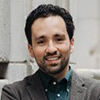
Shane Seppinni is the Founder of Seppinni Law and a trial lawyer whose practice is devoted to employment litigation on behalf of workers, including sexual harassment and assault, workplace discrimination and retaliation, pregnancy discrimination, and wage and hour violations. He came to plaintiff-side employment work by way of a civil rights practice, a large-firm trial practice, and several years inside a major technology employer, a combination that informs how he investigates, frames, and tries harassment cases.

John S. Crain is Managing Counsel at Seppinni Law, where his practice covers employment litigation and civil rights, including workplace discrimination, pregnancy discrimination, sexual harassment and assault, and wage and hour matters. He has guided clients through hard-fought litigation and has helped create precedents that other courts now cite. His background spans a large New York City firm, a federal district court clerkship, and a leading civil rights and employment boutique, and he brings that trial and appellate perspective to the firm’s discrimination and harassment caseload.
Live Video-Broadcast: October 12, 2026
2 hour CLE
Tuition: $195.00
Co-Sponsored by myLawCLE
Get this course, plus over 1,000+ of live webinars.
Learn More
Training 5 or more people?
Sign-up for a law firm subscription plan and each attorney in the firm receives free access to all CLE Programs
Program Summary
The Agency Roadmap Is Gone and the Class Route Just Closed — Harassment Litigation Runs on Case Law Now
On January 22, 2026, the EEOC rescinded its 2024 Enforcement Guidance on Harassment in the Workplace. The first comprehensive update in more than twenty years is now withdrawn. Counsel on both sides must reconstruct the severe-or-pervasive analysis from Harris, Faragher, Ellerth, and circuit precedent.
Build a training or investigation protocol on the rescinded checklist and the Faragher/Ellerth defense weakens. Plead Title VII alone and you accept the damages caps and exhaustion that Section 1981 avoids. Ignore the Vaughn certification ruling and a 14,000-member class becomes hundreds of individual trials. Misjudge the reach of the Ending Forced Arbitration Act and the forum is lost.
Attendees leave with a case-law-only framework for the harassment analysis and a statute-selection checklist covering caps, exhaustion, and limitations. They also leave with a pattern-proof playbook built from me-too evidence, investigation files, and the notice chain, plus damages strategy tested against the Diaz remittitur.
Key topics to be discussed:
- Post-Rescission Authority
What the EEOC withdrew on January 22, 2026, and which authorities now control the harassment analysis. - Severe-or-Pervasive Analysis
How to run the standard from Harris, Faragher, and Ellerth alone, and what Muldrow’s “some harm” threshold does and does not change. - Statute Selection
How Title VII, Section 1981, and the state-law floor differ on caps, exhaustion, limitations, and individual liability. - Pattern Proof at Scale
What the Vaughn court demanded on representative proof, and how counsel restructured 900-plus claims into individual cases. - Building the Record
How me-too and serial-harasser evidence, investigation files, slur documentation, and the notice chain prove a pattern. - Forum and Damages
How the EFAA, delegation clauses, and waiver decide the forum, and how Diaz shapes damages that survive remittitur.
This course is co-sponsored with myLawCLE.
Date / Time: October 12, 2026
- 12:00 pm – 2:10 pm Eastern
- 11:00 am – 1:10 pm Central
- 10:00 am – 12:10 pm Mountain
- 9:00 am – 11:10 am Pacific
 Closed-captioning available
Speakers
Shane Seppinni, Trial Lawyer & Founder | Seppinni Law
Shane Seppinni is the Founder of Seppinni Law and a trial lawyer whose practice is devoted to employment litigation on behalf of workers, including sexual harassment and assault, workplace discrimination and retaliation, pregnancy discrimination, and wage and hour violations. He came to plaintiff-side employment work by way of a civil rights practice, a large-firm trial practice, and several years inside a major technology employer, a combination that informs how he investigates, frames, and tries harassment cases.
- Education & Credentials
Mr. Seppinni earned his law degree from Stanford Law School and studied Industrial Labor Relations at Cornell University. He was the first student from his public high school to be admitted to Cornell. At Stanford, he served as a research assistant to Professor William B. Gould IV, the former Chairman of the National Labor Relations Board.
- Recognition & Leadership
Mr. Seppinni founded Seppinni Law and leads its employment litigation practice. His work as a research assistant to a former Chairman of the National Labor Relations Board placed him alongside one of the principal scholars of American labor law while he was still in law school.
- Professional Involvement
During law school, Mr. Seppinni was a member of the Black Law Students Association at Stanford Law School and participated in the Workers Rights Pro Bono Clinic, representing workers in employment matters.
- Experience
Mr. Seppinni practiced as a civil rights lawyer at the Bronx Defenders, where he brought successful suits against landlords and employers, including Amazon. He also tried cases at Quinn Emanuel Urquhart & Sullivan. Before entering law, he worked at Google as an HR Coordinator in People Operations, supporting the teams of now-Chief Executive Officer Sundar Pichai, and as a Competitive Intelligence Analyst.
John S. Crain, Managing Counsel | Seppinni Law
John S. Crain is Managing Counsel at Seppinni Law, where his practice covers employment litigation and civil rights, including workplace discrimination, pregnancy discrimination, sexual harassment and assault, and wage and hour matters. He has guided clients through hard-fought litigation and has helped create precedents that other courts now cite. His background spans a large New York City firm, a federal district court clerkship, and a leading civil rights and employment boutique, and he brings that trial and appellate perspective to the firm’s discrimination and harassment caseload.
- Education & Credentials
Mr. Crain graduated from Brooklyn Law School summa cum laude and second in his class. He was honored seven times for top lecture scores and received a faculty award.
- Recognition & Leadership
Mr. Crain served as a law clerk to the Honorable Roslynn Mauskopf of the United States District Court for the Eastern District of New York. In his practice he has developed precedents that are important and often cited, and he now leads matters at Seppinni Law as Managing Counsel.
- Professional Involvement
In 2026, Mr. Crain teaches a seminar on Litigating an Employment Case at Brooklyn Law School, his alma mater. He has also published twice on the history of American civil rights law.
- Experience
Mr. Crain began his career in the corporate department of a major New York City firm and later served as Of Counsel at a prominent New York City civil rights and employment boutique. He played an important role in confidential settlements of ten to twenty-five million dollars and won a $900,000 judgment in a pregnancy discrimination case in the Southern District of New York.
Agenda
SESSION 1 – The 2026 Harassment Landscape: Severe-or-Pervasive After the EEOC Rescission | 12:00pm – 1:00pm
This session rebuilds the harassment framework without an agency roadmap. On January 22, 2026, the EEOC rescinded its 2024 Enforcement Guidance on Harassment in the Workplace — the first comprehensive update to the agency’s harassment framework in more than twenty years — leaving counsel on both sides to reconstruct the severe-or-pervasive analysis from Harris v. Forklift Systems, Faragher, Ellerth, and circuit precedent, without the compliance checklist that shaped a decade of investigations, training programs, and Faragher/Ellerth defenses. State statutes, meanwhile, continue to supply a floor that in many jurisdictions sits well above federal law.
Attorneys will learn what the rescission removed and which authorities now control; how to run the severe-or-pervasive analysis and attack the Faragher/Ellerth defense from case law alone; what Muldrow’s “some harm” threshold does and does not change for hostile work environment claims; and how to choose among Title VII, Section 1981, and state statutes on damages caps, administrative exhaustion, limitations periods, and individual liability.
BREAK | 1:00pm – 1:10pm
SESSION 2 – Proving Pattern Harassment at Scale: From Class Certification to Hundreds of Individual Trials | 1:10pm – 2:10pm
This session turns the framework into trial strategy, taught from inside the Tesla race harassment litigation. In November 2025, an Alameda County court denied class certification in Vaughn v. Tesla, holding that a jury could not reliably extrapolate from a sample of trial witnesses to a class of more than 14,000 Black workers. Plaintiffs’ counsel pivoted rather than appealed: more than 500 individual complaints have been filed, with over 900 planned. Forum fights are moving just as fast, as courts divide over how far the Ending Forced Arbitration Act reaches beyond the sexual harassment claim itself and what a plaintiff must plead to invoke it.
Attorneys will learn what the Vaughn court demanded on representative proof; how counsel restructured 900-plus claims into individual cases; how to build the pattern record through me-too evidence, investigation files, and the notice chain; how the EFAA and waiver doctrine decide the forum; and how to try emotional distress and punitive damages so the award survives post-trial review — drawing on the Diaz v. Tesla verdict, remittitur, and 2023 damages retrial.
Credits
Alaska
Approved for CLE Credits
2 General
Alabama
Pending CLE Approval
2 General
Arkansas
Approved for CLE Credits
2 General
Arizona
Approved for CLE Credits
2 General
California
Approved for CLE Credits
2 General
Colorado
Pending CLE Approval
2 General
Connecticut
Approved for CLE Credits
2 General
District of Columbia
No MCLE Required
2 CLE Hour(s)
Delaware
Pending CLE Approval
2 General
Florida
Pending CLE Approval
2 General
Georgia
Pending CLE Approval
2 General
Hawaii
Approved for CLE Credits
2 General
Iowa
Pending CLE Approval
2 General
Idaho
Pending CLE Approval
2 General
Illinois
Pending CLE Approval
2 General
Indiana
Pending CLE Approval
2 General
Kansas
Pending CLE Approval
2 Substantive
Kentucky
Pending CLE Approval
2 General
Louisiana
Pending CLE Approval
2 General
Massachusetts
No MCLE Required
2 CLE Hour(s)
Maryland
No MCLE Required
2 CLE Hour(s)
Maine
Pending CLE Approval
2 General
Michigan
No MCLE Required
2 CLE Hour(s)
Minnesota
Pending CLE Approval
2 General
Missouri
Approved for CLE Credits
2.4 General
Mississippi
Pending CLE Approval
2 General
Montana
Pending CLE Approval
2 General
North Carolina
Pending CLE Approval
2 General
North Dakota
Approved for CLE Credits
2 General
Nebraska
Pending CLE Approval
2 General
New Hampshire
Approved for CLE Credits
120 General minutes
New Jersey
Approved for CLE Credits
2 General
New Mexico
Approved for CLE Credits
2 General
Nevada
Pending CLE Approval
2 General
New York
Approved for CLE Credits
2 General
Ohio
Pending CLE Approval
2 General
Oklahoma
Pending CLE Approval
2.5 General
Oregon
Pending CLE Approval
2 General
Pennsylvania
Approved for CLE Credits
2 General
Rhode Island
Pending CLE Approval
2.5 General
South Carolina
Pending CLE Approval
2 General
South Dakota
No MCLE Required
2 CLE Hour(s)
Tennessee
Pending CLE Approval
2 General
Texas
Approved for CLE Credits
2 General
Utah
Pending CLE Approval
2 General
Virginia
Not Eligible
2 General Hours
Vermont
Approved for CLE Credits
2 General
Washington
Approved via Attorney Submission
2 Law & Legal Hours
Wisconsin
Pending CLE Approval
2 General
West Virginia
Pending CLE Approval
2.4 General
Wyoming
Pending CLE Approval
2 General
More CLE Webinars
Trending CLE Webinars










Upcoming CLE Webinars

































© 2026 Federal Bar Association